12 Cabin Living Room Ideas for a Cozy Rustic Retreat

cabin living room Ideas
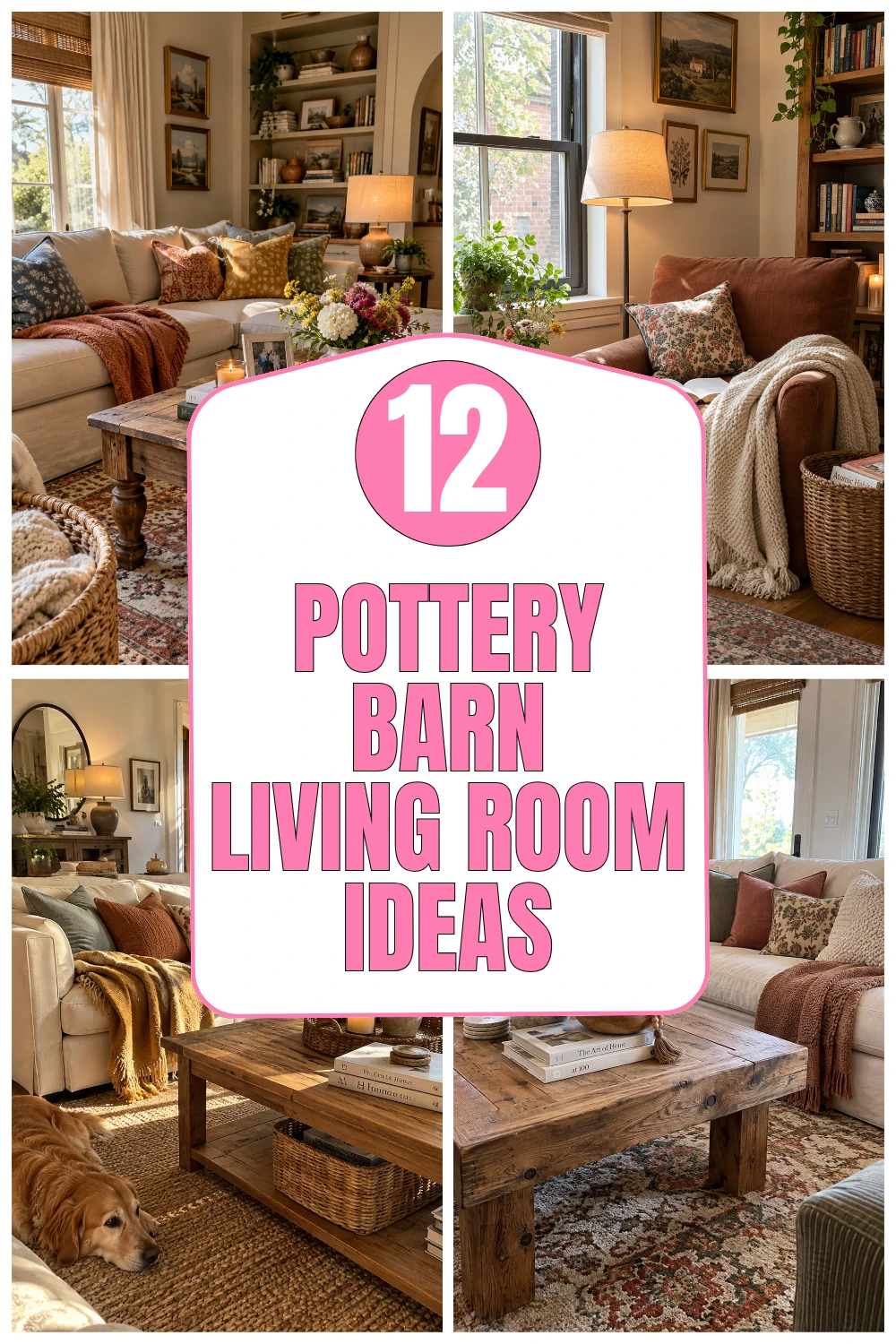
A cabin living room works best when it feels collected rather than overly decorated. The most inviting spaces combine natural materials, comfortable seating, warm lighting, and a few distinctive rustic details without making the room feel heavy or dated.
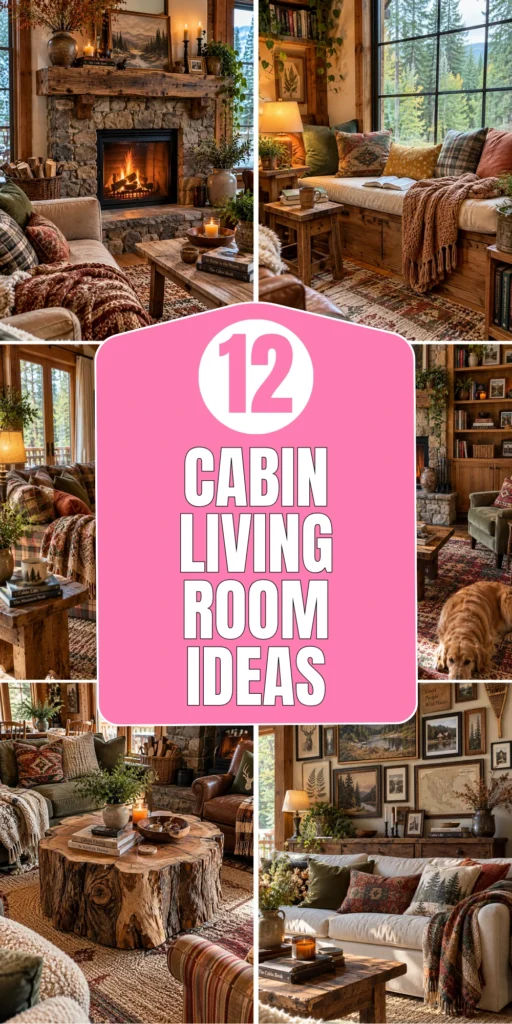
Whether you are decorating a genuine woodland cabin or simply bringing cabin character into a modern home, these ideas focus on practical layouts, durable materials, and easy styling choices that create warmth while keeping the room functional.
1. Stone Fireplace With Layered Leather Seating
Description
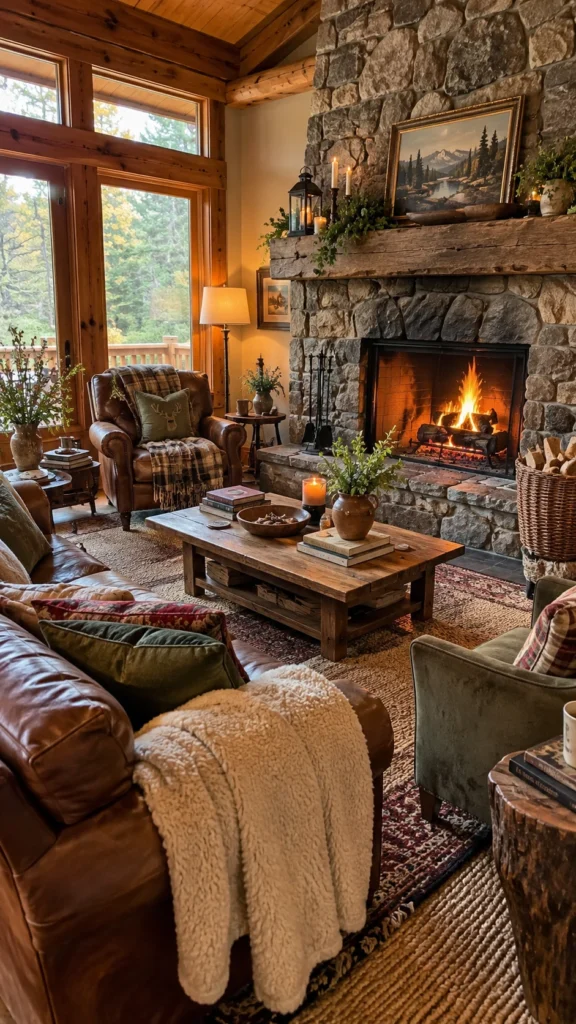
Build the room around a substantial stone fireplace and arrange seating close enough to make conversation comfortable. A worn leather sofa paired with two smaller chairs gives the space character without looking like a furniture showroom. In practice, the biggest mistake is pushing every piece against the walls. Keep the seating grouped around the fireplace and leave a clear walkway behind or beside it for better everyday circulation.
What You’ll Need:
Stone or stone-look fireplace, leather sofa, two accent chairs, wool rug, wooden coffee table, floor lamp, firewood basket.
Quick How-To:
Position the sofa facing the fireplace, then angle two chairs inward to form a relaxed conversation area. Center a durable rug underneath the main seating group and use a sturdy wood table to connect everything visually.
Styling Tip:
Mix leather with softer textiles such as wool, cotton, or woven throws so the room feels warm rather than overly rugged.
2. Floor-to-Ceiling Wood Wall
Description
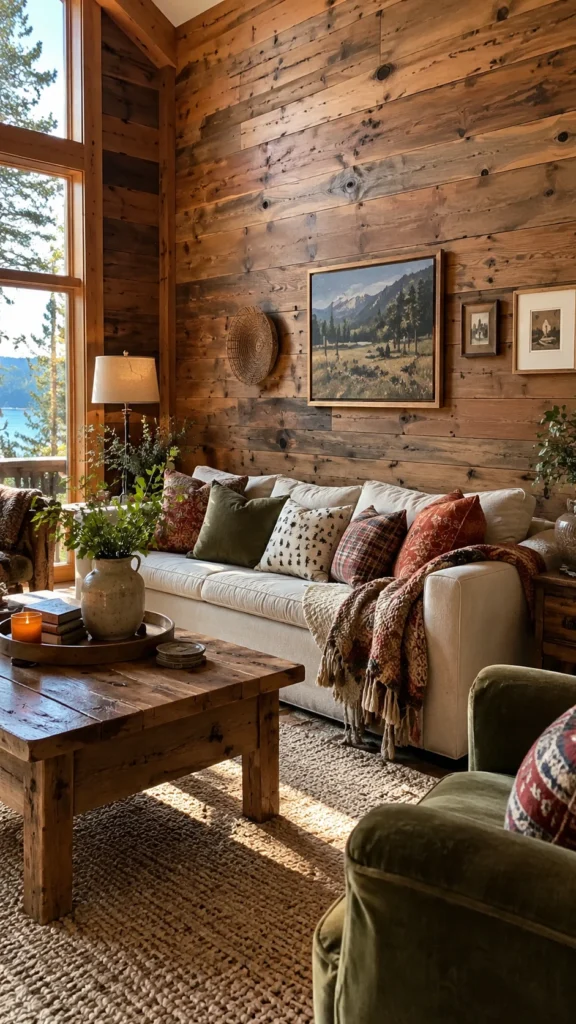
Use one full wall of natural or reclaimed wood to create instant cabin character without covering the entire room. Choose boards with variation in grain and tone rather than perfectly uniform panels. A common mistake is using too many matching wooden accessories afterward. Let the wall remain the main feature and balance it with lighter upholstery, simple artwork, and a restrained number of rustic accents.
What You’ll Need:
Wood planks, appropriate wall fasteners, neutral sofa, textured rug, simple artwork, wooden console.
Quick How-To:
Choose the wall with the greatest visual impact, install the boards vertically or horizontally depending on the room’s proportions, then keep surrounding furniture visually simple.
Styling Tip:
Pair darker wood with cream, oatmeal, or warm beige upholstery to prevent the room from feeling visually enclosed.
3. Cozy Window Reading Nook
Description
Turn an overlooked cabin window into a practical reading corner instead of leaving it as empty space. A compact bench, deep cushion, small side table, and adjustable lamp can create a useful retreat without consuming much floor area. The key is choosing cushions that can withstand regular use. Avoid filling the nook with oversized pillows that look attractive but leave little room to actually sit comfortably.
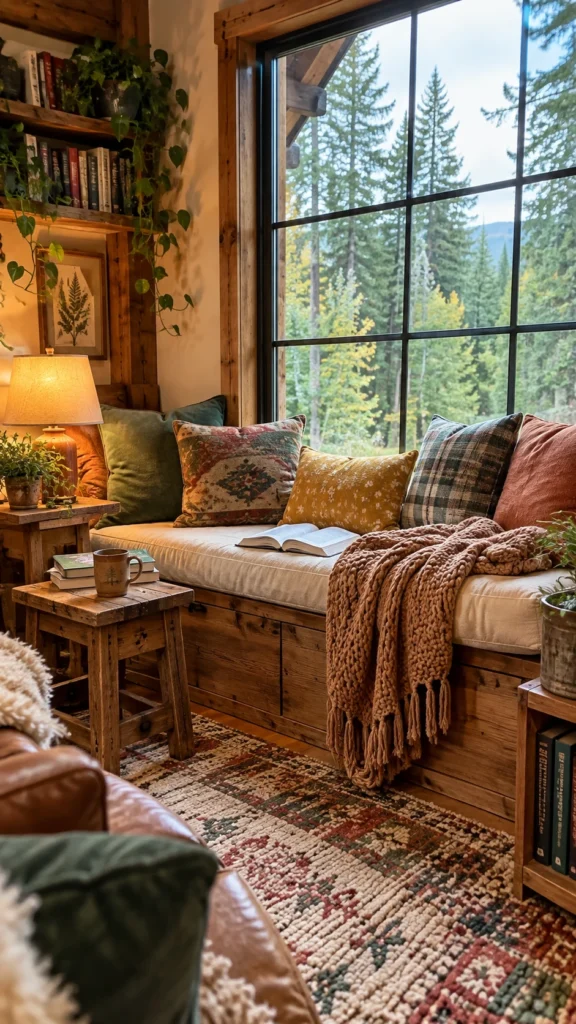
What You’ll Need:
Built-in or freestanding bench, seat cushion, two pillows, small side table, reading lamp, woven blanket.
Quick How-To:
Place the bench directly beneath the window, add a supportive cushion, then position a narrow table and lamp within easy reach.
Styling Tip:
Use one patterned pillow against mostly solid textiles to introduce personality without making the small area feel cluttered.
4. Rustic Tree Trunk Coffee Table
Description
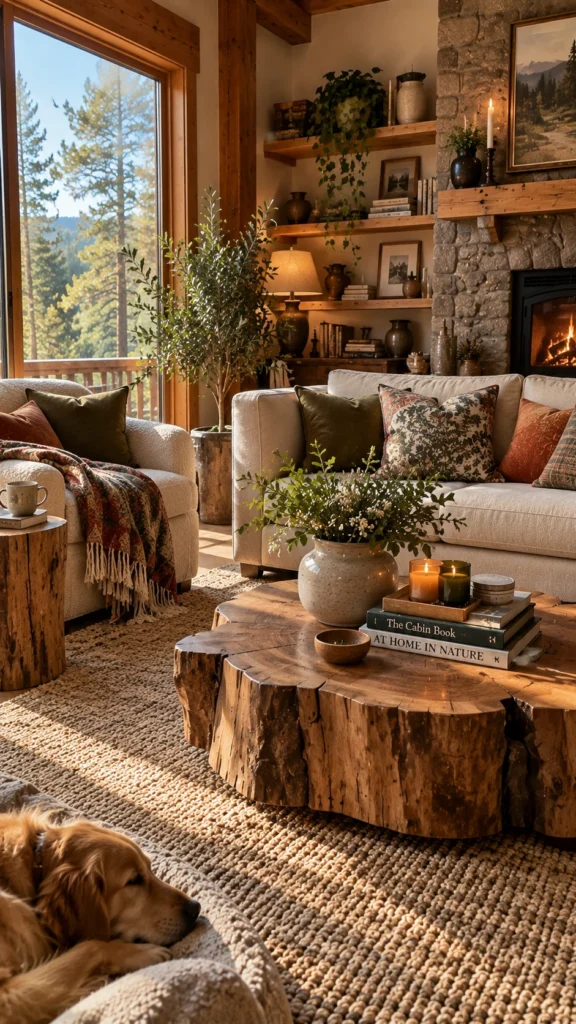
A tree trunk coffee table can become the natural centerpiece of a cabin living room while adding useful surface space. Choose a stable, properly dried trunk with a reasonably flat top and smooth enough edges for everyday use. Extremely uneven pieces may look authentic but quickly become frustrating. A protective finish also helps prevent stains, especially when the table will hold drinks, books, or candles regularly.
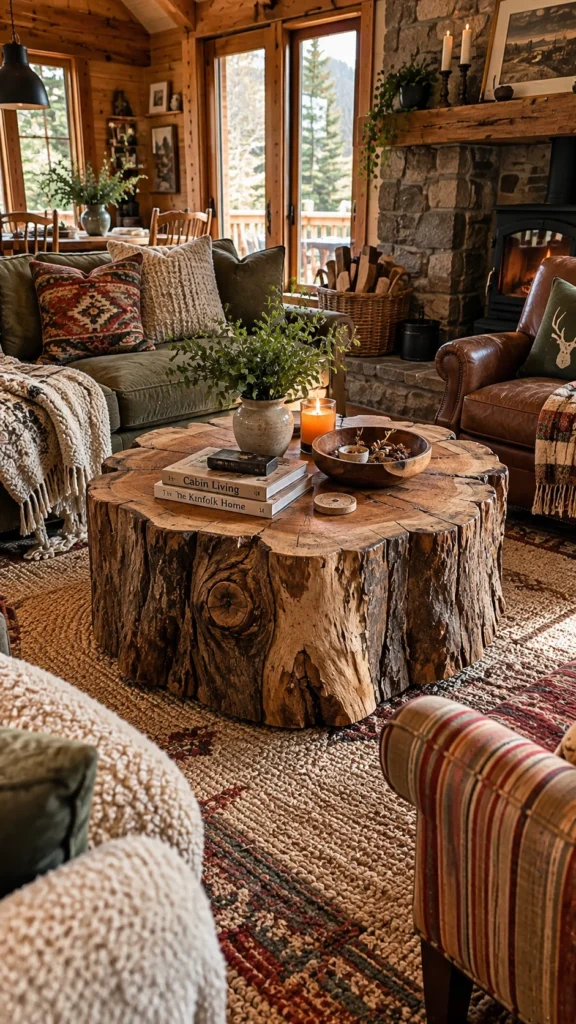
What You’ll Need:
Dried tree trunk, sanding supplies, wood finish, protective floor pads, area rug, sofa and chairs.
Quick How-To:
Sand the trunk carefully, seal the surface, add protective pads underneath, and position it so there is comfortable clearance around every side.
Styling Tip:
Keep the tabletop simple with a ceramic bowl, a few books, or one small natural arrangement.
5. Vintage Cabin Gallery Wall
Description
Create a gallery wall using vintage-inspired landscapes, wildlife sketches, old maps, botanical prints, and simple cabin photography. The strongest results come from mixing frame sizes while maintaining a consistent color family. Hanging everything perfectly evenly can make the arrangement feel too formal. Instead, create a loose composition with enough spacing to let each piece remain readable from across the room.
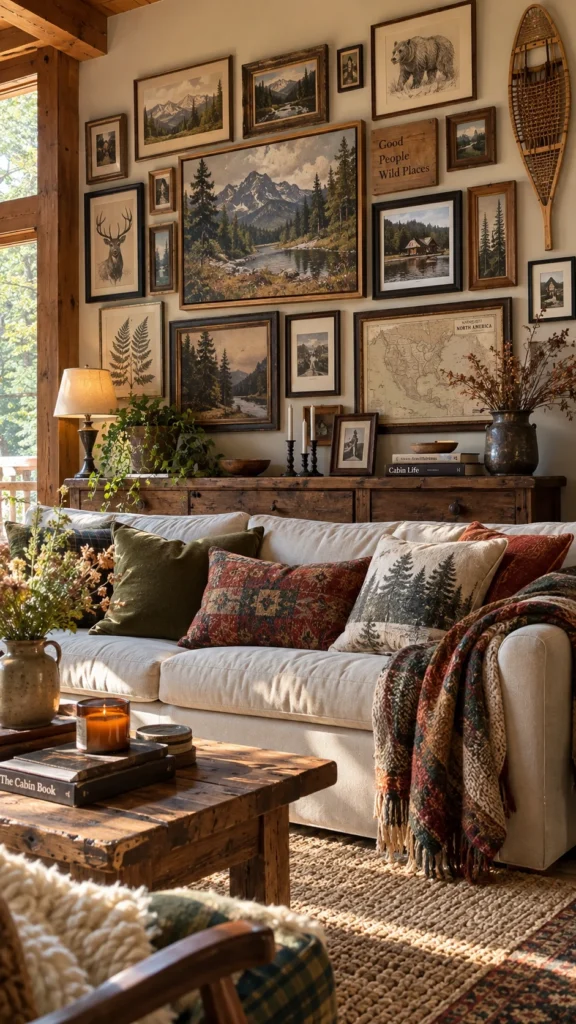
What You’ll Need:
Framed prints, landscape artwork, old-style map, measuring tape, picture hooks, wooden or aged frames.
Quick How-To:
Arrange the artwork on the floor first, keeping the largest piece near the center. Transfer the arrangement to the wall while maintaining consistent visual spacing.
Styling Tip:
Use black, walnut, distressed wood, and muted metal frames together for an collected, naturally aged appearance.
6. Warm Layered Lighting Scheme
Description
Cabin lighting should create pools of warmth rather than relying on one bright ceiling fixture. Combine table lamps, floor lamps, wall sconces, and fireplace lighting at different heights. This makes the room feel considerably more comfortable after sunset. Avoid placing every light at eye level. Mixing low and high sources adds depth and makes architectural features such as beams or stonework more noticeable.
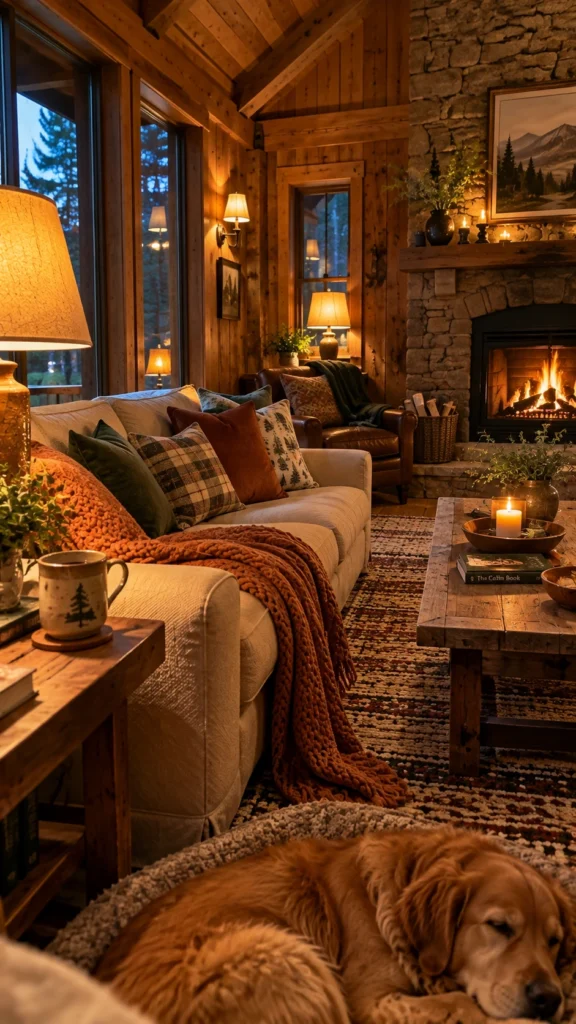
What You’ll Need:
Floor lamp, table lamp, wall sconces, warm-toned bulbs, dimmer switches, lantern-style accent light.
Quick How-To:
Start with the main ambient fixture, then add one floor lamp near seating and smaller lamps on side tables or consoles.
Styling Tip:
Choose warm bulbs and use dimmers wherever possible so the lighting can shift from practical daytime illumination to relaxed evening ambiance.
7. Built-In Bookshelves Around the Fireplace
Description
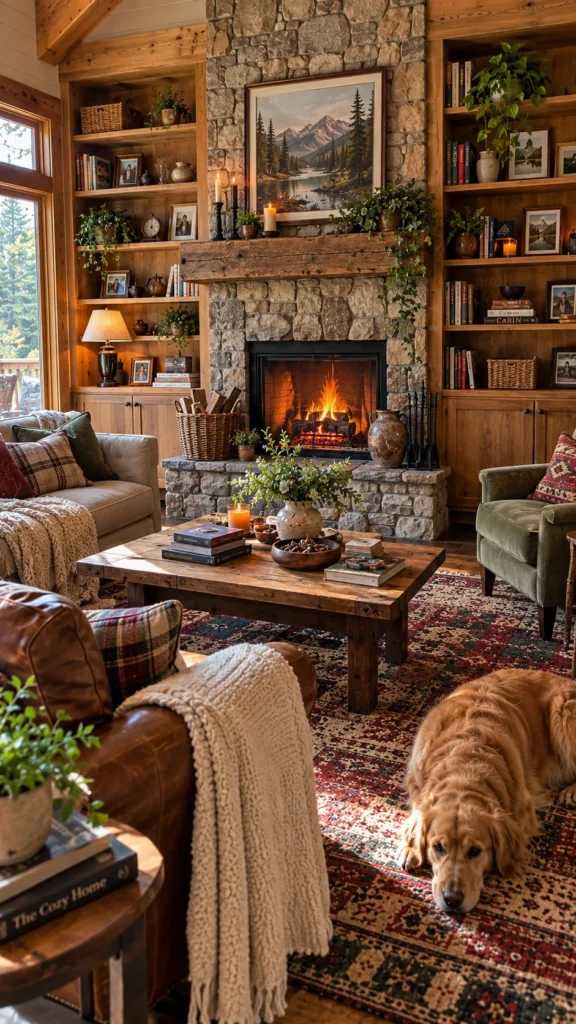
Frame a fireplace with built-in shelves to combine storage and visual impact. Keep the shelves useful rather than filling every opening with decorations. Books, baskets, ceramics, framed photographs, and a few natural objects create a more believable cabin arrangement. One frequent mistake is placing small objects everywhere. Leave some shelves partially empty so the collection feels intentional and the fireplace remains the visual anchor.
What You’ll Need:
Built-in or modular shelving, books, baskets, pottery, framed photographs, decorative wood pieces.
Quick How-To:
Install matching shelving on both sides of the fireplace when possible, then organize objects by height while leaving breathing room between groups.
Styling Tip:
Place heavier or darker objects toward the bottom and lighter decorative pieces higher up to create visual balance.
8. Oversized Plaid Sectional
Description
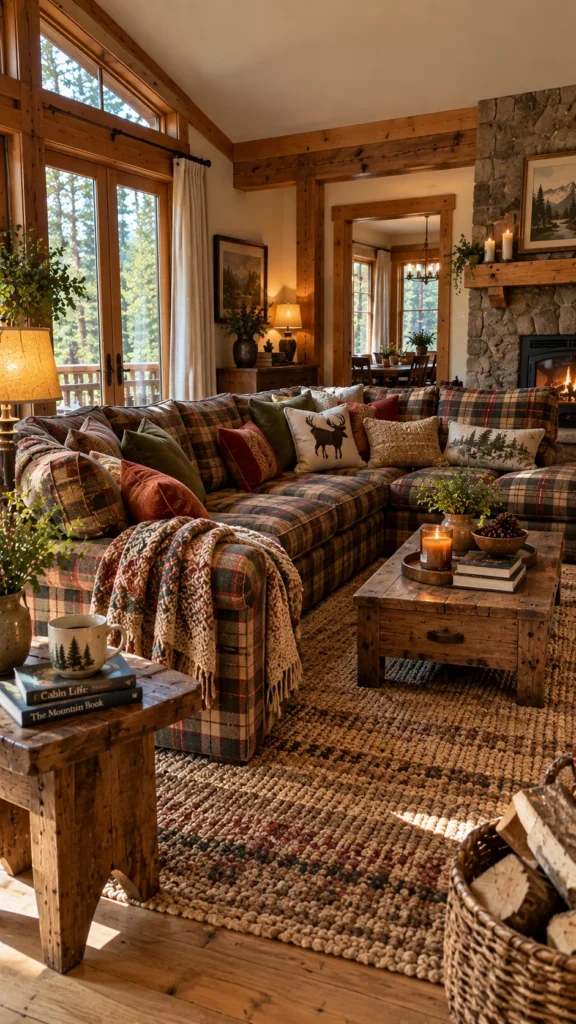
An oversized sectional works especially well in a cabin designed for families and weekend guests. Choose a durable fabric in a subtle plaid, check, or earthy neutral rather than an extremely busy pattern. Measure the room carefully before buying because large sectionals can quickly overwhelm compact cabins. Keep at least one clear route through the seating area so the room remains practical during busy gatherings.
What You’ll Need:
Large sectional, washable throws, neutral cushions, durable rug, wood side table, floor lamp.
Quick How-To:
Map the sectional dimensions with painter’s tape before purchasing. Position it to define the lounge zone while keeping doors, windows, and walkways unobstructed.
Styling Tip:
Balance a patterned sofa with mostly solid pillows and one or two textured throws instead of adding multiple competing prints.
9. Cabin-Inspired Neutral Color Palette
Description
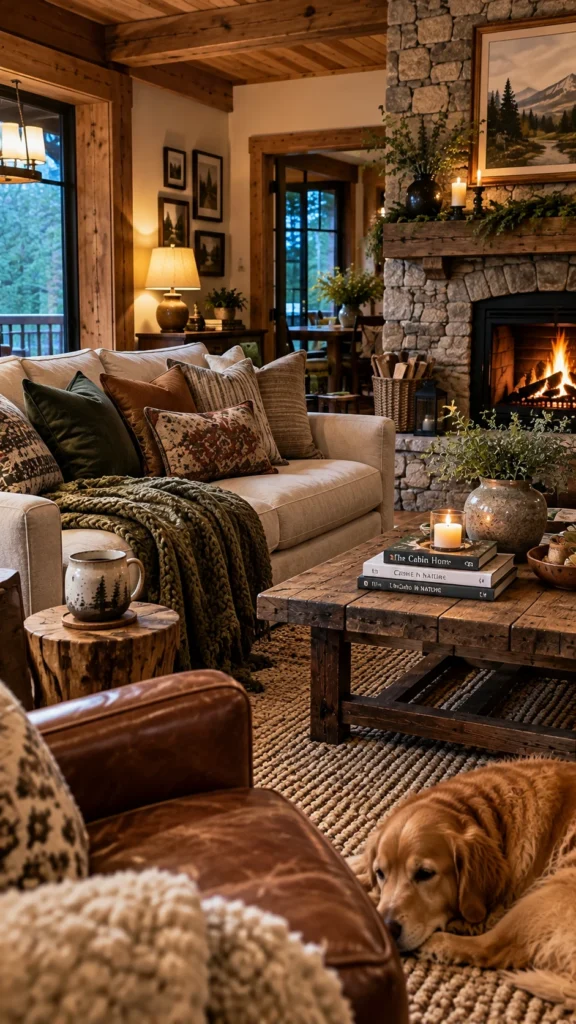
A restrained palette of warm white, taupe, brown, charcoal, and muted green can make a cabin feel sophisticated while preserving its rustic character. The trick is layering different textures rather than relying on strong colors for interest. Flat fabrics can make neutral rooms feel lifeless, while wool, linen, leather, wood, and woven materials add depth without visual noise.
What You’ll Need:
Neutral upholstery, wool rug, linen curtains, leather accents, wooden furniture, textured cushions.
Quick How-To:
Choose one dominant neutral, one darker grounding color, and one subtle accent shade. Repeat each throughout the room in different materials.
Styling Tip:
Use texture as your main decorative tool when working with a limited color palette.
10. Exposed Beam Conversation Room
Description
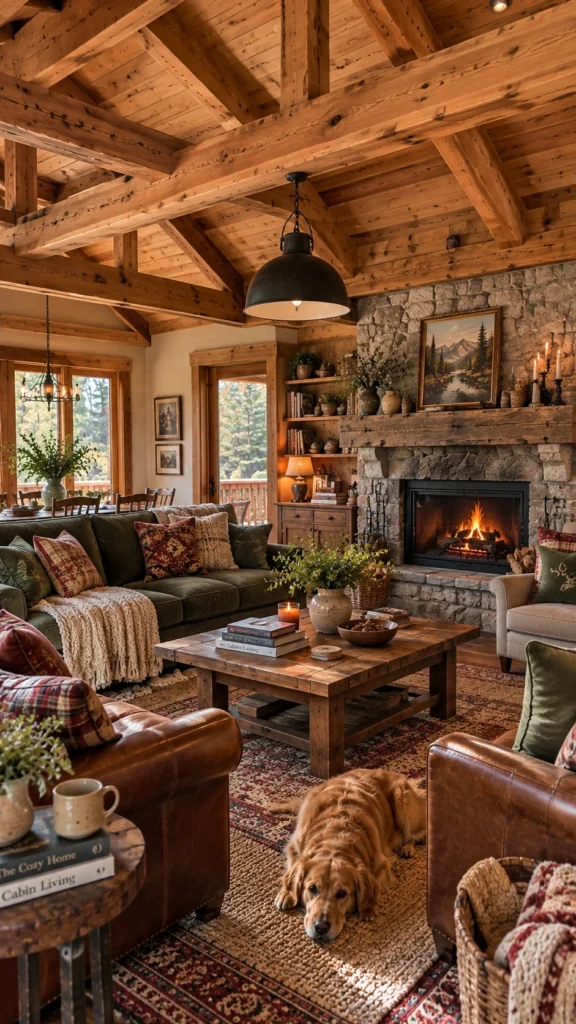
If your cabin has exposed ceiling beams, make them part of the room’s layout rather than treating them as background architecture. Arrange furniture so the seating zone visually connects with the strongest beam lines. Keep overhead decor limited because hanging too many objects can make the ceiling feel crowded. A simple rug and substantial furniture pieces usually provide enough contrast against the structural timber.
What You’ll Need:
Exposed beams, comfortable sofa, two chairs, large area rug, solid coffee table, minimal pendant light.
Quick How-To:
Identify the room’s strongest beam direction and position the seating to complement it. Center the rug beneath the main furniture grouping.
Styling Tip:
Repeat the beam’s wood tone in one or two smaller furniture pieces to make the architecture feel intentionally connected to the decor.
11. Modern Rustic Cabin Corner
Description
Combine clean-lined contemporary furniture with rustic materials for a cabin that feels current rather than themed. A simple sofa, sculptural chair, natural wood table, and textured rug can work beautifully against traditional timber walls. The biggest mistake is trying to make every item rustic. A few modern shapes actually make authentic wood, stone, and handmade pieces stand out more effectively.
What You’ll Need:
Modern sofa, sculptural accent chair, natural wood table, wool rug, simple pendant, ceramic accessories.
Quick How-To:
Begin with contemporary furniture as the foundation, then introduce rustic character through wood, stone, woven materials, and handmade accessories.
Styling Tip:
Keep decorative objects minimal and choose pieces with irregular shapes or visible craftsmanship for warmth.
12. Layered Cabin Fireplace Mantel
Description
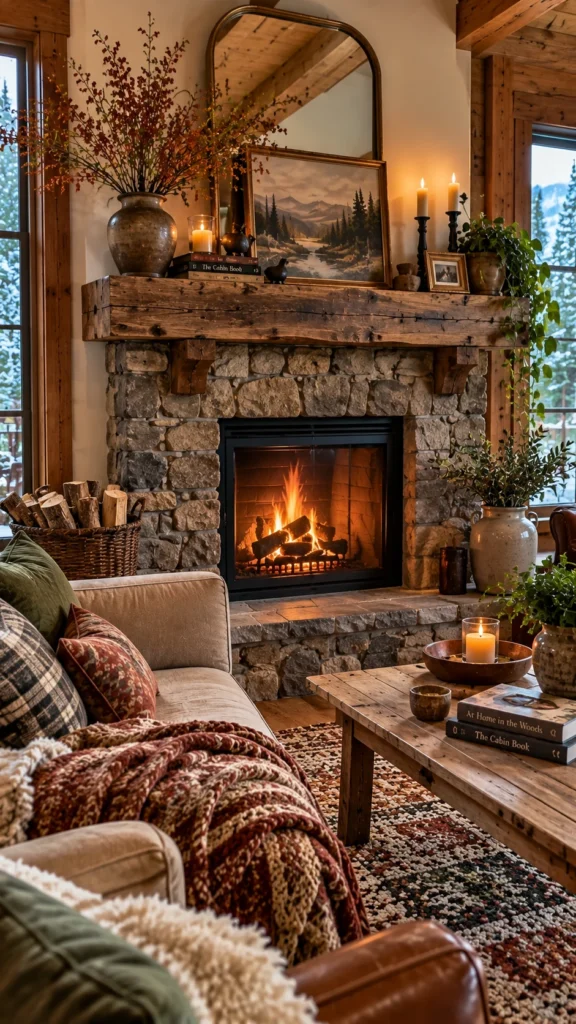
A fireplace mantel is an easy place to introduce personality without redesigning the whole living room. Layer a large mirror or artwork behind smaller objects such as pottery, candlesticks, branches, or framed photographs. Keep the tallest item slightly off-center instead of creating a perfectly symmetrical display. Avoid placing too many heat-sensitive or flammable materials close to an active fireplace.
What You’ll Need:
Mirror or artwork, ceramic vase, branches, framed photograph, candleholders, mantel accessories.
Quick How-To:
Start with one large backdrop piece, then add two or three objects at different heights. Step back frequently to check the composition from the main seating position.
Styling Tip:
Repeat one material already found elsewhere in the room, such as black metal, aged wood, or ceramic, to make the mantel feel connected to the overall design.
FAQ SECTION
How do I make a living room look like a cabin?
Start with natural materials rather than adding lots of rustic decorations. Wood, stone, leather, wool, woven textures, warm lighting, and earthy colors usually create a more convincing cabin atmosphere than themed accessories.
What colors work best in a cabin living room?
Warm neutrals, brown, cream, charcoal, muted green, rust, and soft tan work particularly well. The best combination depends on the amount of natural wood and daylight already present in the room.
How can I decorate a small cabin living room?
Prioritize multifunctional furniture, keep walkways clear, and use vertical storage. A compact reading nook, wall-mounted shelves, or a small wood coffee table can add character without consuming excessive floor space.
How do I keep rustic decor from looking outdated?
Mix traditional materials with cleaner contemporary shapes. For example, combine reclaimed wood with a streamlined sofa, simple lighting, or modern artwork. The contrast keeps the room feeling current.
What makes a cabin living room feel cozy?
Comfortable seating, layered lighting, tactile fabrics, natural materials, and a practical furniture arrangement make the biggest difference. Cozy design comes more from how the room functions than from simply adding decorations.
RELATED CONTENT
CLOSING
A great cabin living room does not need to look perfectly rustic or perfectly styled. The most memorable spaces usually combine practical furniture with natural materials, comfortable textures, meaningful objects, and a few imperfect details that make the room feel lived in.
Try one idea first and build from there. Whether you start with a cozy reading nook, a reclaimed wood feature wall, or a fireplace-centered seating arrangement, small changes can completely shift the atmosphere. I hope these cabin living room ideas inspire you to create a space that feels warm, personal, and genuinely inviting. Enjoy decorating, and share your results with others who love cozy cabin style.