12 Dining Table Decor Ideas for a Beautiful and Welcoming Home

Dining Table Decor Ideas
A dining table can completely change the character of a dining room, but the best styling is not simply about adding more accessories. In practice, a successful tablescape needs balance, usable space, and a clear focal point.
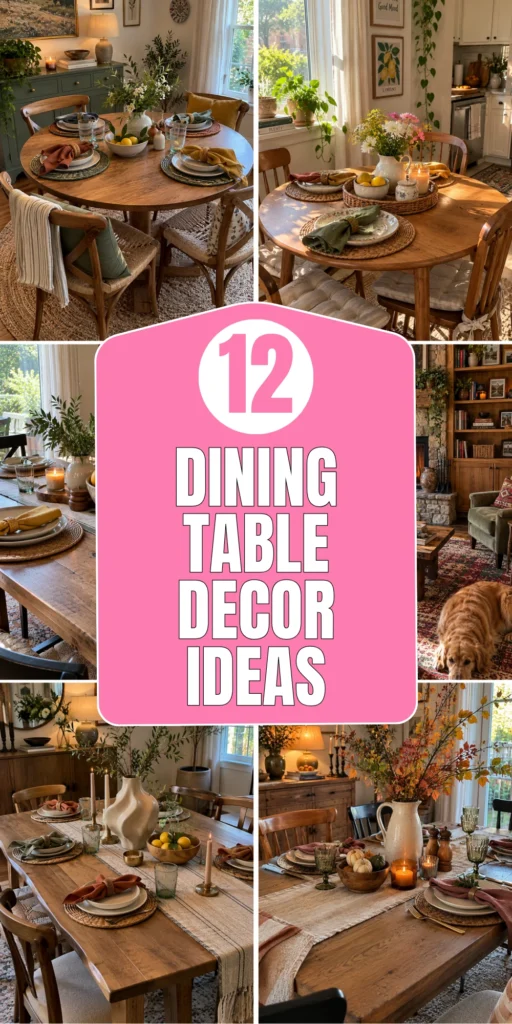
The ideas below focus on arrangements that look intentional in everyday homes while remaining practical enough for meals, entertaining, and regular cleaning. Each concept can also be adjusted for small dining areas, open-plan rooms, rental apartments, or larger tables.
1. Layered Neutral Centerpiece
Description
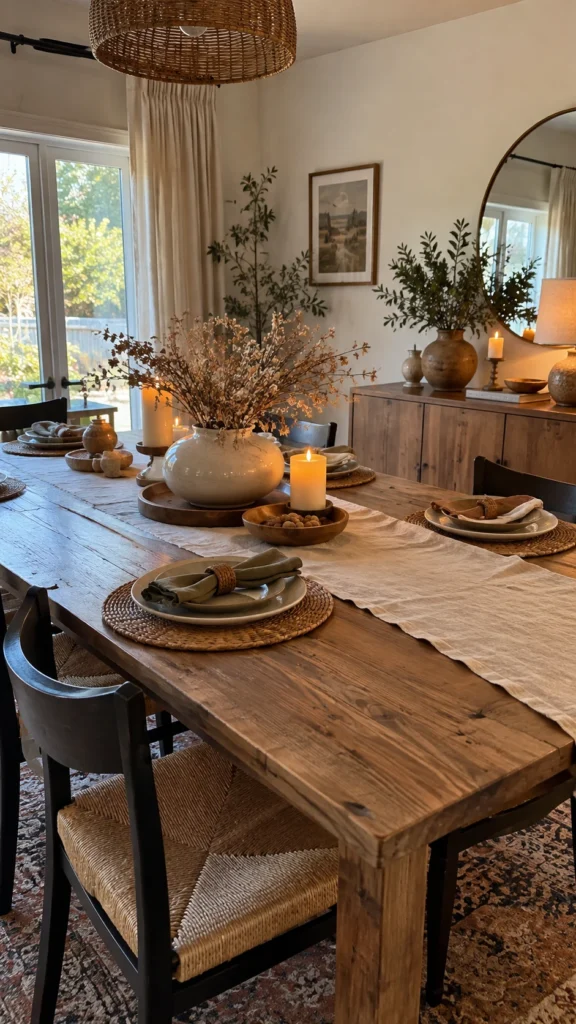
Create a relaxed centerpiece by layering a low ceramic bowl, a textured runner, and a few natural accents such as branches or dried stems. Keep the arrangement below eye level so people can talk across the table comfortably. The key is restraint: too many neutral objects can make the setting look flat, so combine different materials such as linen, wood, ceramic, and glass for subtle contrast.
What You’ll Need:
- Linen or cotton table runner
- Low ceramic bowl
- Dried branches or greenery
- Wooden or stone accents
- Small decorative objects
Quick How-To:
Lay the runner down the center, place the bowl slightly off-center, then add branches and two or three smaller objects around it.
Styling Tip:
Use three different textures rather than several similar-colored accessories to keep a neutral table visually interesting.
2. Black-and-White Graphic Table
Description
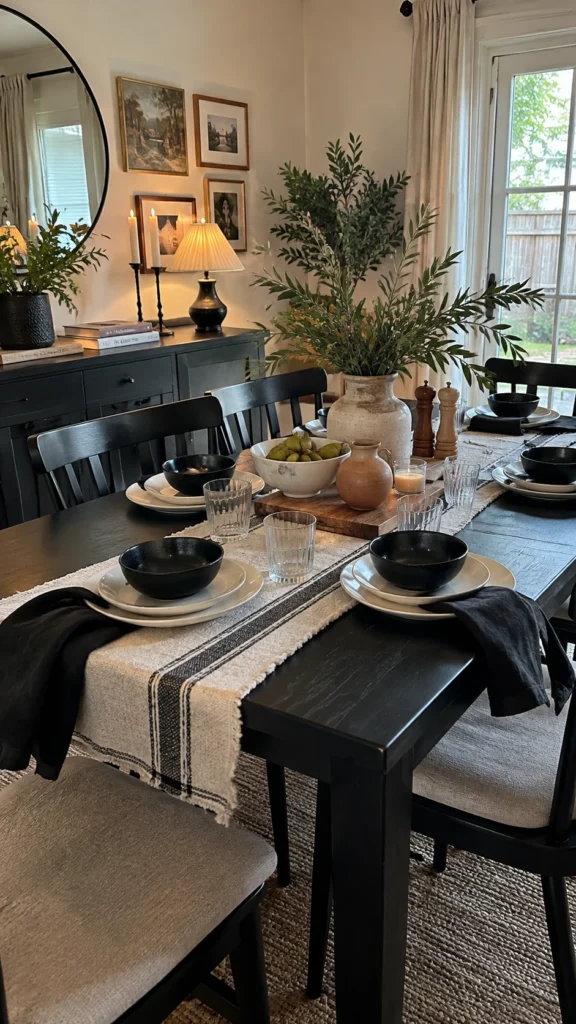
For a sharper look, build the table around black and white with one warm material to soften the contrast. Black dinnerware, white plates, clear glassware, and natural wood create a polished combination without feeling overly formal. This approach works particularly well when the dining room already contains dark furniture or black accents.
What You’ll Need:
- Black or white dinnerware
- Clear glasses
- Black napkins
- Wooden tray or board
- Simple centerpiece
Quick How-To:
Start with the plates and glassware, add black napkins, then place a wooden tray through the center with a few restrained decorative pieces.
Styling Tip:
Avoid making every item black and white. A little natural wood prevents the arrangement from looking cold or overly coordinated.
3. Compact Table for Six
Description
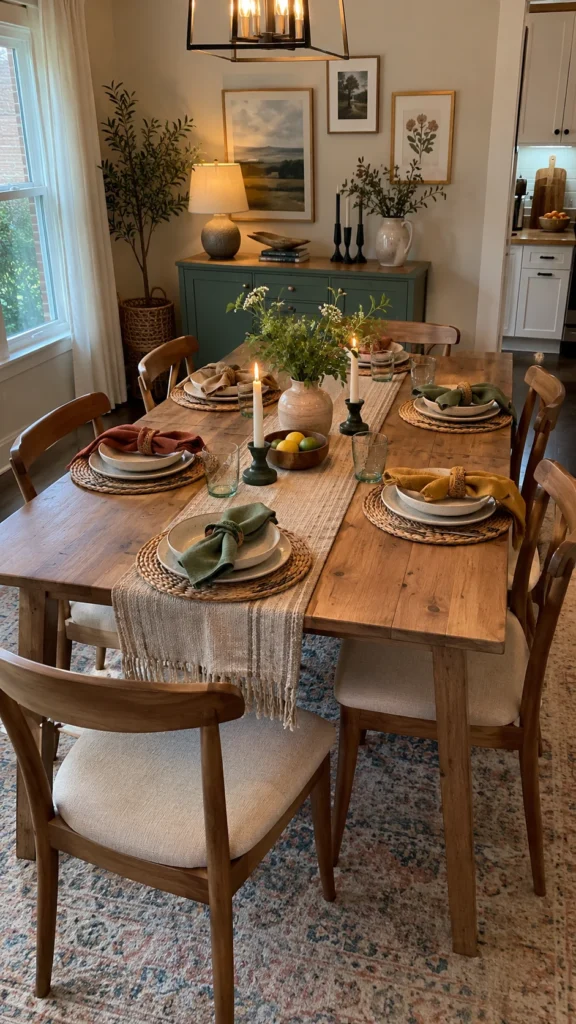
A table for six needs decoration that leaves enough room for plates, serving dishes, and elbows. Instead of filling the entire surface, use one narrow centerpiece running through the middle. Small individual place settings can provide personality without consuming valuable space, making this arrangement especially useful in compact dining rooms.
What You’ll Need:
- Narrow runner
- Six simple place settings
- Small candleholders
- Low centerpiece
- Minimal napkins
Quick How-To:
Mark out the six seating positions first, then keep the central decoration inside the remaining middle section.
Styling Tip:
Measure your centerpiece before buying it. A beautiful decoration that forces dishes toward the table edge is not practical for everyday dining.
4. Rustic Wood and Greenery
Description
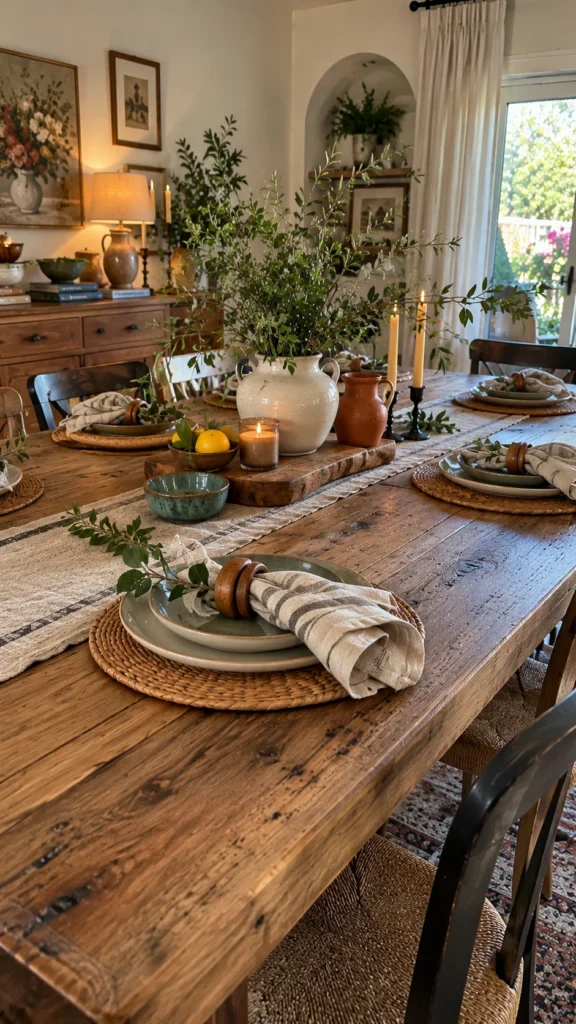
Bring warmth to the dining area with a combination of unfinished wood, greenery, and handmade-looking ceramics. A wooden serving board can act as the foundation, while a few leafy branches add height without creating a complicated arrangement. This style is especially effective on plain dining tables because the natural materials provide visual character without requiring many accessories.
What You’ll Need:
- Wooden serving board
- Ceramic vase
- Fresh or faux greenery
- Linen napkins
- Wooden or ceramic bowls
Quick How-To:
Place the board centrally, add a vase toward one side, and balance it with a small bowl or candleholder on the opposite side.
Styling Tip:
Choose greenery with different leaf shapes rather than using several identical stems. Natural variation makes the arrangement look less staged.
5. Elegant Candlelit Setting
Description
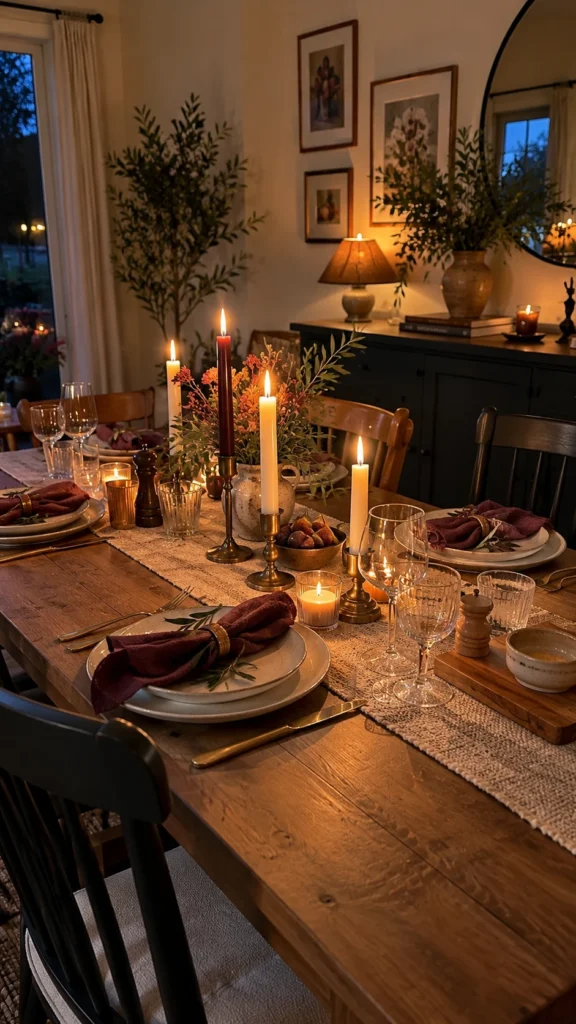
Candles are one of the easiest ways to make an ordinary dining table feel special, but placement matters. Instead of using one oversized centerpiece, distribute several small candleholders along the center. This creates a softer glow and allows the table to remain useful. Unscented candles are generally better for meals because strong fragrances can compete with food aromas.
What You’ll Need:
- Three to five candleholders
- Unscented taper or votive candles
- Simple runner
- Neutral dinnerware
- Small decorative bowl
Quick How-To:
Arrange candleholders in a loose line, varying their heights slightly while leaving generous gaps between them.
Styling Tip:
Keep taller candles toward the sides or use shorter designs in the center so guests can maintain clear sightlines.
6. Round Table Conversation Cluster
Description
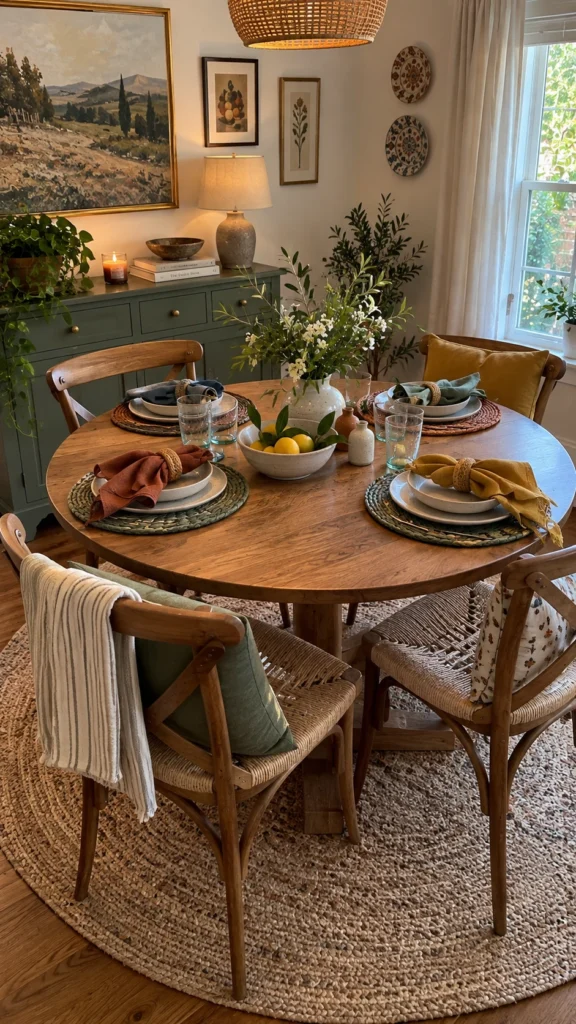
Round dining tables benefit from circular arrangements rather than long linear centerpieces. A shallow bowl surrounded by a few smaller objects creates a natural visual loop that follows the table’s shape. This works particularly well for intimate dining spaces where the table doubles as a breakfast or work surface during the day.
What You’ll Need:
- Low round bowl
- Small vase
- Two decorative objects
- Round placemats
- Compact napkins
Quick How-To:
Position the bowl in the center, then arrange the smaller pieces around it with enough space for plates and serving dishes.
Styling Tip:
Repeat the table’s circular shape through bowls, placemats, or trays to make the entire setting feel cohesive.
7. Dining Nook Breakfast Table
Description
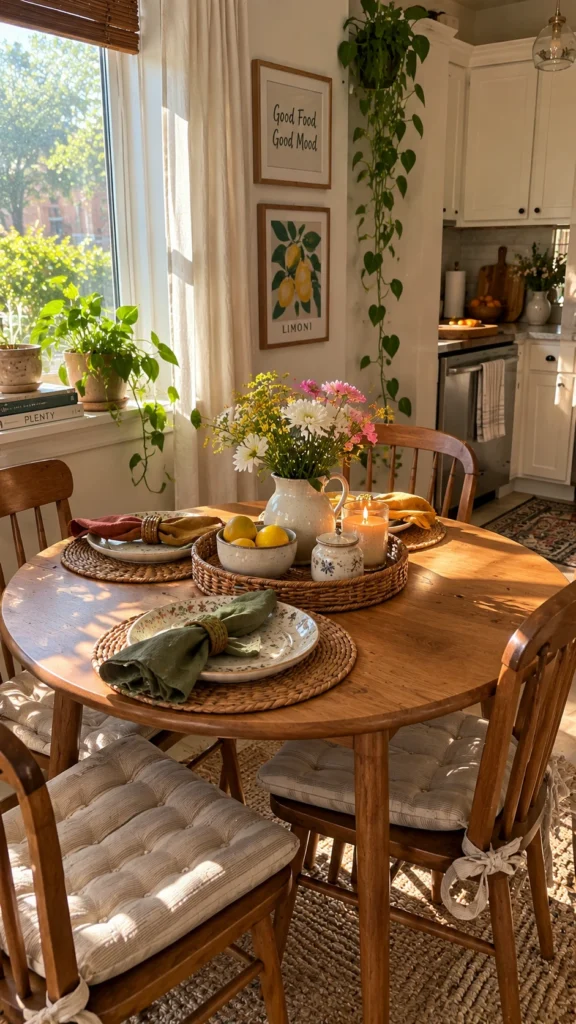
A small dining nook does not need a miniature version of a formal tablescape. Instead, make the table feel useful and welcoming with one compact centerpiece and everyday objects. A small vase, fruit bowl, or wooden tray can add decoration while remaining functional. This approach is particularly useful in apartments where the dining surface needs to serve several purposes.
What You’ll Need:
- Small tray
- Compact vase
- Seasonal fruit
- Simple placemats
- Two or four chairs
Quick How-To:
Create one contained arrangement on the tray so the entire centerpiece can be lifted away quickly when the table is needed.
Styling Tip:
A removable centerpiece is one of the smartest choices for a small dining nook because it prevents decoration from becoming clutter.
8. Soft Linen and Earthy Tones
Description
For a warmer, relaxed tablescape, combine muted earth tones with natural textiles. Terracotta, oatmeal, cream, brown, and soft green work well together without demanding a perfectly matched set. The most successful versions mix casual linen napkins with slightly heavier ceramics, creating a table that feels comfortable rather than staged.
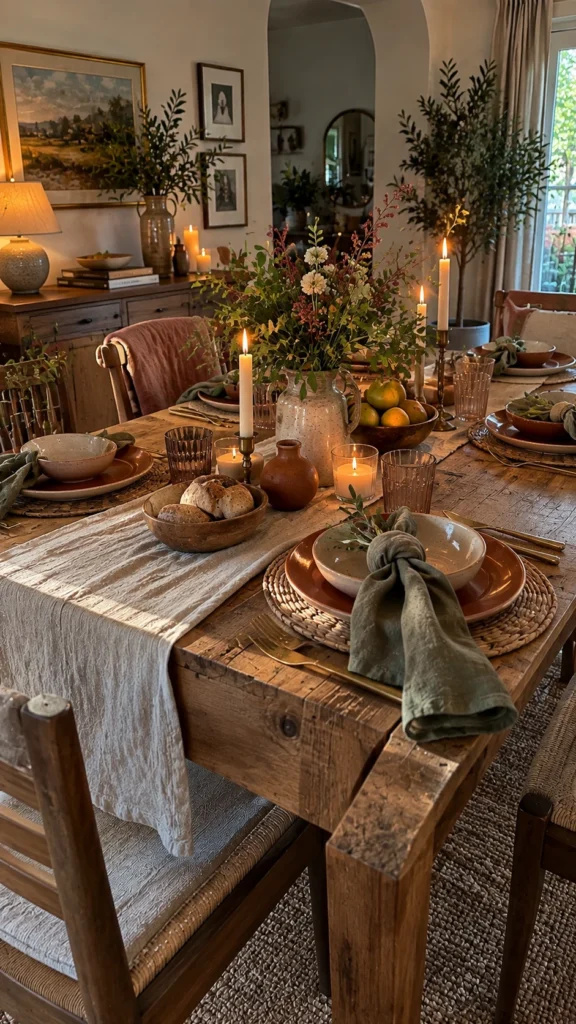
What You’ll Need:
- Linen table runner
- Earth-tone napkins
- Ceramic plates
- Small pottery vase
- Wooden serving piece
Quick How-To:
Place the runner first, then build simple place settings and finish with pottery and natural materials through the center.
Styling Tip:
Repeat one earthy color at least three times across the table so the different shades feel connected.
9. Sculptural Statement Vase
Description
When the dining room is visually simple, one sculptural vase can provide more impact than a collection of small decorations. Choose an unusual silhouette and fill it with restrained branches or stems. The vase should complement the table rather than compete with it, so keep surrounding accessories minimal and allow the shape to remain the focal point.
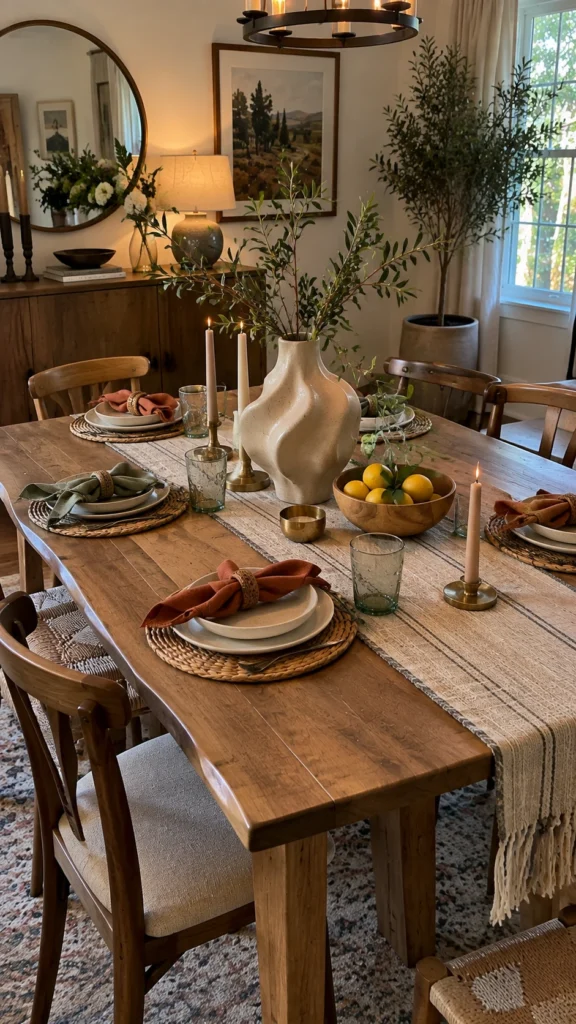
What You’ll Need:
- Sculptural vase
- Branches or tall stems
- Simple runner
- Two small supporting objects
- Neutral tableware
Quick How-To:
Place the vase slightly off-center, then add only a couple of low accessories on the opposite side to create visual balance.
Styling Tip:
If the vase is highly decorative, use simple greenery. Combining a dramatic vase with elaborate flowers can make the table feel overcrowded.
10. Everyday Fruit Bowl Display
Description
A fruit bowl can become a practical centerpiece when chosen and styled intentionally. Select a broad bowl with an attractive shape and fill it with a limited variety of fruit. Mixing too many colors often creates visual noise, while repeating two or three tones gives the table a more considered appearance and keeps fresh food within easy reach.
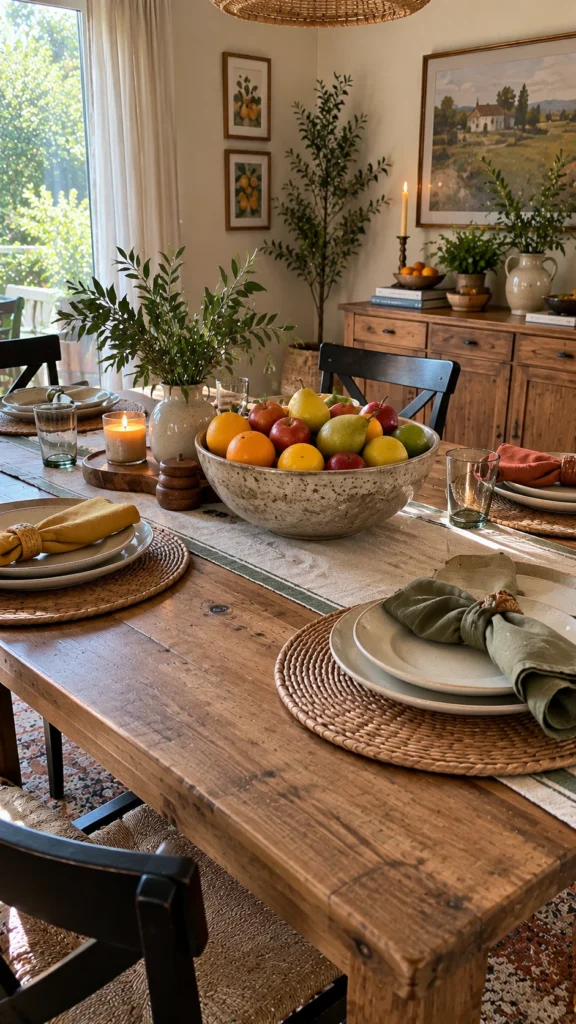
What You’ll Need:
- Wide decorative fruit bowl
- Two or three types of fruit
- Linen napkins
- Simple placemats
- Small wooden accent
Quick How-To:
Place the bowl centrally or slightly to one side, then arrange the fruit loosely instead of stacking it into a perfect mound.
Styling Tip:
Choose fruit that is actually eaten regularly. A centerpiece is more successful when it serves a purpose instead of becoming another object to move around.
11. Seasonal Branch Arrangement
Description
For an inexpensive table refresh, use branches as the main decorative element. Their height and irregular shapes create interest without requiring expensive flowers. Place them in a simple vessel and trim the stems so the arrangement feels deliberate rather than freshly cut from the garden. This idea can easily shift with the seasons.
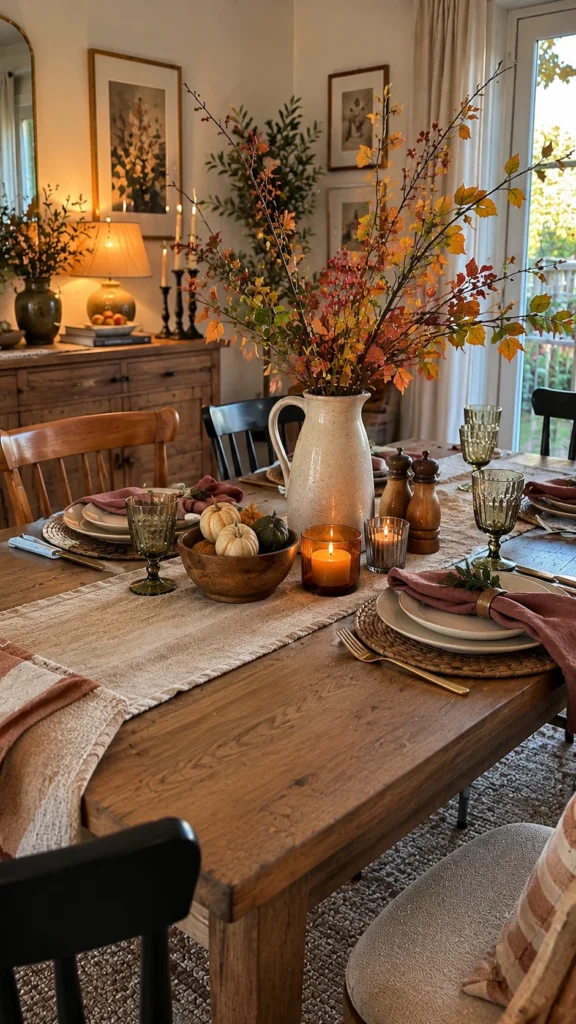
What You’ll Need:
- Tall vase or pitcher
- Seasonal branches
- Pruning shears
- Neutral runner
- Small candleholder
Quick How-To:
Trim the branches at different lengths, place the tallest stems toward the center, and gradually shorten the outer pieces.
Styling Tip:
Do not make the arrangement perfectly symmetrical. Slight irregularity usually gives branches a more natural and sophisticated appearance.
12. Collected Vintage Tablescape
Description
Create character by combining pieces that look collected over time instead of buying a complete matching set. Mix vintage-style plates, an old-looking candlestick, a ceramic pitcher, and textured linens while keeping one color family consistent. The result feels personal and layered, particularly when the dining room itself has simple contemporary furniture.
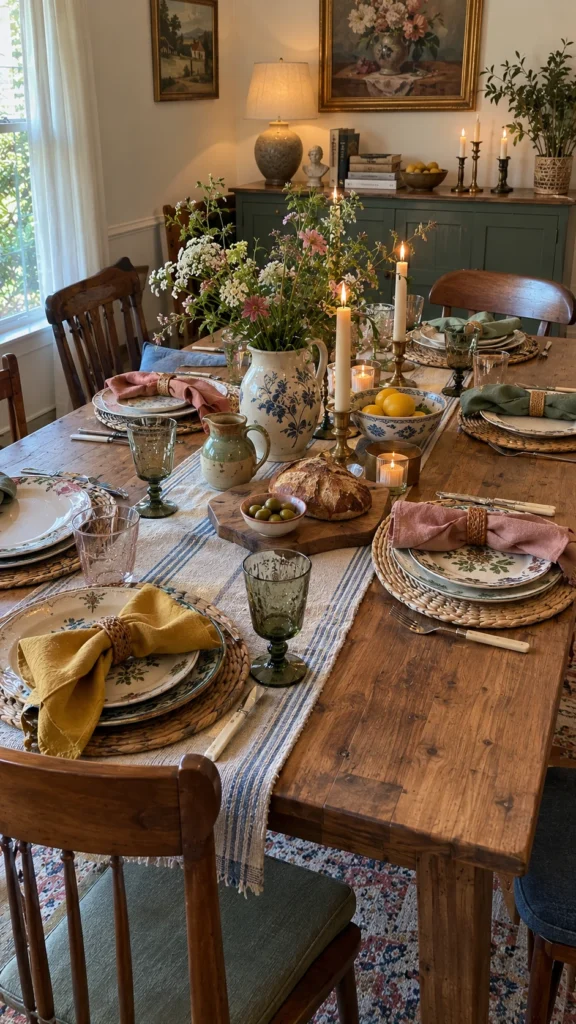
What You’ll Need:
- Vintage or vintage-inspired dishes
- Ceramic pitcher
- Candlesticks
- Textured napkins
- Wooden or metal serving piece
Quick How-To:
Choose one unifying color, then layer different shapes and finishes around it. Keep the center low enough for comfortable conversation.
Styling Tip:
The easiest way to prevent collected pieces from looking random is to repeat one color or material throughout the arrangement.
FAQ SECTION
How much decoration should be on a dining table?
The right amount depends on the table size, but leave enough clear surface for plates, glasses, serving dishes, and comfortable movement. A smaller number of larger, intentional pieces usually looks better than many tiny accessories.
Should a dining table always have a centerpiece?
No. A centerpiece is useful when you want the room to feel finished, but an empty table can be equally attractive. For everyday use, removable centerpieces are especially practical.
What works best on a small dining table?
Choose low-profile, compact decorations such as a small bowl, narrow tray, tiny vase, or short candleholders. Avoid tall or wide arrangements that reduce usable dining space.
How can I make a dining table look expensive?
Focus on proportion and materials rather than buying expensive accessories. Linen textiles, quality-looking ceramics, natural wood, glass, and carefully spaced objects can create a sophisticated result without requiring a large budget.
How often should I change dining table decor?
There is no need to change it constantly. Seasonal branches, different linens, fresh fruit, or a new centerpiece every few months can refresh the room without creating unnecessary work.
RELATED CONTENT
CLOSING
A beautifully decorated dining table does not have to be complicated, expensive, or reserved for special occasions. The best tablescapes are the ones that fit naturally into everyday life while still making the room feel thoughtful and welcoming. Start with one idea that suits your table’s size and your home’s style, then adjust the materials, colors, and centerpiece until it feels like your own.
I hope these ideas give you a practical starting point for creating a dining table you genuinely enjoy using. Try one arrangement, make it your own, and share your results with someone who loves home decor as much as you do.