
12 Oak Tree Aesthetic Ideas for a Charming and Natural Outdoor Space

Oak Tree Aesthetic
The oak tree aesthetic celebrates the quiet beauty of nature through mature trees, sculptural branches, golden autumn leaves, earthy colors, and rustic outdoor spaces. Whether you love woodland gardens, cottage-style landscaping, nature-inspired interiors, or peaceful backyard retreats, oak trees offer endless inspiration throughout the seasons.

Their strong silhouettes create beautiful focal points, while their spreading canopies provide shade and opportunities for thoughtful garden design. You can embrace this aesthetic with a real oak tree, a woodland-inspired seating area, natural wood accents, or botanical decorations inside your home. The most successful designs work with the landscape rather than forcing it into a perfect arrangement. These 12 oak tree aesthetic ideas will help you create an outdoor or indoor space that feels authentic, practical, and connected to nature.
1. A Majestic Oak Tree as the Garden Centerpiece
Description
A mature oak tree can become the defining feature of a garden, providing shade, structure, and year-round visual interest. Its broad canopy creates a natural gathering place, while surrounding plants and simple garden paths help highlight its impressive shape.

What You’ll Need
- A suitable oak tree or established specimen
- Native ground-cover plants
- Natural mulch
- Garden edging, if needed
- A garden hose
Quick How-To
If you’re planting a new oak, choose a species suited to your climate, soil, and available space. Research its mature height and canopy spread before selecting a location, and keep it away from foundations, underground utilities, and other structures where roots or branches could cause problems. Plant at the correct depth, water during establishment, and apply a moderate layer of mulch around the root zone without piling it against the trunk. For an established oak, avoid digging or changing the soil level beneath the canopy, as disturbing roots can damage the tree. Instead, introduce shade-tolerant ground cover only where conditions allow, and preserve the natural shape of the surrounding landscape.
Styling Tip
Keep the area around the trunk relatively open. A simple curved path or a small group of native plants often looks more natural than a dense ring of decorative flowers.
2. A Cozy Seating Area Beneath an Oak Tree
Description
A seating area beneath an oak creates a peaceful outdoor retreat with natural shade and a woodland atmosphere. A simple bench, comfortable cushions, and a small table can transform an unused garden corner into a practical place to read, relax, or enjoy a morning drink.

What You’ll Need
- A weather-resistant bench or outdoor chairs
- A small side table
- Outdoor cushions
- Stable paving or a suitable level surface
- Optional portable lanterns
Quick How-To
Choose a spot beneath or near the canopy where the seating won’t interfere with the trunk or major roots. Avoid excavating deeply or pouring a heavy concrete slab over the root zone. A movable bench or lightweight chairs are often better choices for an established tree. Position the furniture on a stable surface, check that rainwater drains properly, and leave enough room to walk comfortably around the seating. Use weather-resistant fabrics and bring cushions indoors when the weather turns wet. Inspect the tree periodically for dead or hanging branches, especially after storms.
Styling Tip
Choose natural wood, muted green, and warm beige for a relaxed woodland look. Keep accessories simple so the tree remains the main feature.
3. An Oak Tree Woodland Garden
Description
A woodland garden inspired by oak trees uses layered greenery, native plants, leaf textures, and natural pathways to create a landscape that feels established and peaceful. The goal is to complement the tree’s natural environment rather than build a formal garden beneath its canopy.

What You’ll Need
- Shade-tolerant native plants
- Leaf mold or suitable organic mulch
- Natural stepping stones
- A watering can or hose
- Garden gloves and hand tools
Quick How-To
Observe how much sunlight reaches the ground throughout the day before choosing plants. Areas beneath mature oaks may be dry because of root competition, even when they appear shady. Select plants suited to both the light and moisture conditions, and introduce them gradually in small planting pockets to limit root disturbance. Use hand tools rather than heavy digging equipment near the tree’s roots. Keep fallen leaves where practical, especially in quieter garden areas, because they support soil life and wildlife. Water new plants until established, then adjust care according to their needs and local rainfall.
Styling Tip
Combine several shades of green with natural stone and small areas of exposed leaf litter. A woodland garden looks most convincing when it has gentle variation rather than perfectly repeated planting patterns.
4. A Rustic Oak Tree Garden Path
Description
A winding garden path beneath oak branches creates a charming woodland effect and makes the tree feel like part of a larger landscape. Natural stone, gravel, or stepping stones can guide visitors through the garden while preserving a relaxed, organic appearance.

What You’ll Need
- Stepping stones or suitable garden gravel
- Landscape edging, if necessary
- A hand tamper
- Measuring tape
- A garden rake
Quick How-To
Plan the route around existing roots rather than cutting through them. Under a mature oak, avoid deep excavation and heavy compaction, both of which can damage the root system. Place stepping stones where the ground is already relatively stable, or choose a lightweight, permeable path material suitable for the site. Check that the path remains level enough for safe walking and does not collect standing water. If roots cross the proposed route, gently redirect the path instead of cutting or covering them with a thick layer of soil.
Styling Tip
Choose irregularly shaped stones in muted gray, warm brown, or sandy tones. A softly curving route generally feels more natural than a perfectly straight walkway through a woodland-inspired garden.
5. An Oak Tree with a Wildflower Border
Description
A wildflower border around the outer edge of an oak’s growing space adds seasonal color and supports pollinators. Native flowers can create a relaxed meadow-like appearance, contrasting beautifully with the tree’s strong trunk and broad green canopy.

What You’ll Need
- Native wildflower seeds or suitable young plants
- A small hand trowel
- Watering equipment
- Plant labels
- A suitable low-disturbance planting area
Quick How-To
Before planting, identify the tree species and assess the amount of sunlight reaching the proposed border. Many wildflowers need more sun than the ground directly beneath a mature oak receives, so the outer canopy edge or a nearby sunny patch may be more suitable. Choose species that naturally grow in your region and match the soil conditions. Prepare only the planting area needed, avoiding extensive digging among established roots. Water seedlings during dry periods and allow suitable flowers to set seed before cutting them back. Check local guidance before introducing seed mixes, particularly near natural woodland.
Styling Tip
Use a loose mix of white, yellow, purple, and soft pink flowers rather than arranging them in rigid rows. This gives the garden a more natural meadow character.
6. An Oak Tree Autumn Color Display
Description
Autumn highlights the oak tree aesthetic through copper, russet, gold, and deep brown foliage. Rather than covering the garden with seasonal decorations, let the tree’s changing leaves provide the main display, supported by a few natural materials and warm-toned outdoor accessories.
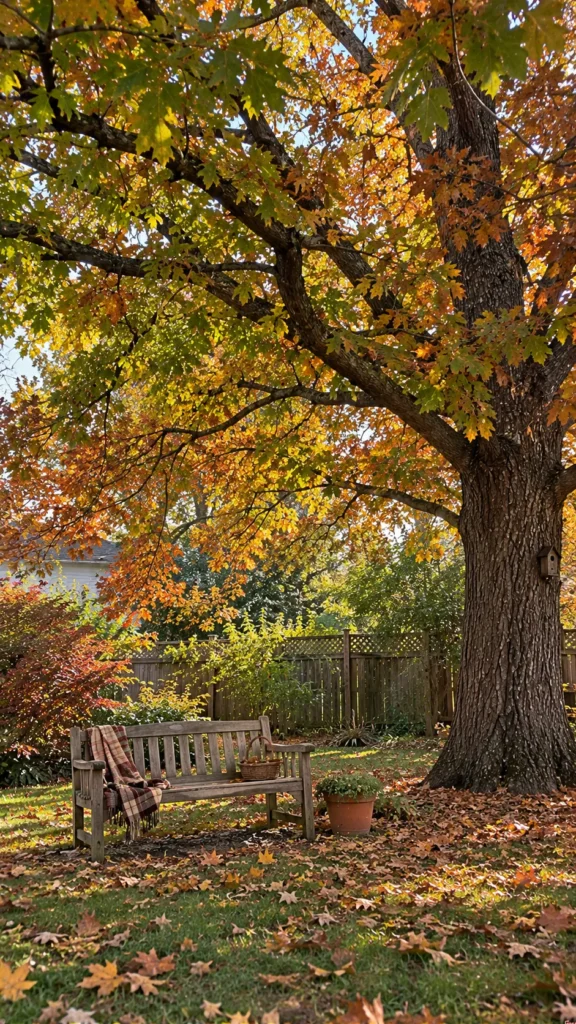
What You’ll Need
- A clear view of the oak canopy
- A simple outdoor bench or chair
- A natural wood basket
- Optional terracotta pots
- A rake for necessary cleanup
Quick How-To
Arrange a bench or a small seating area where the autumn canopy can be appreciated. Add a few terracotta pots with seasonal plants near the seating, keeping them away from the trunk and major roots. Allow fallen leaves to remain in suitable planting beds when practical, but remove thick accumulations from paths and frequently used lawn areas where they may create slippery conditions. Keep drains clear and avoid using heavy machinery beneath the tree. Remember that oak foliage color varies by species, local weather, and growing conditions.
Styling Tip
Use a restrained palette of burnt orange, olive green, warm brown, and cream. Natural seasonal color usually looks more authentic than an abundance of plastic autumn decorations.
7. A Small Oak Tree in a Natural Garden Corner
Description
A young oak can bring woodland character to a smaller garden when the species and location are chosen carefully. Its developing branches provide an opportunity to build a nature-inspired planting scheme that becomes more interesting as the tree grows.

What You’ll Need
- A young oak suited to the site
- Suitable garden soil
- Mulch
- A watering can or hose
- A tree guard or support if appropriate
Quick How-To
Research the oak’s expected mature size before planting; even small saplings can eventually become very large trees. If space is limited, consider whether a naturally smaller species is appropriate, but don’t assume any oak will remain compact. Plant the root flare at the correct level and avoid burying the trunk. Water consistently while the tree establishes, and apply mulch without allowing it to touch the bark. Use a stake only if the tree needs support, and ensure any ties allow natural movement. Keep nearby paving and structures far enough away to accommodate future growth.
Styling Tip
Surround the young tree with a few low-growing native plants, leaving enough open space for maintenance. A simple planting arrangement looks better over time than filling every gap with decorations.
8. An Oak Tree Inspired Outdoor Dining Area
Description
An outdoor dining area near an oak combines the practical comfort of a garden table with the beauty of a natural canopy. Wooden furniture, neutral table linens, and understated greenery create an inviting space for family meals and relaxed gatherings.

What You’ll Need
- A weather-resistant outdoor dining table
- Chairs suited to the available space
- Outdoor tableware
- A neutral table runner
- Portable outdoor lighting
Quick How-To
Position the dining area where guests can enjoy the tree without sitting directly beneath visibly damaged or potentially hazardous branches. Avoid digging foundations or installing heavy paving over important roots. Lightweight furniture can be moved as needed, while permeable surfaces help preserve water and air exchange in the soil. Use outdoor-rated lights and keep cables secured away from walking routes. Before hosting larger gatherings, inspect the tree and arrange a qualified arborist’s assessment if you notice dead limbs, major cracks, or other concerning signs.
Styling Tip
Use natural wood, linen, and simple ceramic tableware. A small vase of seasonal flowers adds color without competing with the oak’s branches.
9. An Oak Tree with a Natural Stone Garden Bench
Description
A stone bench near an oak creates a timeless focal point that feels connected to the surrounding landscape. The combination of weathered stone, textured bark, and green foliage suits traditional gardens, woodland settings, and quiet outdoor corners.

What You’ll Need
- A stable garden bench
- A suitable level surface
- Natural stone or gravel
- A soft outdoor cushion, if desired
- A hand brush for maintenance
Quick How-To
Select a bench that is stable and appropriate for outdoor exposure. Position it away from the trunk and avoid placing heavy foundations over major roots. A small area of existing paving or a carefully prepared permeable surface may be sufficient, depending on the bench’s weight and local conditions. Check the seating position throughout the day to understand the shade and sunlight. Clean the bench periodically and check for movement, moss, or slippery surfaces, particularly in damp weather.
Styling Tip
Choose weathered stone or muted natural finishes rather than highly polished materials. Let the bench age naturally while keeping the surrounding area safe and accessible.
10. Oak Leaves and Acorns as Natural Decor
Description
Oak leaves and acorns bring the woodland aesthetic indoors through small seasonal arrangements. Their natural shapes, earthy colors, and varied textures work well in simple bowls, botanical displays, and rustic table decorations without requiring expensive accessories.

What You’ll Need
- A shallow ceramic or wooden bowl
- Clean, dry fallen acorns
- A few fallen oak leaves
- A small glass vase
- Optional botanical artwork
Quick How-To
Collect fallen leaves and acorns from areas where gathering is permitted, avoiding damaged or moldy materials. Check them for insects and dirt, and allow them to dry completely before bringing them indoors. Arrange a small quantity in a shallow bowl or combine a few leaves with a simple vase. Keep natural materials away from candles, fireplaces, food preparation surfaces, and places where children or pets might swallow them. Replace leaves as they deteriorate, and avoid collecting large quantities from sensitive natural areas.
Styling Tip
Pair oak leaves and acorns with cream ceramics, natural wood, and a muted linen cloth. A small, restrained arrangement often looks more elegant than filling an entire surface.
11. A Woodland-Inspired Oak Tree Balcony
Description
A balcony can capture the oak tree aesthetic through leafy plants, natural textures, and earthy colors, even without enough space to grow a full-sized oak. The result is a compact outdoor retreat that feels connected to woodland landscapes.

What You’ll Need
- Containers suited to the balcony’s weight limits
- Leafy plants appropriate for the light conditions
- A compact outdoor chair
- Natural-fiber or weather-resistant textiles
- A small wooden side table
Quick How-To
Begin by checking the balcony’s weight limits and the amount of sunlight it receives. Choose containers and plants appropriate for the available conditions, and use a small number of larger pots rather than crowding the floor with many tiny ones. If you want an actual oak, research dwarf or naturally compact options carefully and consider long-term root space; most oak trees are unsuitable for permanent balcony growing. Use a mix of foliage shapes, ensure containers drain properly, and secure lightweight items against wind. Keep walkways and drainage outlets clear.
Styling Tip
Combine leafy greens with warm brown planters, a simple wooden chair, and one soft neutral cushion. A few well-chosen pieces create more visual calm than a crowded collection of decorations.
12. A Peaceful Oak Tree Reflection Corner
Description
A peaceful corner near an oak can become a place for quiet reflection, journaling, or simply enjoying the garden. A comfortable seat, a clear view of the branches, and a few understated natural details create a personal retreat that changes beautifully with the seasons.

What You’ll Need
- A weather-resistant chair or bench
- A small side table
- A notebook or book
- A portable cushion
- Optional solar garden light
Quick How-To
Choose a location with a pleasant view of the trunk and canopy, but avoid areas beneath damaged or hanging branches. Place the seat on an existing stable surface or a low-impact permeable area. Add a small table for a notebook or drink, and use a portable cushion that can be stored indoors during wet weather. Keep the surrounding planting low enough to preserve visibility and access. Check the spot in different weather conditions, as shade, wind, and dampness may affect comfort.
Styling Tip
Keep this corner simple. One comfortable seat, a small table, and a clear view of the oak will often create a more restorative atmosphere than lots of decorative objects.
FAQ SECTION
What does the oak tree aesthetic mean?
The oak tree aesthetic celebrates mature trees, woodland landscapes, natural wood, earthy colors, autumn leaves, and peaceful garden spaces. It often overlaps with rustic, cottage, woodland, and nature-inspired design styles.
Which colors work best with the oak tree aesthetic?
Forest green, olive, warm brown, cream, muted gold, rust, and soft gray complement oak trees beautifully. These colors reflect the natural tones of bark, foliage, soil, and seasonal leaves.
How can I create an oak tree aesthetic in a small garden?
Use woodland-inspired plants, natural stone, a simple bench, and a few earthy accessories. If you plan to plant an oak, research its mature size first; a young tree can eventually require far more space than a small garden provides.
Can I plant flowers beneath an oak tree?
Yes, but success depends on shade, soil moisture, and root competition. Choose suitable shade-tolerant or dry-shade plants, plant carefully to minimize root disturbance, and consider planting around the outer canopy where conditions may be less challenging.
Is it safe to build a seating area beneath an oak tree?
It can be, provided the tree is in suitable condition and the seating area doesn’t damage its roots. Avoid placing seating beneath dead or visibly damaged branches, and seek a qualified arborist’s advice if the tree shows concerning signs or the area will receive frequent use.
How do I decorate with oak leaves and acorns indoors?
Use a small bowl, a simple vase, or a restrained seasonal arrangement. Collect natural materials responsibly, dry them thoroughly, and keep them away from flames and areas accessible to small children or pets.
RELATED CONTENT
CLOSING
The oak tree aesthetic is all about appreciating natural beauty and creating spaces that feel calm, welcoming, and connected to the landscape. Whether you have a mature oak in your backyard, a small garden that needs more character, or a balcony inspired by woodland colors, you can bring this look to life with thoughtful choices and simple materials. My favorite approach is to work with the existing environment, protect the tree’s roots, and allow natural textures and seasonal changes to provide most of the decoration. Start with one idea that suits your space, make it your own, and share your results with others who love nature-inspired gardens as much as you do.



One Comment