
12 Front Yard Landscaping Ideas with Rocks to Transform Your Yard

Front Yard Landscaping Ideas with Rocks
Rocks are one of the most versatile materials you can use to create a beautiful, low-maintenance front yard. Whether you want a modern entrance, a natural cottage-style garden, or a neat landscape that stays attractive throughout the year, the right combination of stones, plants, and pathways can make a noticeable difference. Rocks also help define garden beds, improve drainage in suitable areas, and reduce the amount of exposed soil that needs regular attention.

The secret to successful rock landscaping is choosing materials that suit your home, climate, and existing outdoor space. Small river rocks create a softer appearance, gravel works well for pathways and open areas, and larger boulders provide natural focal points. Before buying materials, observe where rainwater flows, how much sunlight your front yard receives, and how much space you need for walking, parking, and maintaining plants. These 12 front yard landscaping ideas with rocks offer practical ways to create an attractive entrance without making your yard unnecessarily difficult or expensive to maintain.
1. A Curved River Rock Garden Border
Description
Create a relaxed, natural-looking front yard by outlining flower beds with smooth river rocks. Curved borders soften straight lawn edges and help colorful plants stand out without overwhelming the entrance. This design works particularly well around established shrubs, ornamental grasses, and small flowering plants.

What You’ll Need
- Smooth river rocks in two complementary sizes
- Garden edging or flexible landscape edging
- Landscape fabric where appropriate
- A shovel, rake, and garden hose
- Suitable shrubs or low-growing flowers
Quick How-To
Mark a gentle curve using a garden hose before digging a shallow trench. Install edging to keep the stones from spreading into the lawn, then prepare the soil and position your plants. Add a consistent layer of river rocks around the planting areas, keeping the stones away from plant crowns and stems. Avoid piling rocks against tree trunks or covering exposed root flares.
Styling Tip
Combine pale gray river rocks with deep-green shrubs and a few bright flowers. Repeating the same rock color around the front yard creates a coordinated appearance without making every garden bed look identical.
2. A Modern Gravel Front Yard
Description
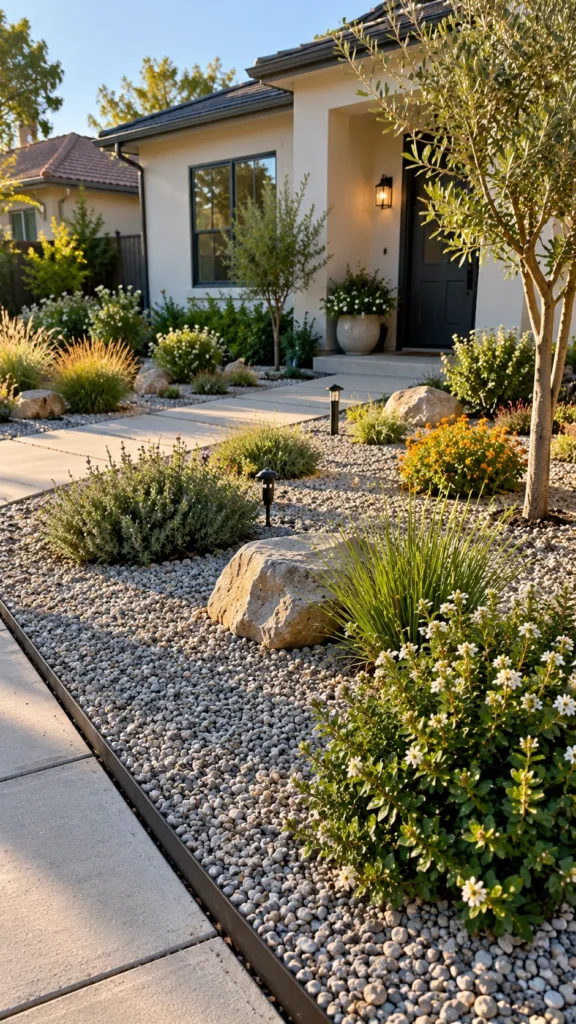
A gravel front yard offers a clean, contemporary look with less lawn to mow. Fine decorative gravel works especially well around architectural plants, simple pathways, and modern homes with neutral exterior colors. The key is preparing a stable base and choosing gravel that remains practical for walking and routine maintenance.
What You’ll Need
- Decorative gravel suitable for landscaping
- Compacted base material where needed
- Permeable landscape fabric if appropriate
- Metal or stone edging
- A rake and shovel
- Drought-tolerant plants suited to your climate
Quick How-To
Remove unwanted vegetation and prepare a level, well-drained surface. Correct any drainage problems before adding gravel, then install edging to define the area. Spread the gravel evenly over the prepared base, following the recommended depth for your material. Place plants in planned openings rather than covering their roots or stems with deep layers of stone.
Styling Tip
Use one main gravel color and repeat it throughout the design. A combination of light gravel, dark planters, and sculptural green plants creates contrast while keeping the overall landscape simple.
3. A Rock Garden with Colorful Succulents
Description
A rock garden filled with succulents adds texture and color to a sunny front yard. Different stone sizes create a miniature natural landscape, while compact succulents provide interesting shapes without requiring constant pruning. This idea works best in climates and locations where the selected plants can tolerate the available sunlight and seasonal temperatures.

What You’ll Need
- Small decorative stones and several larger rocks
- Free-draining soil suited to your chosen plants
- Hardy succulents appropriate for your climate
- A shovel and gardening gloves
- Gravel for finishing the surface
Quick How-To
Choose a sunny location with suitable drainage and remove existing weeds. Arrange the larger rocks first, partially burying them so they appear naturally embedded. Prepare well-draining planting pockets and position succulents according to their mature sizes. Add smaller stones around the plants, leaving space for growth and keeping the plant crowns uncovered.
Styling Tip
Mix upright, rounded, and spreading succulent varieties to create visual depth. Repeat a few plant types instead of using too many different varieties, which can make a small rock garden look cluttered.
4. A Natural Stone Path to the Front Door
Description
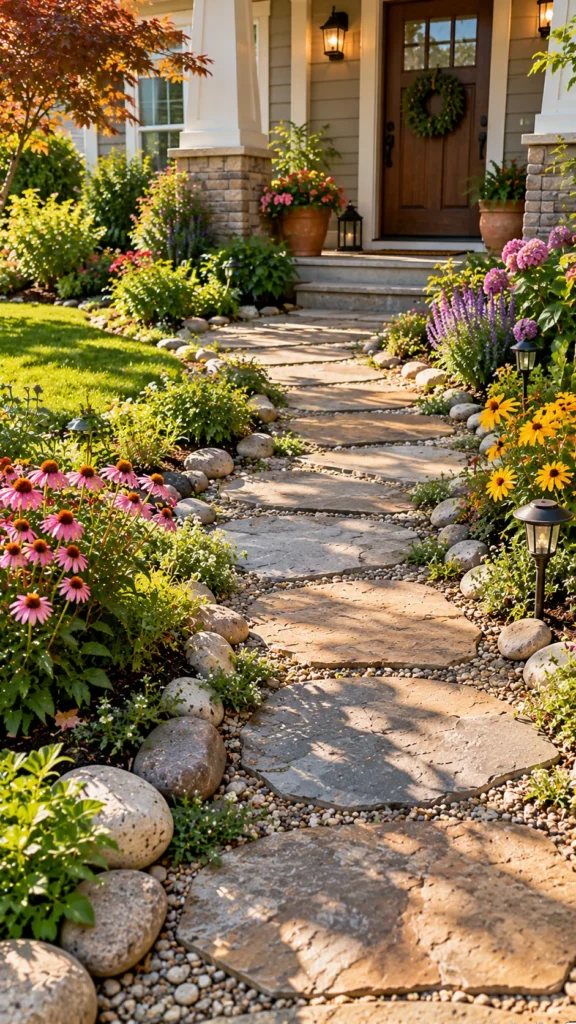
A stone pathway makes a front yard more welcoming while providing a clear route to the entrance. Irregular stepping stones create a relaxed garden style, whereas rectangular slabs produce a more contemporary appearance. The most important consideration is a stable, comfortable walking surface that remains usable during wet weather.
What You’ll Need
- Flat stepping stones or suitable paving slabs
- Crushed stone or another appropriate base material
- Coarse sand where suitable for the installation
- A shovel, level, and rubber mallet
- Low-growing plants or decorative gravel
Quick How-To
Plan the route from the sidewalk or driveway to the entrance, allowing enough width for comfortable walking. Excavate each section and prepare a firm, level base according to the stone type and local conditions. Set the stones securely, checking for rocking edges and uneven heights. Fill the spaces with compacted gravel or suitable ground cover that will not create a slippery surface.
Styling Tip
Border the pathway with small river rocks and compact ornamental grasses. Keep the stones and plants low enough to preserve visibility around steps, entrances, and driveway edges.
5. Large Decorative Boulders with Ornamental Grasses
Description
A few carefully positioned boulders can make a front yard feel established and natural. Their irregular shapes contrast beautifully with the fine leaves of ornamental grasses, creating an attractive landscape even when flowers are not blooming. This approach is particularly useful for filling a broad lawn corner or highlighting an otherwise plain garden bed.

What You’ll Need
- Two or three landscape boulders in complementary colors
- Ornamental grasses suited to your climate
- Compost and soil amendments if needed
- Mulch or small decorative stones
- A shovel and appropriate equipment for safely moving heavy rocks
Quick How-To
Choose the boulder positions before purchasing plants. Partially bury the stones so they appear to emerge naturally from the ground rather than sitting like decorations on top. Plant grasses in small groups around the rocks, allowing room for their mature width. For heavy boulders, arrange professional delivery and safe placement rather than attempting to move them alone.
Styling Tip
Use an odd number of boulders and vary their sizes. Leave some open ground between the stones and plants so the arrangement feels natural rather than crowded.
6. A Rock Border Around the Front Walkway
Description
A narrow rock border can make an existing concrete or paved walkway look more finished without requiring a complete renovation. Small gravel or river stones create a neat transition between the hard surface and surrounding lawn. This is a practical option for homes where the front entrance needs a refresh but the main pathway is still in good condition.

What You’ll Need
- Decorative gravel or small river rocks
- Narrow garden edging
- A shovel and hand rake
- Suitable compact plants, if desired
- Weed-control materials appropriate for the site
Quick How-To
Measure the available space on both sides of the walkway and check that the border will not reduce the usable walking width. Remove weeds, establish a stable edge, and prepare the ground without blocking drainage. Spread the rocks evenly and add a few compact plants at intervals if space permits. Keep the border below the pathway surface to prevent stones from scattering onto the walking area.
Styling Tip
Choose stones that complement the color of the walkway. Warm beige gravel pairs well with cream paving, while charcoal stones create a crisp contrast beside pale concrete.
7. A Dry Creek Bed for a Natural Front Yard
Description
A dry creek bed creates the appearance of a natural stream using rocks, gravel, and carefully selected plants. It can also help guide runoff when designed for the actual direction and volume of water moving across the property. This feature is especially useful in yards with a natural slope, but it must be planned carefully to avoid sending water toward the house or neighboring properties.

What You’ll Need
- Rounded river stones in several sizes
- Larger rocks for the edges
- Gravel and suitable erosion-control materials
- Moisture-tolerant plants where appropriate
- A shovel and rake
Quick How-To
Observe the yard during rainfall to understand how water moves before choosing the creek bed’s route. Shape a shallow, gently curving channel and establish stable edges. Place larger stones along the sides, then add smaller stones through the center to create a natural appearance. If the channel will carry significant runoff, consult a qualified drainage professional before construction.
Styling Tip
Plant ornamental grasses or moisture-tolerant native plants near the edges, keeping the center open. Use several rock sizes rather than one uniform layer to create a more convincing natural creek appearance.
8. A White Rock Garden with Evergreen Shrubs
Description
White or pale decorative stones create a bright contrast against evergreen shrubs and darker garden features. This design suits small front yards because the light surface can make the planting area feel open and defined. However, pale stones can show dirt, fallen leaves, and algae more readily than darker materials, so placement and maintenance matter.

What You’ll Need
- White or pale gray decorative stones
- Compact evergreen shrubs
- Garden edging
- A shovel and rake
- Appropriate soil and planting materials
Quick How-To
Choose a location with good drainage and enough room for shrubs to reach their mature size. Plant the shrubs first, water them thoroughly, and establish clear bed boundaries. Spread the stones in an even layer around the planting pockets without burying stems or root crowns. Avoid placing pale stones where heavy leaf fall or muddy runoff will make maintenance difficult.
Styling Tip
Pair pale stones with deep-green evergreens and a small amount of natural wood or dark edging. Use the white rock selectively rather than covering every garden bed, which can make the yard feel stark.
9. A Layered Rock Garden on a Sloped Front Yard
Description
A sloped front yard can become an attractive feature with layered stones and plants arranged at different heights. Carefully positioned rocks add visual structure while suitable ground-cover plants help protect exposed soil. The design must account for erosion and water movement, since decorative stones alone will not stabilize a steep or actively eroding slope.

What You’ll Need
- Flat landscape stones or suitable retaining stones
- Smaller gravel for finishing
- Ground-cover plants suited to the slope and climate
- Soil and appropriate erosion-control materials
- Professional advice for significant slopes or retaining walls
Quick How-To
Assess the slope and identify where water flows during heavy rain. For a gentle slope, arrange partially buried stones in staggered groups and plant between them. Avoid placing rocks loosely on steep ground where they could move downhill. Steep slopes, unstable soil, or tall retaining structures require proper engineering and drainage rather than a purely decorative solution.
Styling Tip
Repeat the same stone type across several levels and soften the edges with low-growing plants. A consistent palette makes the slope feel connected instead of like several separate garden projects.
10. A Rock Garden Around a Small Ornamental Tree
Description
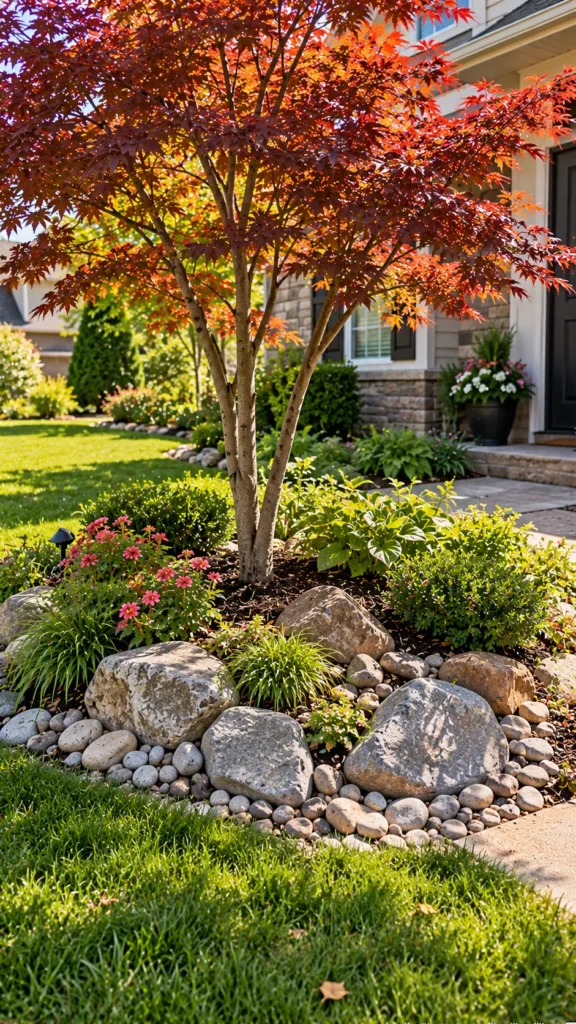
A small ornamental tree surrounded by decorative rocks creates a clear focal point near the front entrance. The combination works well with suitable flowering trees, Japanese maple varieties, or other small trees adapted to the local climate. Proper spacing is essential because tree roots need oxygen, water, and room to expand as the tree matures.
What You’ll Need
- A suitable small ornamental tree
- Decorative river rocks or gravel
- A shovel and garden rake
- Organic mulch for the root zone where appropriate
- Flexible edging if needed
Quick How-To
Select a tree that fits the mature space available and plant it at the correct depth. Create a broad, shallow bed around the tree, keeping the trunk flare visible and uncovered. Place decorative stones toward the outer part of the bed, avoiding deep layers over the main root zone. Where roots require a cooler, organic surface, use mulch near the tree and reserve rocks for the perimeter.
Styling Tip
Use a few medium-sized stones and a simple ring of smaller gravel rather than a tight circle of rock pressed against the trunk. An irregular border looks more natural and leaves room for the tree to grow.
11. A Front Yard Rock Bed with Seasonal Flowers
Description
Combine durable decorative stones with small seasonal flower pockets to create a front yard that changes throughout the year. The rocks provide a consistent structure while flowers add bright colors in spring, summer, or fall. This approach works well for homeowners who enjoy refreshing their gardens but do not want to redesign the entire landscape each season.

What You’ll Need
- Decorative gravel or small river rocks
- Seasonal flowers suited to local conditions
- A few compact evergreen plants
- Garden edging
- Planting soil and hand tools
Quick How-To
Plan the permanent shrubs and stone areas first, then leave accessible planting pockets for seasonal flowers. Prepare the soil in those pockets separately so the plants receive the conditions they need. Arrange the stones around the planting zones and keep enough open space to replace flowers without disturbing the entire bed. Check sunlight and watering needs before mixing different plant varieties.
Styling Tip
Choose a main color palette, such as orange and yellow flowers against gray stones, then repeat the same colors in several small groups. This makes the bed feel coordinated even when the flowers change.
12. A Minimalist Rock Garden with Architectural Plants
Description
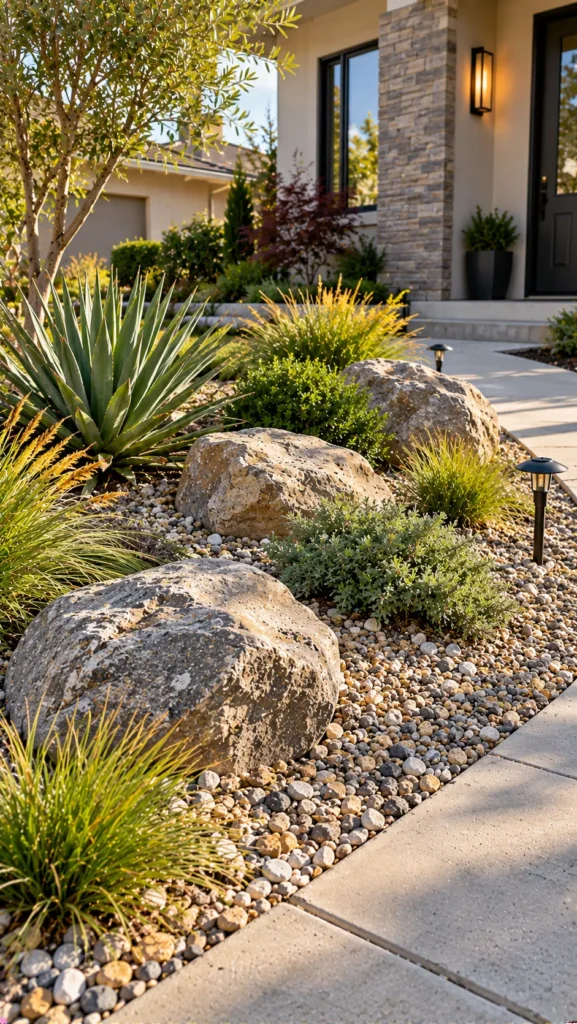
A minimalist rock garden uses a limited selection of stones, clean edges, and plants with distinctive shapes. It suits modern homes where a simple landscape can complement the exterior without competing with it. The design depends on spacing and proportion rather than the number of decorations, so choosing a few suitable plants is more effective than filling every gap.
What You’ll Need
- Two or three larger feature rocks
- Consistent decorative gravel
- Architectural plants suited to the climate
- Metal or stone edging
- A rake and shovel
Quick How-To
Clear the selected area and create a defined bed with clean boundaries. Position the largest rocks first, partially embedding them to give them a natural, stable appearance. Plant a small number of structural plants, leaving room for mature growth, then distribute gravel evenly around them. Keep drainage paths open and choose plants that can tolerate the site’s sunlight, wind, and seasonal temperatures.
Styling Tip
Use one dominant rock color and repeat it in smaller details near the entrance. Leave generous open spaces between the plants and stones to preserve the minimalist look.
FAQ SECTION
Are rocks a good choice for front yard landscaping?
Yes. Rocks can define garden beds, create attractive pathways, reduce exposed soil, and provide long-lasting decorative structure. Their success depends on proper preparation, suitable plant selection, and good drainage. Rocks do not eliminate all maintenance because leaves, weeds, and sediment can still accumulate.
What are the best rocks for front yard landscaping?
River rocks work well for natural-looking borders and decorative beds. Gravel is useful for pathways and larger ground-cover areas, while flat stones suit stepping paths and larger boulders create focal points. Choose materials according to their intended use, local climate, color, and maintenance requirements.
Should I put landscape fabric under decorative rocks?
Landscape fabric can help limit some weeds, but it does not prevent every weed and may become difficult to manage as debris accumulates. It can also interfere with soil improvement and plant establishment in some garden beds. Use it selectively, prepare the ground properly, and avoid treating it as a permanent solution to all weed problems.
How do I prevent rocks from spreading into my lawn?
Install suitable edging along the boundary between the rock bed and the lawn. Keep the stones within the defined area, use a stable base where necessary, and avoid placing loose gravel directly beside frequently used mowing routes. A quick rake after storms can help restore the edges.
Can rocks improve drainage in a front yard?
Rocks can form part of a properly designed drainage feature, but simply covering soil with stones does not automatically improve drainage. Water may still collect beneath the surface or move toward a building. Correct the underlying grading and drainage problem before installing decorative materials, and seek professional help for persistent pooling or significant runoff.
How can I make rock landscaping look natural rather than artificial?
Combine a small number of complementary rock sizes, partially bury larger stones, and repeat selected materials throughout the yard. Add plants with different heights and textures, leave some open space, and avoid perfectly symmetrical arrangements unless you specifically want a formal design.
Are rock gardens completely maintenance-free?
No. They usually require less mowing than a lawn, but occasional weeding, leaf removal, edging, and plant care are still necessary. Choosing suitable plants and preparing the area correctly can make long-term maintenance much easier.
RELATED CONTENT
- Marigold Flower Decoration Home Ideas to Add Color and Charm
- Low-Maintenance Garden Ideas for Busy Homeowners
CLOSING
Creating a beautiful front yard does not require a complicated design or a huge landscaping budget. Sometimes, a few carefully chosen rocks, healthy plants, and a clearly defined pathway are enough to transform the entire entrance. Start with one manageable area, choose materials that complement your home, and pay attention to drainage and plant spacing before adding the finishing touches.
My favorite approach is to combine natural stone textures with greenery and a few seasonal flowers, creating a landscape that feels welcoming without demanding constant attention. Try the idea that best fits your space, adapt it to your own style, and enjoy the process of making your home more inviting. I would love to see which of these front yard landscaping ideas with rocks inspires your next garden project.



One Comment