12 Winter Flowers Garden Ideas for a Charming Seasonal Display

Winter Flowers Garden
A winter garden does not have to look empty, gray, or lifeless when temperatures drop. With the right flowers, containers, and planting combinations, you can create an outdoor space that still offers beautiful colors, interesting textures, and seasonal charm. Some plants bloom during the colder months, while others provide flowers in late winter or bring color to sheltered patios and sunny windowsills. The secret is choosing plants that suit your local climate rather than buying flowers simply because they look attractive at the garden center.
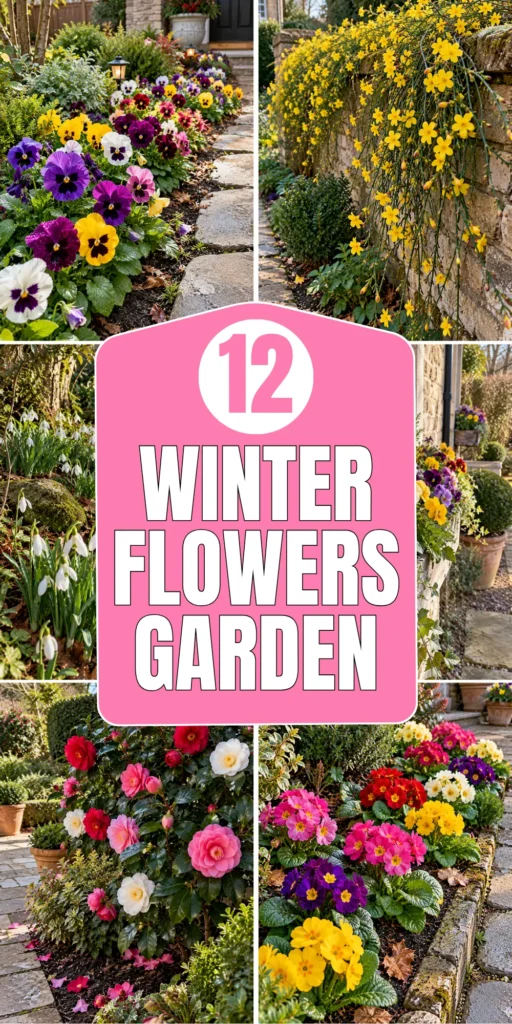
When planning a winter flowers garden, pay attention to sunlight, drainage, frost exposure, and the amount of maintenance you can realistically manage. A sheltered front entrance may support different plants from an exposed garden bed, and a container can dry out or freeze more quickly than the ground. I also recommend combining flowers with evergreen foliage, decorative grasses, and natural materials to keep the garden interesting between blooming periods. These 12 winter flower garden ideas offer practical ways to create colorful borders, welcoming containers, and beautiful outdoor displays while helping your plants thrive through the colder season.
1. A Colorful Winter Pansy Garden Border
Description
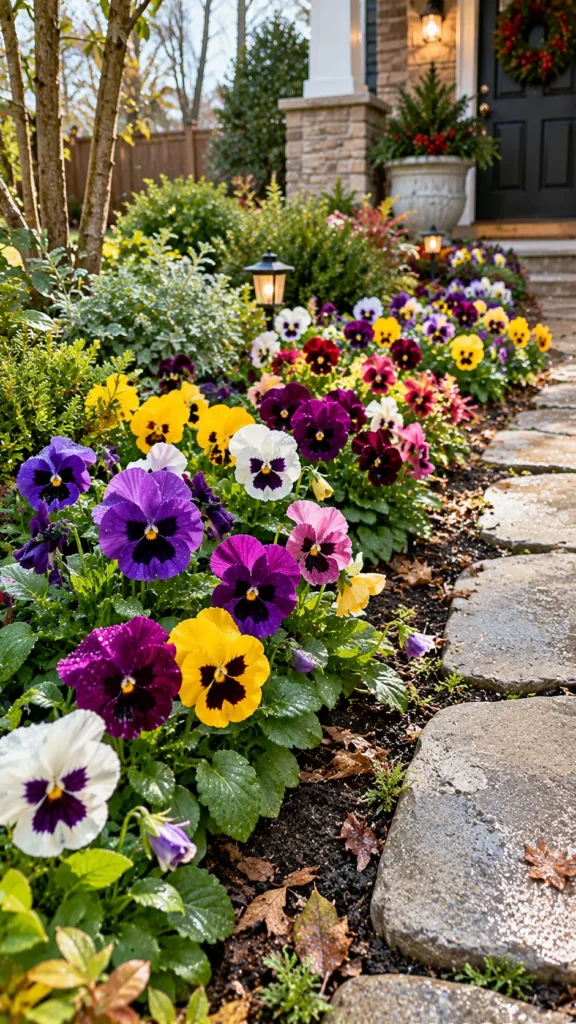
Pansies are excellent choices for adding cheerful color to a winter garden in climates where they tolerate cool temperatures. Their purple, yellow, white, and burgundy blooms brighten pathways and garden borders, especially when planted in small groups rather than scattered individually.
What You’ll Need
- Winter-tolerant pansy seedlings
- Well-drained garden soil
- Compost, if the soil needs improvement
- A hand trowel
- Mulch suitable for your garden bed
Quick How-To
Choose a location with good light and soil that does not remain waterlogged after rain. Space pansies according to their mature size, generally around 6–10 inches apart depending on the variety. Water after planting and check soil moisture regularly. Remove faded flowers to encourage continued blooming, and protect plants during severe cold if your variety requires it.
Styling Tip
Combine purple pansies with white and yellow varieties for a lively border. Plant them in repeating clusters so the colors remain visible from a distance, and avoid placing them in low spots where cold water collects.
2. Elegant Hellebores Beneath Winter Trees
Description
Hellebores, often called Christmas roses or Lenten roses, bring understated beauty to shaded winter gardens. Their nodding flowers may appear in white, pink, burgundy, or greenish tones, while their evergreen foliage provides structure when other plants are dormant.

What You’ll Need
- Hellebore plants suited to your climate
- Moisture-retentive, well-drained soil
- Leaf mold or compost
- A hand trowel
- Gloves for handling plant material
Quick How-To
Plant hellebores in partial shade, such as beneath deciduous trees or along a sheltered garden border. Improve the soil with organic matter if needed, but avoid heavy soil that stays saturated. Water during dry spells while the plants establish, then allow the soil to remain evenly moist rather than constantly wet. Remove damaged foliage when necessary.
Styling Tip
Pair hellebores with ferns, snowdrops, and natural leaf mulch for a woodland-inspired display. Their flowers often face downward, so plant them where you can appreciate them from a slightly lower viewing angle.
3. Winter Heather for a Colorful Rock Garden
Description
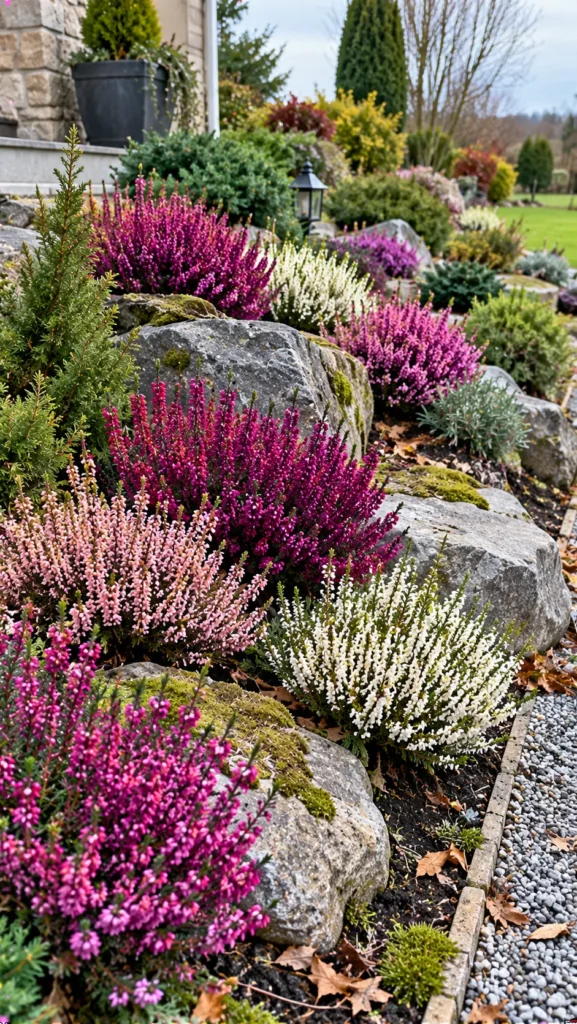
Winter-flowering heather adds small pink, purple, or white blooms to rock gardens and sunny borders when many other plants have stopped flowering. Its low-growing habit makes it useful for covering bare soil and creating texture around stones.
What You’ll Need
- Winter-flowering heather suitable for your region
- Acidic or appropriately prepared soil, depending on the variety
- Gravel or grit to improve drainage
- Decorative rocks
- A hand trowel
Quick How-To
Check the specific heather variety’s soil requirements before planting, as many prefer acidic conditions. Choose a sunny position with excellent drainage, and incorporate suitable soil amendments if needed. Space plants according to their mature spread and water them during establishment. Avoid letting the roots sit in saturated soil during cold weather.
Styling Tip
Plant heather in small groups between rocks rather than as isolated specimens. Combine different bloom shades for subtle color variation, but check that all selected varieties share similar soil and light requirements.
4. Bright Winter Cyclamen in Containers
Description
Cyclamen can bring vibrant pink, red, white, and purple flowers to sheltered patios and entrances during cool weather. Hardy garden cyclamen and florist cyclamen have different growing requirements, so selecting the right type for your climate and location is essential.

What You’ll Need
- Hardy cyclamen for suitable outdoor conditions, or florist cyclamen for a protected display
- Containers with drainage holes
- Appropriate potting mix
- Decorative gravel, if suitable for the species
- A sheltered, bright location
Quick How-To
For outdoor beds, choose hardy species such as Cyclamen coum or Cyclamen hederifolium according to your climate and seasonal timing. Use a well-drained position and avoid burying tubers too deeply. Florist cyclamen usually need more protection from frost and are best placed in a bright, cool sheltered area. Water the soil carefully without leaving the crown or tuber sitting in water.
Styling Tip
Use a simple terracotta or charcoal-colored pot to make the flowers stand out. Remove fading blooms by following the plant’s recommended method, and avoid leaving decorative outer pots filled with excess water.
5. Snowdrops Along a Natural Garden Path
Description
Snowdrops are delicate white winter-to-early-spring flowers that create a natural woodland look along paths, beneath deciduous trees, or around shaded garden edges. Their small blooms are most effective when planted in loose groups that gradually spread over time.

What You’ll Need
- Snowdrop bulbs or established plants
- Moist, well-drained soil rich in organic matter
- A bulb planter or hand trowel
- Leaf mold or compost
- Natural mulch, if needed
Quick How-To
Plant bulbs at the depth recommended for the species and supplier, usually several inches below the surface. Choose a position with moisture during the growing season but avoid persistently waterlogged soil. Established clumps can be divided after flowering while the leaves are still green, often called planting them “in the green.” Allow the foliage to die back naturally so the bulbs can replenish their energy.
Styling Tip
Plant snowdrops in irregular drifts rather than straight rows. Their delicate flowers look particularly lovely beside a natural stone path, fallen leaves, and low-growing evergreen ground cover.
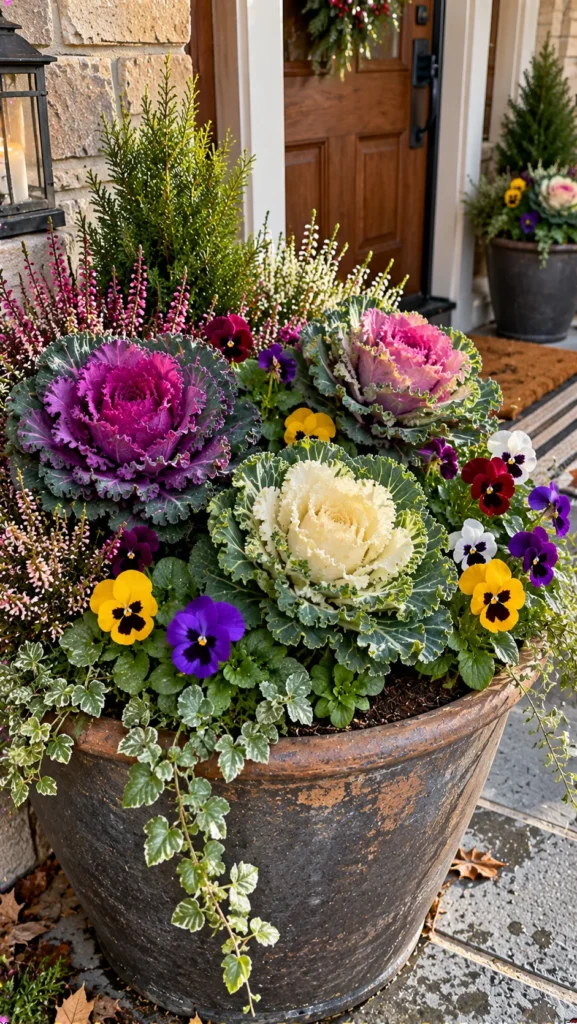
6. Ornamental Kale and Winter Pansies in a Mixed Planter
Description
Combine winter pansies with ornamental kale for a container that offers both flowers and sculptural foliage. The kale’s purple, cream, or green centers provide structure, while pansies add smaller, brighter blooms around the edges.
What You’ll Need
- Ornamental kale or cabbage plants
- Winter-tolerant pansies
- A wide container with drainage holes
- Quality outdoor potting mix
- Optional small evergreen accents
Quick How-To
Choose a container large enough to accommodate the plants without crowding them. Fill it with fresh potting mix and position ornamental kale toward the center or back, depending on the container’s viewing angle. Add pansies around the edges, leaving room for growth and airflow. Water thoroughly after planting, then check moisture regularly because containers can dry out even in cold weather.
Styling Tip
Use one or two ornamental kale plants as the focal point and repeat the same pansy colors around the container. Avoid filling every gap with extra plants, as overcrowding can reduce airflow and make maintenance harder.
7. Winter Jasmine Against a Garden Wall
Description
Winter jasmine produces bright yellow flowers on long, arching green stems, often before its leaves appear. It is a useful choice for adding color to a wall, fence, or sloping garden area, especially where a low-maintenance flowering shrub is needed.

What You’ll Need
- Winter jasmine, commonly Jasminum nudiflorum
- Well-drained garden soil
- A sturdy support or wall, if training the plant
- Garden ties
- Pruning shears
Quick How-To
Plant winter jasmine in sun or partial shade in soil that drains reasonably well. Water while it establishes, then during prolonged dry periods. Guide selected stems along a support using soft ties if you want a more controlled display. After flowering, prune as needed to manage its arching growth and remove old or tangled stems.
Styling Tip
Let some branches cascade naturally over a low wall, or train them across a simple trellis. Give the plant enough room to spread, and avoid planting it where its stems will obstruct narrow paths.
8. Winter Flowering Violas in Window Boxes
Description
Violas bring compact, colorful blooms to window boxes and small balconies during cool weather. Their smaller flowers and neat growth make them especially useful for creating cheerful displays in limited spaces, with shades ranging from deep violet to yellow and cream.

What You’ll Need
- Cool-season violas
- Window boxes with drainage holes
- Outdoor potting mix
- Secure brackets suitable for the box’s full weight
- A small watering can
Quick How-To
Secure the window box properly before filling it, remembering that wet soil becomes heavy. Add potting mix and space violas according to their expected growth. Water after planting and check the box regularly, as exposed containers can dry out quickly during windy weather. Remove faded flowers and damaged leaves to maintain a tidy display.
Styling Tip
Combine two or three complementary colors and repeat them along the window box. Purple and yellow create a lively contrast, while white and lavender produce a softer look. Keep plants below window openings and away from drainage outlets.
9. Fragrant Winter Daphne Near the Entrance
Description
Winter daphne is valued for its intensely fragrant flowers, which can perfume a sheltered garden corner in late winter or early spring, depending on the variety and climate. Its glossy foliage and compact shape make it an elegant feature near an entrance or seating area.

What You’ll Need
- A suitable Daphne variety
- Well-drained soil with appropriate organic matter
- A sheltered planting location
- Mulch, used lightly
- Gardening gloves
Quick How-To
Choose the location carefully because daphne generally dislikes being transplanted once established. Plant it in well-drained soil and avoid disturbing the root ball. Water during dry periods, but do not keep the roots constantly wet. Prune minimally, removing only damaged or unwanted growth unless your variety has specific pruning needs.
Styling Tip
Plant daphne where its fragrance can be enjoyed from a doorway or garden seat, but allow enough room for the shrub to grow naturally. Daphne plants are toxic if ingested, so avoid placing them where children or pets might chew the leaves or berries.
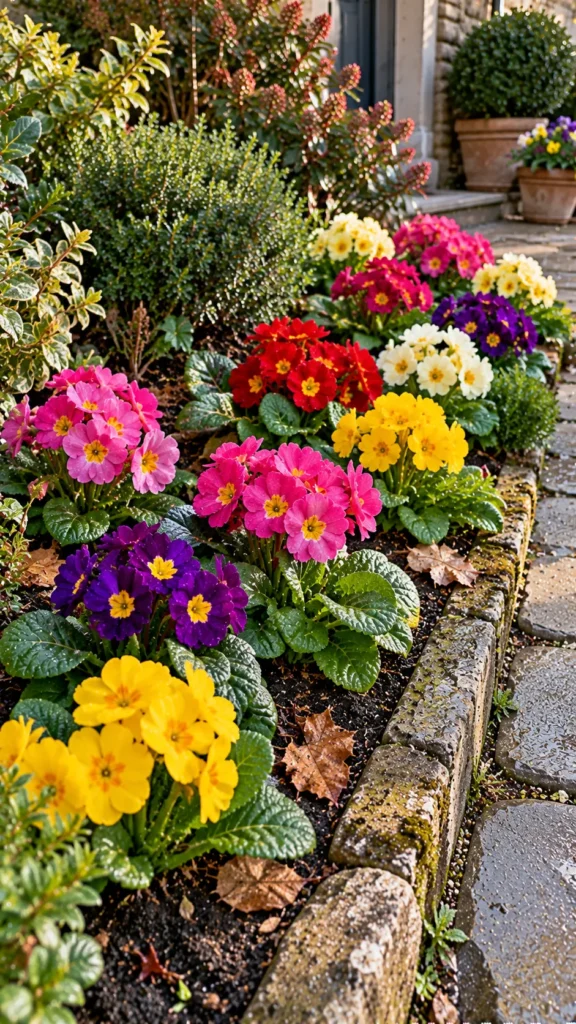
10. Primroses for a Bright Winter-to-Spring Border
Description
Primroses provide cheerful clusters of yellow, pink, purple, red, and white flowers in cool conditions. They are especially useful in sheltered borders and containers, where their compact growth adds color while larger shrubs and evergreens provide structure.
What You’ll Need
- Primrose plants suited to your climate
- Moist, well-drained soil
- Compost, if needed
- A hand trowel
- Mulch suitable for the planting area
Quick How-To
Choose a location with bright light or partial shade, depending on the variety and local climate. Prepare the soil so it retains some moisture without becoming waterlogged. Plant at the same depth as the nursery pot, water thoroughly, and check regularly during dry weather. Remove fading flowers and damaged foliage to keep the display looking fresh.
Styling Tip
Plant primroses in groups of three or more for stronger visual impact. Mix a few complementary colors rather than every available shade, and pair them with evergreen foliage to maintain interest between flowering periods.
11. Winter Flowering Camellias in a Sheltered Garden Corner
Description
Winter-flowering camellias bring elegant rose-like blooms in shades of pink, red, and white to suitable mild-climate gardens. Their glossy evergreen leaves provide year-round structure, making them valuable shrubs for a sheltered border or large container.

What You’ll Need
- A camellia variety suited to your climate and flowering season
- Acidic, well-drained soil or ericaceous potting mix
- A sheltered location with filtered light
- Mulch
- A large container with drainage, if needed
Quick How-To
Check the variety’s mature size and cold tolerance before planting. Camellias generally prefer acidic soil and protection from harsh winds and early morning sun on frozen flowers. Water consistently while the plant establishes, and use rainwater where possible if your tap water is very alkaline. Avoid planting too deeply, and mulch lightly without piling material against the stem.
Styling Tip
Place a camellia where its blooms can be seen from a window or patio. Pair it with simple evergreen shrubs and a restrained ground cover so the flowers remain the focal point.
12. A Mixed Winter Flower Garden with Bulbs and Evergreen Foliage
Description
Combine winter-flowering bulbs, cool-season annuals, and evergreen foliage to create a garden that changes naturally throughout the colder months. Snowdrops, suitable crocuses, hellebores, and pansies can provide different flower shapes and colors when their seasonal requirements are matched.

What You’ll Need
- Flowering bulbs suited to your climate
- Hellebores or other suitable perennial flowers
- Pansies or violas for seasonal color
- Evergreen plants
- Well-drained soil and appropriate mulch
Quick How-To
Plan the garden in layers, placing taller evergreen plants toward the back and smaller flowers near the front. Plant bulbs at the recommended depth and season, then add established perennials and seasonal annuals where appropriate. Check that the selected plants have compatible light, soil, and moisture needs. Water new plants thoroughly and monitor them during dry spells or periods of unusual cold.
Styling Tip
Choose a limited color palette, such as white, purple, and green, or yellow, burgundy, and silver. Combine different flower shapes and leaf textures to keep the garden interesting even when one plant is not in bloom.
FAQ SECTION
Which flowers bloom in winter?
Winter-flowering options depend on your climate, but may include pansies, violas, hellebores, winter heather, snowdrops, cyclamen, winter jasmine, and some camellia varieties. Always check the specific variety and its flowering season for your growing region.
How do I protect winter flowers from frost?
Choose varieties suited to your local hardiness zone, water appropriately, and use a light layer of suitable mulch around established garden plants. Move vulnerable containers to sheltered areas and use horticultural fleece when needed. Avoid covering plants with plastic that traps moisture against the foliage.
Can I grow winter flowers in pots?
Yes. Pansies, violas, hardy cyclamen, and ornamental kale can grow well in suitable containers. Use pots with drainage holes, outdoor potting mix, and containers large enough to buffer changes in temperature and moisture. Check pots more frequently during windy or unusually dry weather.
How often should I water a winter flower garden?
Watering depends on rainfall, soil type, temperature, and whether plants are growing in the ground or containers. Check the soil before watering rather than following a fixed schedule. Water when the root zone needs moisture, and avoid leaving plants in saturated soil.
Do winter flowers need fertilizer?
Not all winter flowers need regular feeding. Use a suitable fertilizer only when the plant or soil requires it, and follow the product label. Avoid excessive feeding during cold periods when growth is slow, and consider a soil test if plants repeatedly struggle.
How can I keep my winter garden colorful when flowers are not blooming?
Combine flowering plants with evergreen shrubs, ornamental grasses, colorful stems, seed heads, and attractive foliage. Containers, natural stone, and well-placed garden ornaments can also add structure without relying on flowers alone.
RELATED CONTENT
- Outdoor Christmas Decor Ideas on a Budget That Look Amazing
- Best Flowers for Colorful Garden Borders
CLOSING
A winter flowers garden can be every bit as inviting as a summer garden when you choose plants suited to your climate and give them the right growing conditions. Whether you love the bright faces of pansies, the delicate beauty of snowdrops, the fragrance of winter daphne, or the sculptural foliage of ornamental kale, even a small planting can bring life to the colder months.
Start with one border, a window box, or a pair of containers near your front door. Observe how much sunlight the area receives, check the soil before watering, and choose flowers that naturally thrive in your conditions. Over time, you will learn which combinations perform best and which plants bring you the most enjoyment.
I hope these winter flower garden ideas inspire you to create a colorful outdoor space of your own. Try a combination that suits your garden, experiment with different textures and shades, and share your results with fellow garden lovers. A little thoughtful planting can make the winter season feel much brighter.