
12 Room Makeover Bedroom Small Spaces Ideas for a Cozy Home

Room Makeover Bedroom Small Spaces
Small bedrooms can feel surprisingly spacious when every piece of furniture has a purpose and the layout is planned around how you actually use the room. The key is not simply choosing smaller furniture, but combining smart storage, flexible pieces, lighter visual elements, and practical decorating tricks.
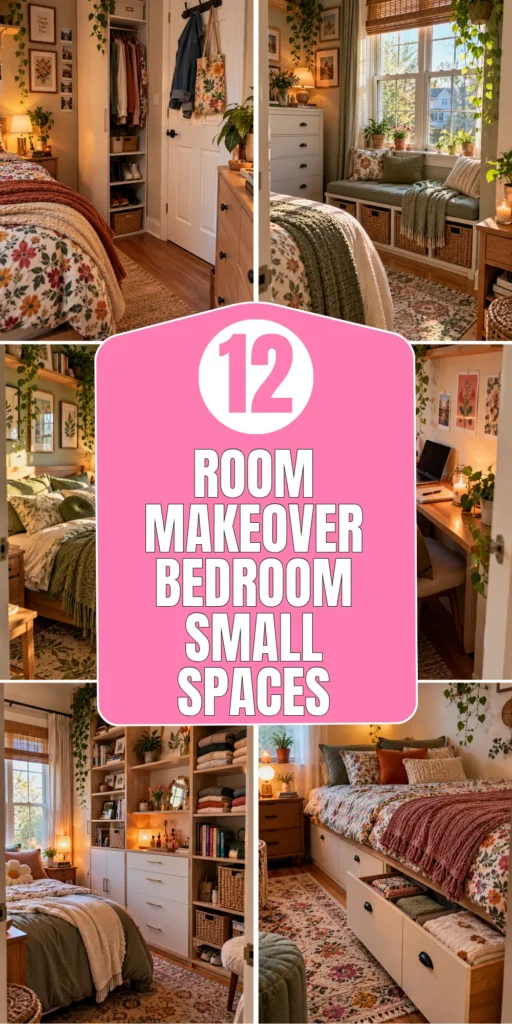
These ideas focus on realistic makeovers that can work in compact bedrooms without making the space feel crowded or unfinished.
1. Wall-Mounted Nightstand for Extra Floor Space
Description
A wall-mounted nightstand is one of the easiest ways to make a small bedroom feel more open. Instead of placing a bulky table beside the bed, a simple floating shelf keeps essentials within reach while leaving the floor visible. Install it at a comfortable height and avoid making it too deep, especially beside a narrow walkway.
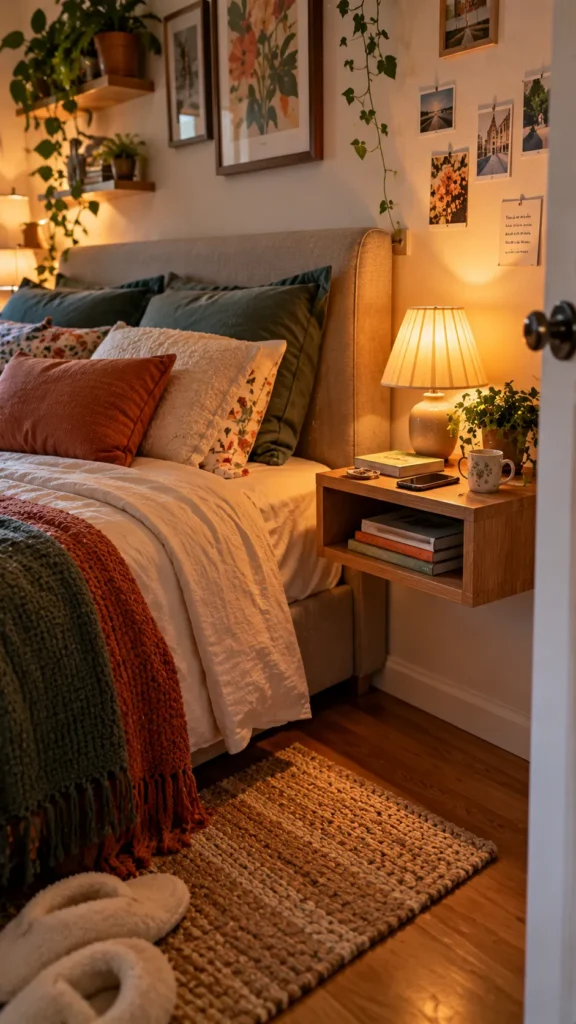
What You’ll Need
- Floating shelf
- Wall anchors and screws
- Drill
- Level
- Small lamp
- Decorative tray or basket
Quick How-To
Measure the available wall space beside the bed and mark the shelf position. Install it securely using appropriate wall anchors, then add only the essentials such as a lamp, phone charger, book, and small tray.
Styling Tip
Choose a shelf that matches the bed frame or wall color to create a cleaner, less visually busy look.
2. Floor-to-Ceiling Storage Wall
Description
When floor space is limited, use the full height of the bedroom. A floor-to-ceiling storage wall can combine open shelves, closed cabinets, and clothing storage without spreading furniture across the room. The biggest mistake is filling every shelf, so leave some breathing room to keep the bedroom visually calm.
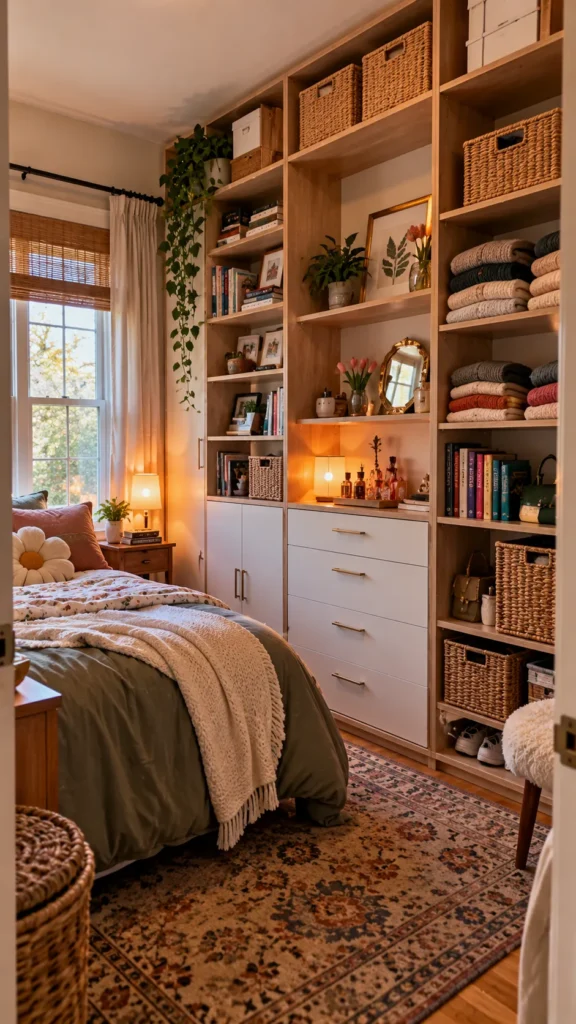
What You’ll Need
- Tall shelving unit
- Storage boxes
- Baskets
- Small organizers
- Wall brackets
- Measuring tape
Quick How-To
Measure the entire wall before buying storage. Place frequently used items between waist and eye level, while seasonal belongings can go into labeled containers on the upper shelves.
Styling Tip
Use matching baskets or boxes on the upper shelves to make the storage look intentional rather than cluttered.
3. Bed With Storage Drawers
Description
A storage bed can solve one of the most common small-bedroom problems: where to put bulky items. Drawers underneath the mattress are particularly useful for extra bedding, sweaters, shoes, or seasonal clothing. Choose drawers that pull out easily and leave enough clearance around the bed for comfortable access.

What You’ll Need
- Storage bed frame
- Under-bed organizers
- Fabric storage bags
- Drawer dividers
- Labels
Quick How-To
Sort belongings before placing them underneath the bed. Keep frequently used items toward the front and store seasonal pieces farther back so you do not need to empty everything whenever you need one item.
Styling Tip
Use matching fabric organizers inside the drawers to prevent loose belongings from becoming difficult to manage.
4. Narrow Desk Behind the Bed
Description
A narrow desk can turn an unused wall behind the bed into a practical work or study zone. This works especially well when the bedroom does not have enough space for a traditional desk. Keep the depth modest and use vertical storage above it so the workspace remains functional without overwhelming the room.
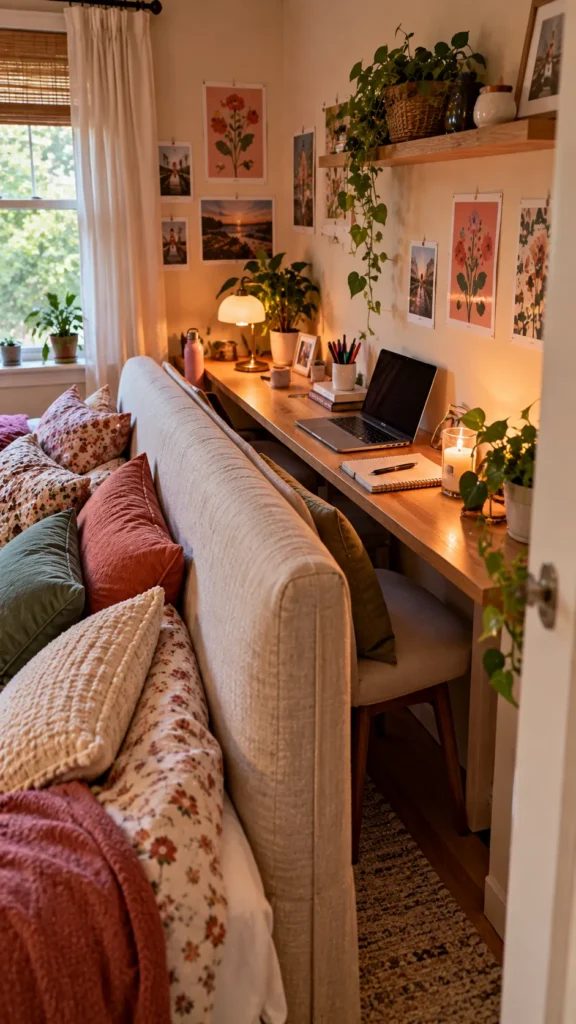
What You’ll Need
- Narrow desk
- Compact chair
- Wall shelf
- Desk lamp
- Cable organizer
- Small storage box
Quick How-To
Position the desk against the wall behind or beside the bed, depending on the layout. Mount a shelf above it for notebooks and supplies, then route cables along the wall to keep the desktop clear.
Styling Tip
Choose a chair that can slide completely underneath the desk when not in use to preserve walking space.
5. Large Mirror Opposite the Window
Description
A strategically positioned mirror can make a compact bedroom appear brighter and deeper. Instead of using several small mirrors, try one larger piece placed where it can reflect daylight or an attractive part of the room. Avoid positioning it directly toward a messy storage area, because it will visually multiply the clutter.
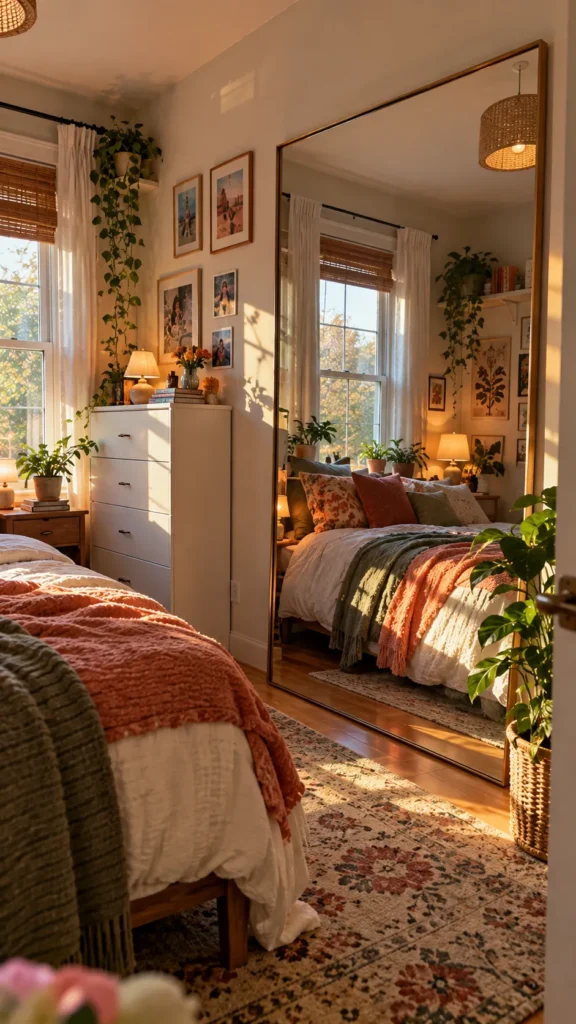
What You’ll Need
- Large wall mirror
- Wall anchors
- Measuring tape
- Level
- Soft cleaning cloth
Quick How-To
Identify the direction of natural light and choose a wall where the mirror can reflect it into darker areas. Secure the mirror properly and leave enough surrounding space so it does not look squeezed between furniture.
Styling Tip
A thin-frame mirror usually works better than a very heavy decorative frame in a tiny bedroom.
6. Corner Reading Nook With a Compact Chair
Description
An unused bedroom corner can become a comfortable reading nook without requiring much furniture. A compact chair, small wall light, and narrow side table are usually enough. The important part is maintaining a clear path around the nook so the new seating area does not make the bedroom feel cramped.
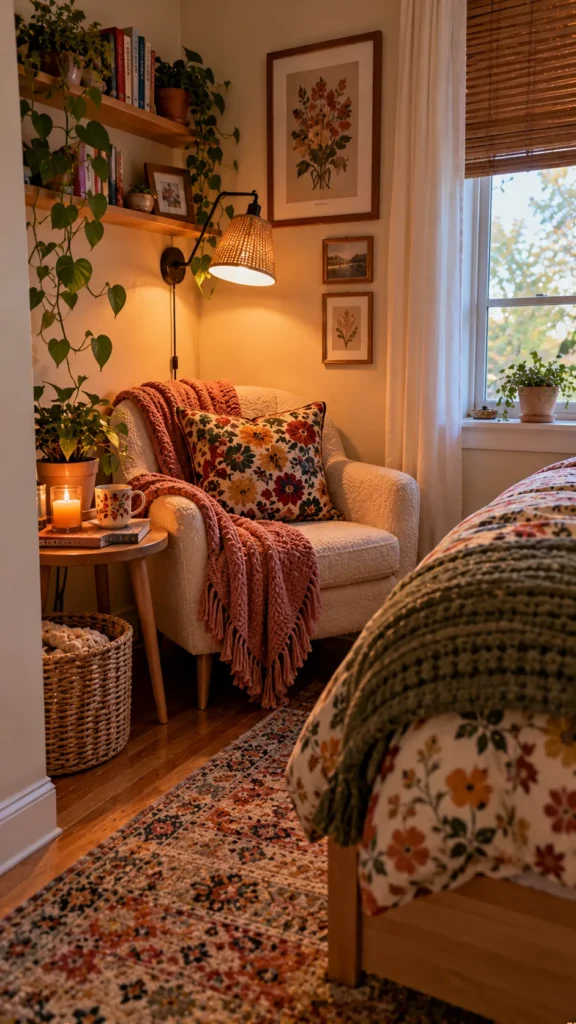
What You’ll Need
- Compact accent chair
- Small side table
- Wall-mounted lamp
- Cushion
- Small throw
- Floor basket
Quick How-To
Choose the least-used corner and measure the available footprint. Add the chair first, then position the table and lighting so everything remains easy to reach without blocking drawers or doors.
Styling Tip
Use one colorful cushion or textured throw to make the corner feel finished without adding too many decorative objects.
7. Floating Shelves Above the Headboard
Description
The wall above the headboard is valuable storage space that is often ignored. Floating shelves can hold books, small plants, framed artwork, or everyday accessories without taking up floor area. Keep heavier objects securely anchored and avoid placing anything that could easily fall directly above where you sleep.
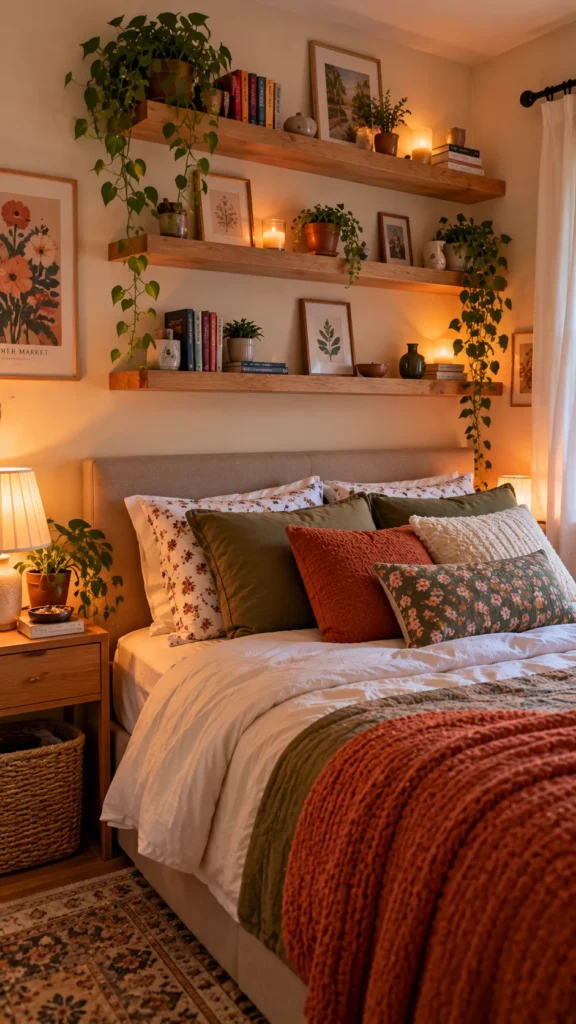
What You’ll Need
- Floating shelves
- Wall anchors
- Drill
- Level
- Books
- Small decorative objects
Quick How-To
Mark shelf positions carefully so they remain balanced above the headboard. Install strong anchors appropriate for your wall type, then arrange objects with larger pieces toward the center and lighter items around them.
Styling Tip
Leave sections of the shelves empty. Negative space keeps the arrangement from looking like an overcrowded storage rack.
8. One-Color Bedroom Makeover
Description
Using one dominant color throughout a small bedroom can make separate elements feel more connected. This does not mean everything needs to match exactly. Instead, repeat related shades across the walls, bedding, curtains, and accessories to reduce visual interruptions and create a more cohesive room.
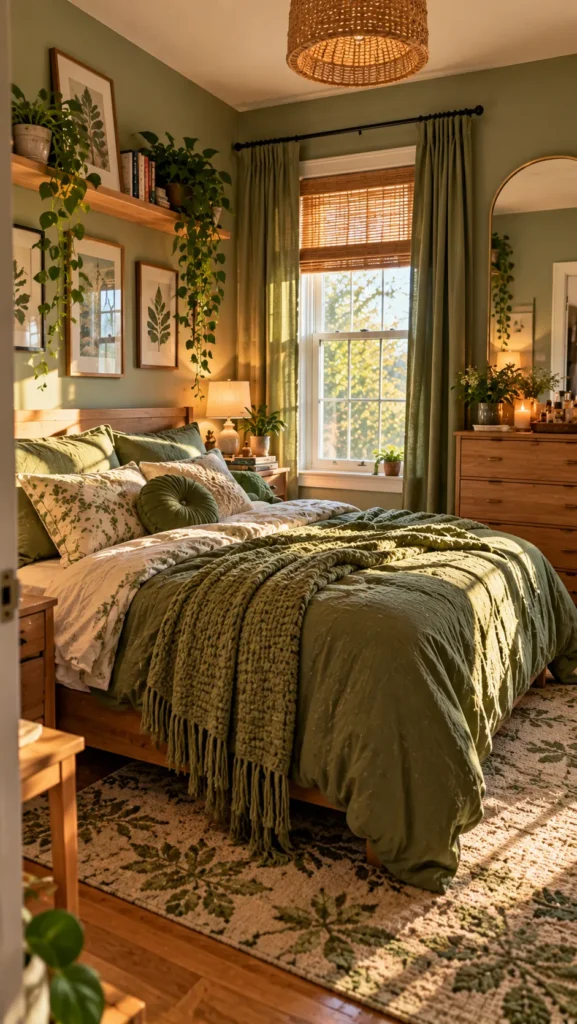
What You’ll Need
- Wall paint
- Bedding
- Curtains
- Cushion covers
- Small accessories
- Neutral rug
Quick How-To
Choose one main color and two supporting neutral shades. Use the main color on one major surface and repeat it subtly through textiles and accessories rather than covering every item in the same shade.
Styling Tip
Keep larger furniture pieces neutral if you want the room to feel flexible and avoid repainting everything during future updates.
9. Slim Wardrobe Beside the Door
Description
A slim wardrobe can provide much-needed clothing storage without consuming the entire bedroom. The area near the door is often overlooked because it is treated as a passageway, but a shallow wardrobe can fit there when carefully measured. Choose sliding or compact doors if traditional doors interfere with circulation.

What You’ll Need
- Slim wardrobe
- Slim hangers
- Drawer organizers
- Shoe boxes
- Storage baskets
- Measuring tape
Quick How-To
Measure both the wall width and the door swing before choosing the wardrobe. Organize everyday clothing at easy-to-reach heights and use upper compartments for less frequently worn pieces.
Styling Tip
Choose a wardrobe with a simple finish close to the wall color so it blends into the background instead of dominating the room.
10. Wall-Mounted Bedside Lighting
Description
Replacing table lamps with wall-mounted lighting instantly frees up valuable bedside space. This is particularly useful when the nightstand is only large enough for a few essentials. Adjustable sconces are practical because they provide focused reading light while keeping the bedside surface uncluttered.

What You’ll Need
- Wall-mounted sconces
- Appropriate mounting hardware
- Light bulbs
- Cable management clips
- Small bedside shelf
Quick How-To
Mark the ideal reading height while sitting in bed before drilling. If hardwiring is not practical, choose a plug-in wall sconce and conceal the cable neatly along the wall.
Styling Tip
Use warm white bulbs to make the bedroom feel softer and more relaxing in the evening.
11. Under-Window Storage Bench
Description
The space beneath a bedroom window can become useful storage instead of remaining empty. A slim storage bench provides a place to sit while also hiding blankets, pillows, or seasonal items. Keep the bench low enough to avoid blocking the window and choose a depth that does not interfere with curtains.

What You’ll Need
- Slim storage bench
- Storage baskets
- Seat cushion
- Small pillows
- Measuring tape
Quick How-To
Measure the window width and available floor depth. Choose a bench that fits comfortably underneath and use the interior storage for bulky items that are needed occasionally rather than daily.
Styling Tip
Add a fitted cushion in a washable fabric so the bench feels like part of the bedroom rather than a separate storage container.
12. Light Layers and Minimal Furniture
Description
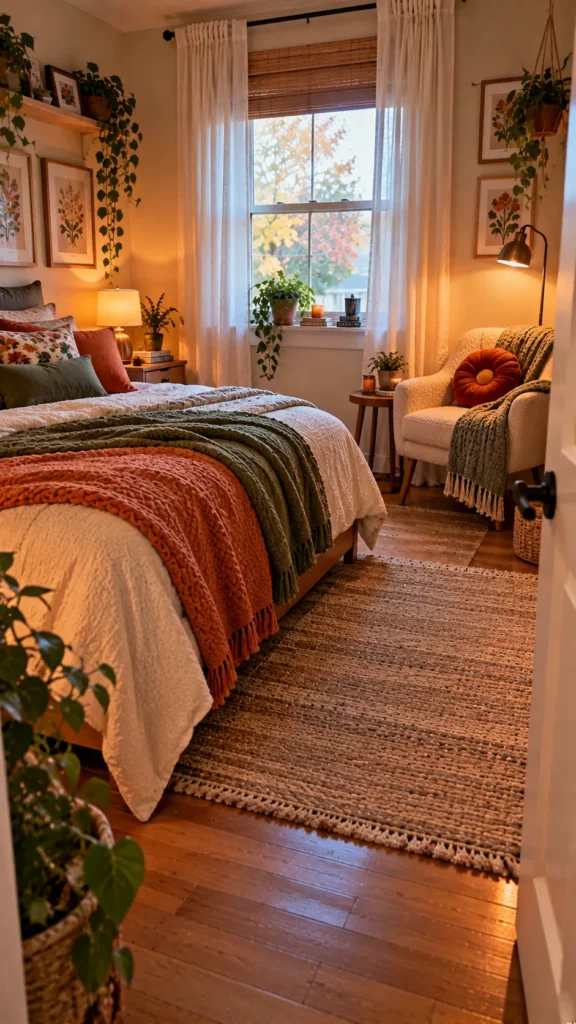
Sometimes the best small-bedroom makeover is removing furniture rather than adding more. Keep the bed, essential storage, and one useful accent piece while using layered lighting and textiles to create personality. This approach works particularly well in rooms where furniture placement already feels tight.
What You’ll Need
- Simple bedding
- Lightweight curtains
- Floor or wall lamp
- Small rug
- One accent chair or bench
- Decorative cushion
Quick How-To
Remove everything that is rarely used and test the room with only essential furniture. Then add lighting, textiles, and one or two decorative pieces until the room feels comfortable without becoming crowded.
Styling Tip
Keep the floor as visible as possible. Open floor space creates a stronger sense of roominess than adding another decorative piece.
FAQ SECTION
How can I make a small bedroom look bigger?
Use furniture with a compact footprint, keep walking paths clear, use vertical storage, and avoid filling every wall or surface. A large mirror and lighter visual layers can also help the room feel more open.
What furniture should I remove from a small bedroom?
Start with pieces that have little practical value, such as oversized accent tables, unused chairs, bulky shelving, or decorative cabinets. Every large item should provide either storage, comfort, or a necessary function.
What colors work best in a small bedroom?
Light neutrals, soft earthy shades, muted pastels, and gentle warm colors can work well. However, darker colors can also look beautiful when used intentionally, especially on one feature wall with adequate lighting.
How do I add storage without making the room feel crowded?
Prioritize vertical storage and hidden storage. Floating shelves, tall wardrobes, under-bed drawers, and storage benches use space efficiently without spreading furniture across the floor.
Should I use a large mirror in a small bedroom?
Yes, when positioned thoughtfully. Place it where it can reflect natural light or an attractive part of the room. Avoid reflecting clutter because the mirror will make the visual mess feel larger.
How much furniture should a small bedroom have?
There is no exact number, but every major piece should serve a clear purpose. A bed, essential clothing storage, compact bedside surface, and one additional functional piece may be enough for many small bedrooms.
RELATED CONTENT
CLOSING
A small bedroom does not need a major budget or a complete renovation to feel completely different. The most successful makeovers usually come from making better use of the space you already have, choosing furniture carefully, and removing anything that makes the room harder to use.
Start with one problem area, such as limited storage, an awkward corner, or a crowded bedside space, and improve it before changing everything else. Even a simple floating shelf, better lighting arrangement, or storage bed can make a noticeable difference.
I hope these ideas help you create a bedroom that feels more comfortable, organized, and personal without sacrificing valuable space. Try the idea that fits your room best, make it your own, and enjoy seeing how much potential a small bedroom can really have.



One Comment