
12 Easy Closet Organization Ideas for a Small Walk-In Closet

Closet Organization Ideas for a Small Walk-In
A small walk-in closet can be surprisingly functional when every inch is planned around how you actually use the space. The biggest mistake is trying to fit too many storage products into a limited footprint. Instead, focus on vertical space, corners, adjustable shelving, and easy access to the things you use most often.
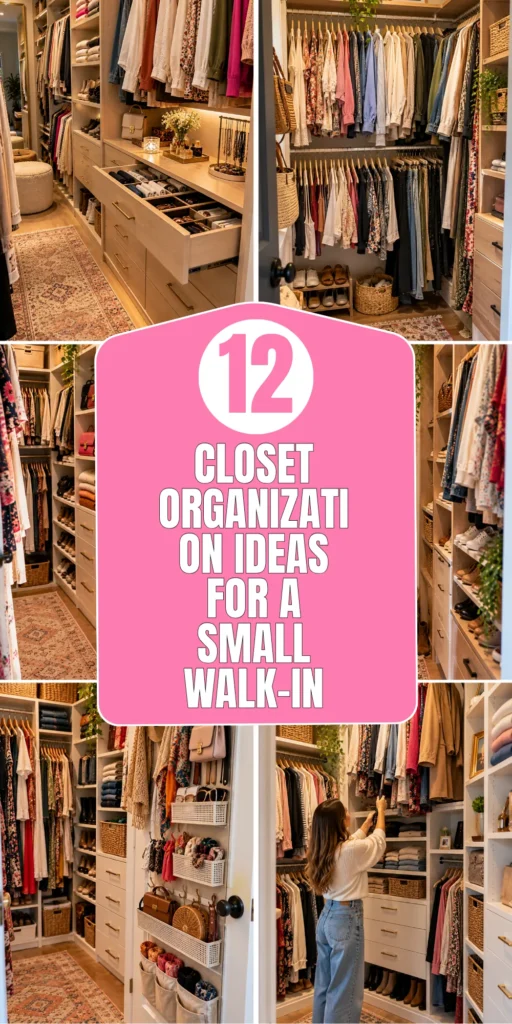
A good small closet should make getting dressed easier, not force you to move five things just to reach one sweater. These ideas combine practical storage with simple styling so your closet can feel organized, spacious, and pleasant to use every day.
1. Double Hanging Rods for More Clothing Space
Description
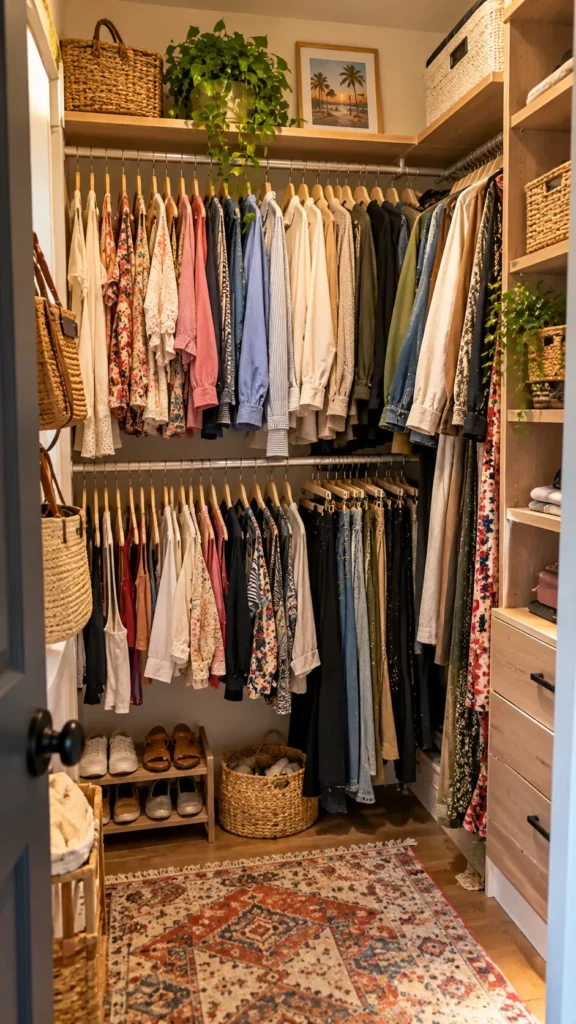
Double hanging rods are one of the most effective solutions for a small walk-in closet because they use vertical space instead of valuable floor area. Place shorter clothing such as shirts, skirts, and folded trousers on the lower rod, with jackets and other longer pieces above. Keeping a small section for full-length garments prevents the closet from becoming overcrowded.
What You’ll Need
Two hanging rods, wall brackets, a measuring tape, level, drill, suitable anchors, and slim matching hangers.
Quick How-To
Measure the available wall height and identify where your longer garments need clearance. Install the upper rod first, then position the second rod below it with enough room for clothing to hang naturally. Test the brackets before loading the rods with clothes.
Styling Tip
Use matching slim hangers throughout the double-rod section. Uniform hangers instantly make a crowded closet look cleaner.
2. Floor-to-Ceiling Shelving
Description
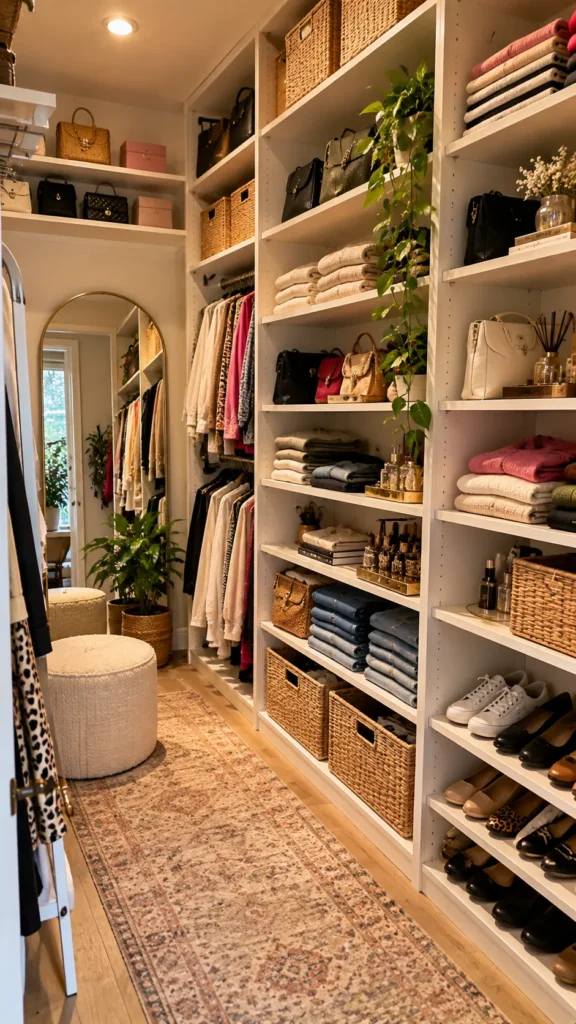
Floor-to-ceiling shelving makes use of the vertical space that small closets often waste. Install adjustable shelves for shoes, handbags, folded sweaters, baskets, and accessories. Keeping shelves adjustable is particularly useful because storage needs change throughout the year. Avoid filling every shelf completely; a little open space makes the closet easier to maintain and visually less crowded.
What You’ll Need
Tall shelving units or modular shelves, brackets, baskets, measuring tape, level, and storage bins.
Quick How-To
Measure the wall from floor to ceiling and account for doors, trim, and lighting. Install the tallest storage first and secure it properly to the wall. Place frequently used items between waist and eye level while keeping seasonal belongings higher.
Styling Tip
Use matching baskets on the upper shelves to hide smaller items and create a more cohesive appearance.
3. Corner Shelves for Awkward Spaces
Description
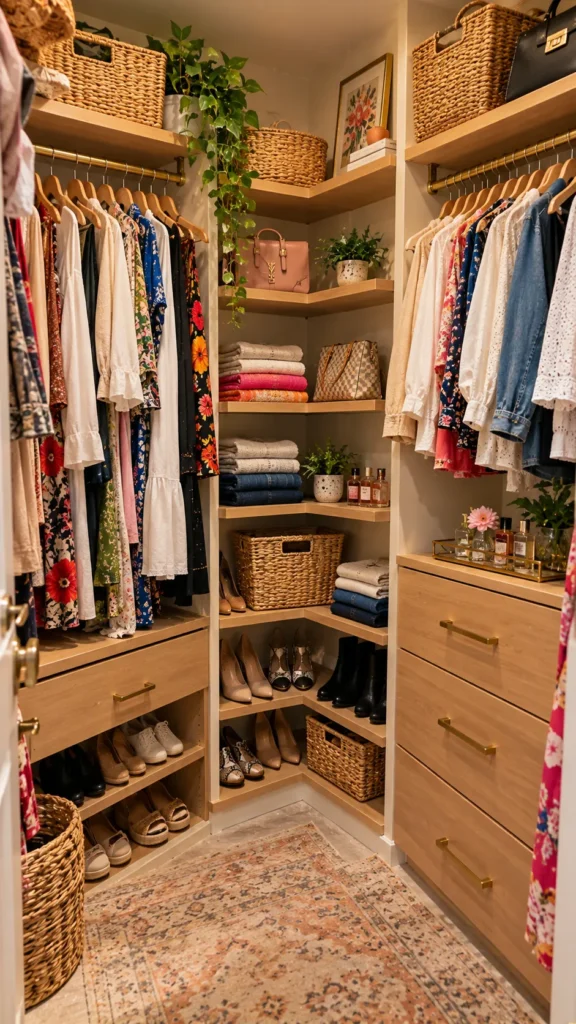
Corners are often wasted in small walk-in closets because standard shelves do not fit comfortably. Corner shelving solves this problem by turning those difficult areas into useful storage for shoes, folded clothing, bags, or accessories. Rounded or triangular shelves can provide access without making the walkway feel narrower.
What You’ll Need
Corner shelves, wall anchors, brackets, a drill, measuring tape, level, and small storage baskets.
Quick How-To
Measure both walls carefully before choosing the shelf size. Install the corner shelves at practical intervals, keeping heavier items lower. Leave enough clearance around the corner so you can still walk comfortably and reach the shelves without bumping into them.
Styling Tip
Reserve corner shelves for attractive shoes, handbags, or neatly folded items that can double as visual accents.
4. Slim Pull-Out Shoe Storage
Description
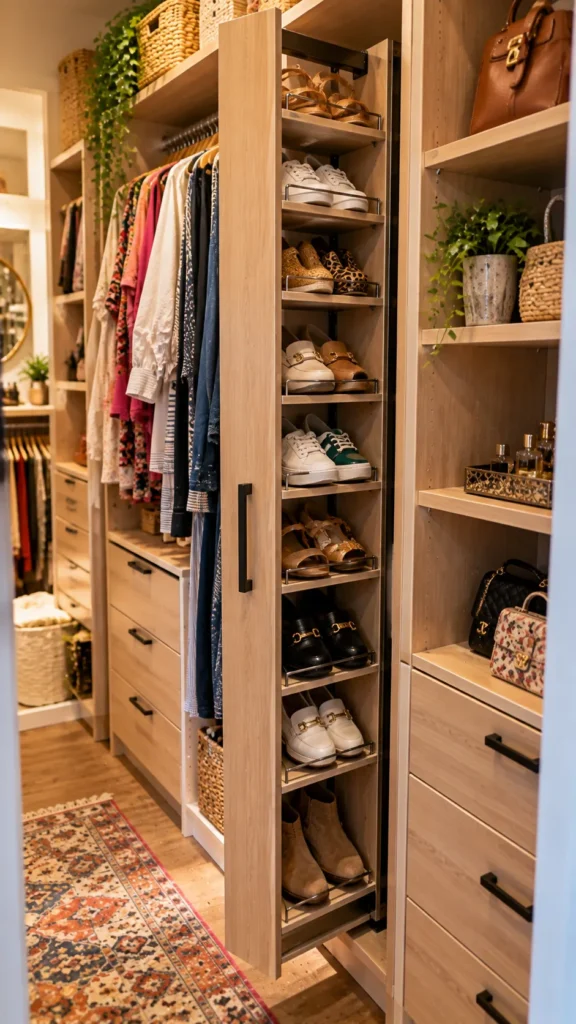
A narrow pull-out shoe organizer can make use of otherwise wasted gaps between shelving and walls. Instead of allowing shoes to collect on the floor, a vertical pull-out system keeps pairs visible and accessible. This works particularly well for small walk-ins where a traditional shoe cabinet would take up too much floor space.
What You’ll Need
A narrow pull-out shoe rack or custom vertical organizer, drawer slides, mounting hardware, and shoe dividers.
Quick How-To
Measure the narrowest available gap and make sure the organizer can open fully without blocking the walkway. Install the slides securely and arrange shoes vertically or on angled shelves. Keep your most frequently worn pairs at comfortable reach.
Styling Tip
Group shoes by type rather than color if you need to find specific pairs quickly. Function should come before perfect visual symmetry.
5. Built-In Drawer Section
Description
A compact drawer section gives a small walk-in closet a place for underwear, socks, belts, jewelry, and other items that become messy on open shelves. Drawers are especially useful for small accessories because they hide visual clutter. If built-ins are too expensive, a narrow freestanding drawer unit can provide much of the same functionality.

What You’ll Need
A compact drawer unit or built-in drawers, drawer dividers, small organizers, labels, and mounting hardware.
Quick How-To
Choose drawers based on the items you actually need to store rather than buying the largest unit available. Add dividers to prevent small pieces from mixing together. Place the drawer unit where it does not interfere with hanging clothes or the closet entrance.
Styling Tip
Use shallow organizers inside drawers instead of large compartments. Smaller sections make everyday items much easier to find.
6. Behind-the-Door Storage
Description
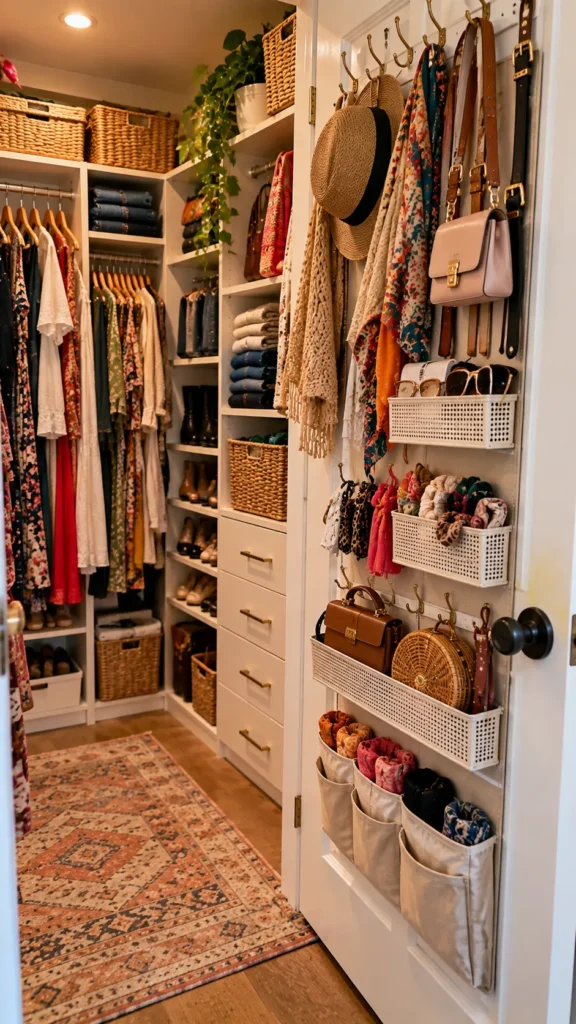
The back of the closet door is valuable storage real estate in a small walk-in. A slim over-door organizer can hold scarves, belts, hats, handbags, hair accessories, or other lightweight items. Because this storage remains vertical, it adds capacity without reducing the main walking area.
What You’ll Need
An over-door organizer, hooks, narrow baskets, adhesive hooks if suitable, and small storage pouches.
Quick How-To
Check the door clearance before installing anything and make sure the organizer does not interfere with the frame. Place lightweight accessories on the door and keep heavier items on properly secured wall storage.
Styling Tip
Avoid hanging too many items on the door. If it becomes difficult to close smoothly, remove excess storage rather than forcing the system to carry too much weight.
7. Pull-Down Hanging Rod
Description
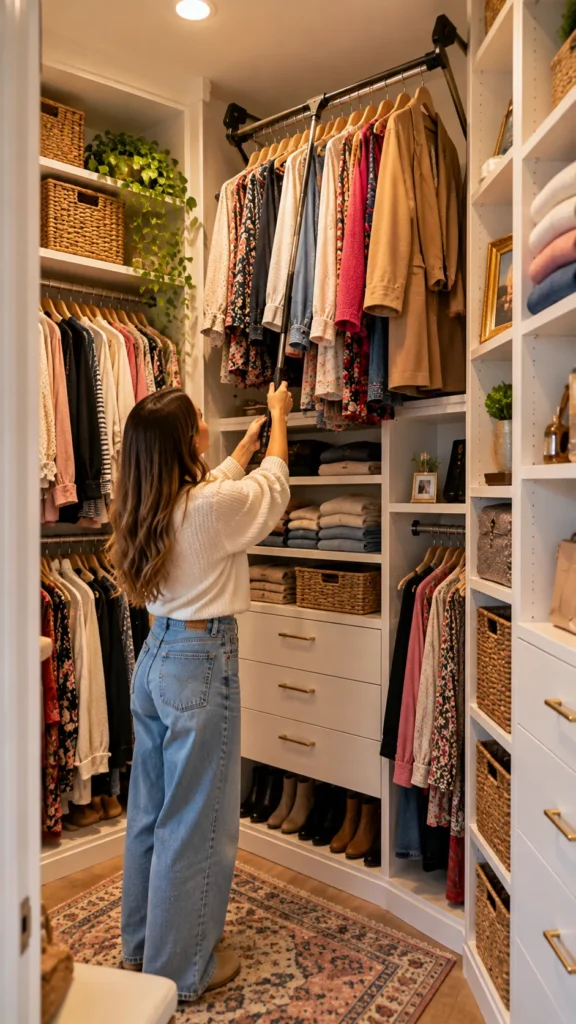
A pull-down hanging rod allows you to use high storage areas that would otherwise be difficult to reach. It is especially helpful in small walk-ins with high ceilings because seasonal clothing can be stored above everyday pieces. The mechanism brings clothing down to a comfortable height when needed without permanently sacrificing valuable vertical space.
What You’ll Need
A pull-down closet rod, mounting hardware, measuring tape, level, and suitable wall or cabinet supports.
Quick How-To
Check the manufacturer’s weight limits and install the mechanism into secure structural support. Position it high enough to preserve lower storage but low enough for the mechanism to operate comfortably. Use it mainly for lighter clothing to keep the system easy to operate.
Styling Tip
Use the pull-down section for seasonal or occasional clothing instead of everyday pieces.
8. Matching Baskets on Upper Shelves
Description
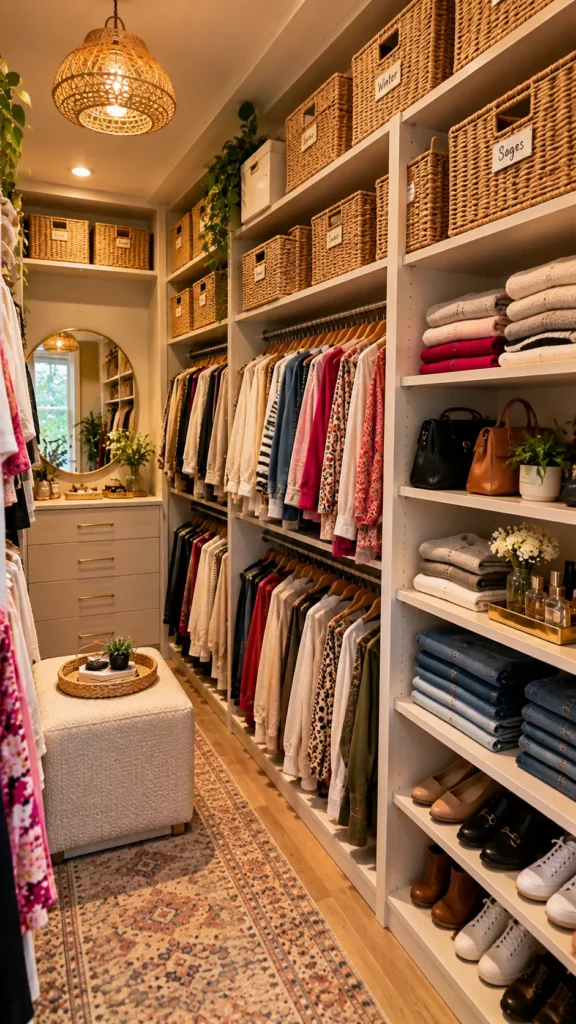
Upper shelves are excellent for storing bulky sweaters, seasonal accessories, handbags, and less frequently used items, but loose piles can quickly make a small closet look messy. Matching baskets create contained storage while keeping those higher areas organized. Choose baskets with sturdy handles so you can pull them down safely.
What You’ll Need
Matching baskets, shelf labels, measuring tape, and optional fabric storage bags.
Quick How-To
Measure shelf depth and height before purchasing baskets. Group similar items together and label the front of each basket. Keep heavier containers on lower shelves and lighter seasonal items toward the top.
Styling Tip
Choose baskets in one neutral material or color. Consistency makes different categories feel like one organized system.
9. Narrow Vanity and Accessory Station
Description
If your walk-in has a small unused wall section, turn it into a compact accessory station. A narrow shelf, small mirror, hooks, and a tiny tray can create a convenient place for jewelry, perfume, watches, or daily accessories. The key is keeping the station narrow enough that it does not interfere with dressing or walking.
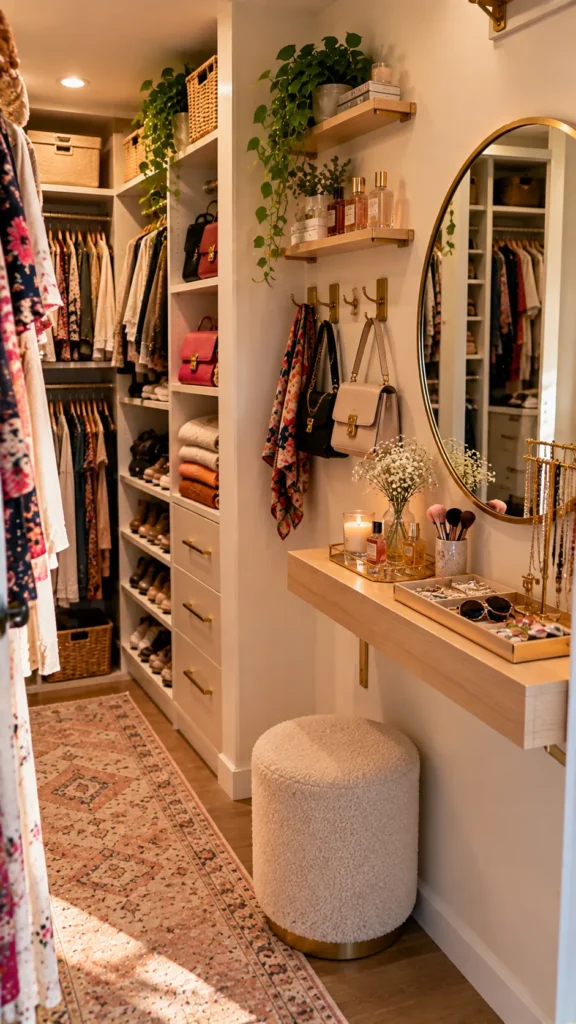
What You’ll Need
A narrow wall shelf, small mirror, hooks, jewelry tray, compact stool if space allows, and wall anchors.
Quick How-To
Choose a wall that is outside the main walking route. Mount the mirror at a comfortable height and add hooks or a small shelf underneath. Keep only frequently used accessories in this area to prevent it from becoming another clutter zone.
Styling Tip
Display a few favorite accessories while keeping smaller pieces inside trays or drawers for a cleaner look.
10. Wall Hooks Between Hanging Sections
Description
Small wall hooks can solve surprisingly many storage problems in a compact walk-in closet. Install them between hanging sections or on otherwise unused wall areas for handbags, belts, scarves, hats, or tomorrow’s outfit. Hooks keep these items visible and accessible without requiring another cabinet or floor-standing organizer.
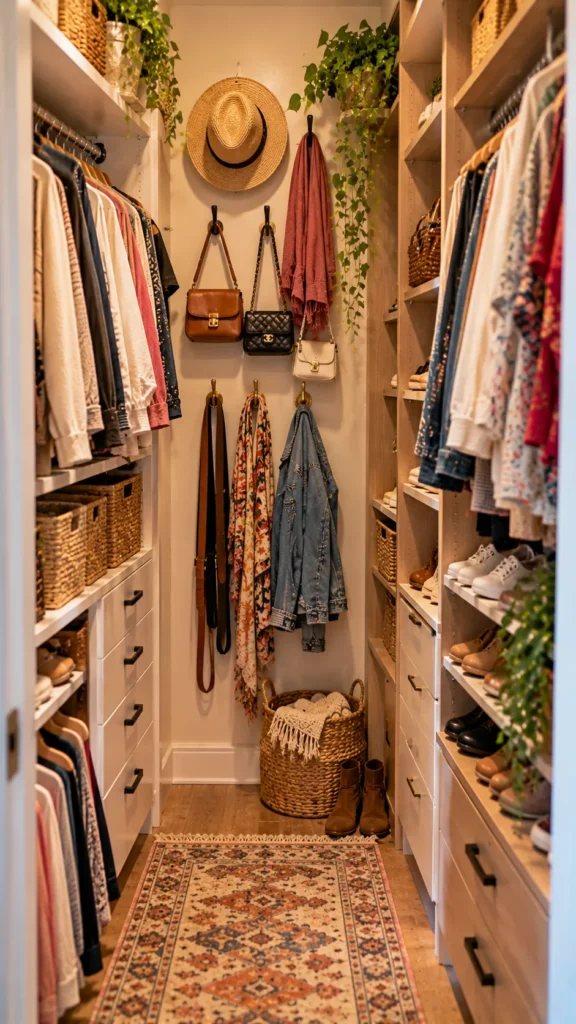
What You’ll Need
Sturdy wall hooks, measuring tape, drill, wall anchors, and optional small baskets.
Quick How-To
Identify unused wall sections and install hooks at different practical heights. Keep heavier bags on properly anchored hooks and lighter accessories on smaller ones. Leave enough space between hooks so items do not overlap excessively.
Styling Tip
Use a few attractive hooks rather than covering an entire wall. Too many visible accessories can make a small closet feel visually crowded.
11. Under-Shelf Storage Bins
Description
The space underneath shelves is often overlooked, especially when shelves are installed farther apart than necessary. Low-profile sliding bins can turn this empty area into useful storage for folded scarves, small handbags, workout accessories, or seasonal pieces. Because the bins slide out, they remain easier to access than items stacked at the back of a shelf.
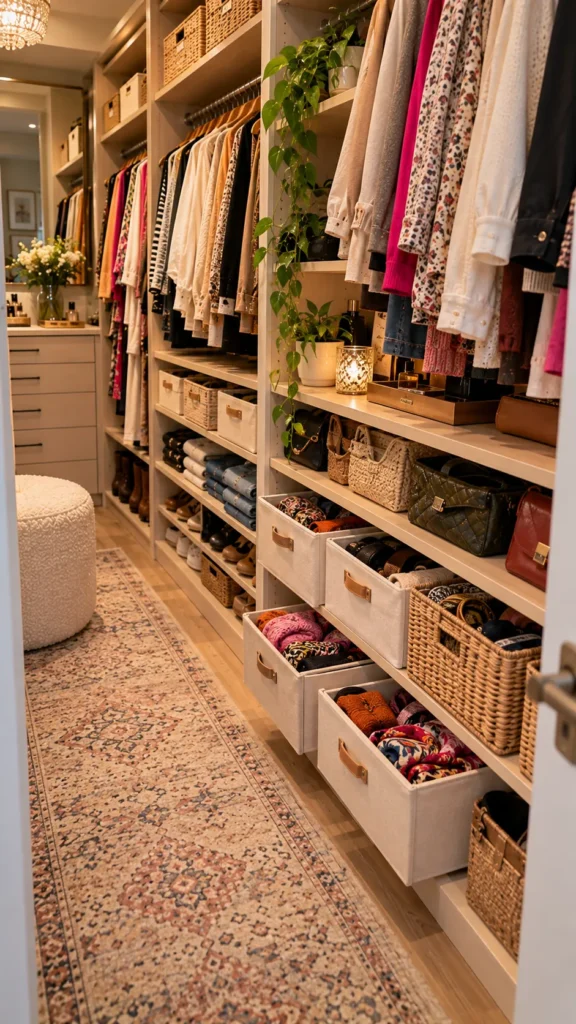
What You’ll Need
Low-profile storage bins, sliding baskets or shelf drawers, labels, and shelf liners if needed.
Quick How-To
Measure the exact clearance underneath each shelf before buying bins. Choose containers that slide easily without scraping nearby clothing. Assign one category to each bin and avoid mixing unrelated items.
Styling Tip
Use clear or lightly colored bins for frequently accessed items so you can identify their contents quickly.
12. Light and Bright Minimal Walk-In
Description
A light color palette can make a small walk-in feel noticeably more open. Combine white or warm neutral shelving with light wood, simple baskets, bright lighting, and a few carefully selected decorative pieces. Instead of filling every wall with storage, leave small visual breaks between sections so the closet feels organized rather than packed from floor to ceiling.
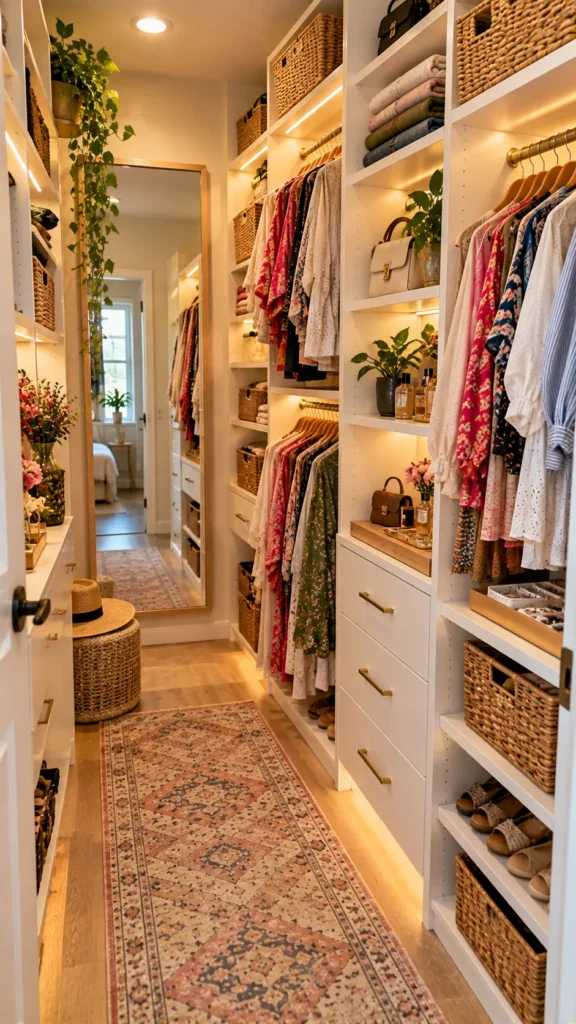
What You’ll Need
Light-colored shelves, LED closet lighting, slim hangers, neutral baskets, a mirror, and a few simple decorative accessories.
Quick How-To
Start by removing unnecessary clothing and storage containers before changing the room. Install the main storage around your actual wardrobe needs, then add lighting to eliminate dark corners. Finish with a mirror and only a few decorative elements.
Styling Tip
Keep your most frequently used items within easy reach and reserve the highest shelves for seasonal storage. This makes the bright, minimal look easier to maintain.
FAQ SECTION
How do I organize a very small walk-in closet?
Start by removing clothing and accessories you no longer use. Then prioritize vertical storage, double hanging rods, narrow shelves, hooks, and adjustable organizers. Keep everyday items at comfortable heights and move seasonal belongings to higher shelves.
How can I make a small walk-in closet look bigger?
Use light colors, consistent hangers, good lighting, mirrors, and storage that uses vertical space. Avoid filling every surface because visual breathing room can make the closet feel significantly larger.
What should go on the top shelf of a small closet?
Top shelves are best for items you do not need every day, such as seasonal clothing, luggage accessories, special-occasion shoes, and extra linens. Use labeled baskets so these items remain contained and easy to identify.
Are double hanging rods worth using?
Yes, especially when you have many shirts, skirts, trousers, or other shorter garments. They can almost double the usable hanging capacity of one wall while taking up very little additional floor space.
How should I organize shoes in a small walk-in?
Use vertical shoe racks, narrow pull-out storage, adjustable shelves, or the floor area under hanging clothes. Keep frequently worn shoes easiest to reach and move special-occasion or seasonal pairs higher.
How do I stop a small closet from becoming cluttered again?
Give every category a defined storage location and avoid filling storage to maximum capacity. Leave some empty space so new items do not immediately create piles. A quick weekly reset can also prevent small messes from becoming overwhelming.
RELATED CONTENT
CLOSING
A small walk-in closet does not need to feel cramped or difficult to use. The biggest improvement usually comes from making better use of the space you already have rather than simply adding more storage products. Think vertically, use awkward corners, keep everyday items accessible, and reserve high or hidden areas for things you rarely use.
I always find that the most successful closet systems are the ones that match real daily habits. If you reach for something every morning, it should not be hidden behind three storage boxes. If you only use something twice a year, it does not need prime shelf space.
Start with one area that causes you the most frustration and improve it first. Once that section works well, move to the next. With a few thoughtful changes, even a very small walk-in closet can become organized, functional, and genuinely enjoyable to use. I hope these ideas inspire you to create a closet that works beautifully for your everyday routine.

2 Comments