
12 Cactus Garden Ideas for a Modern and Stylish Outdoor Space

Cactus Garden
A cactus garden can be much more than a collection of desert plants in ordinary pots. With the right layout, gravel, containers, stone, and outdoor accessories, cacti can create a structured and stylish garden that works in both large yards and small patios. The most important practical consideration is drainage.

Cacti dislike sitting in wet soil, so choosing the right growing medium and avoiding containers without drainage holes will make a much bigger difference than expensive decorations. These ideas combine low-maintenance planting with attractive layouts that are realistic to maintain.
1. Layered Cactus Rock Garden
Description
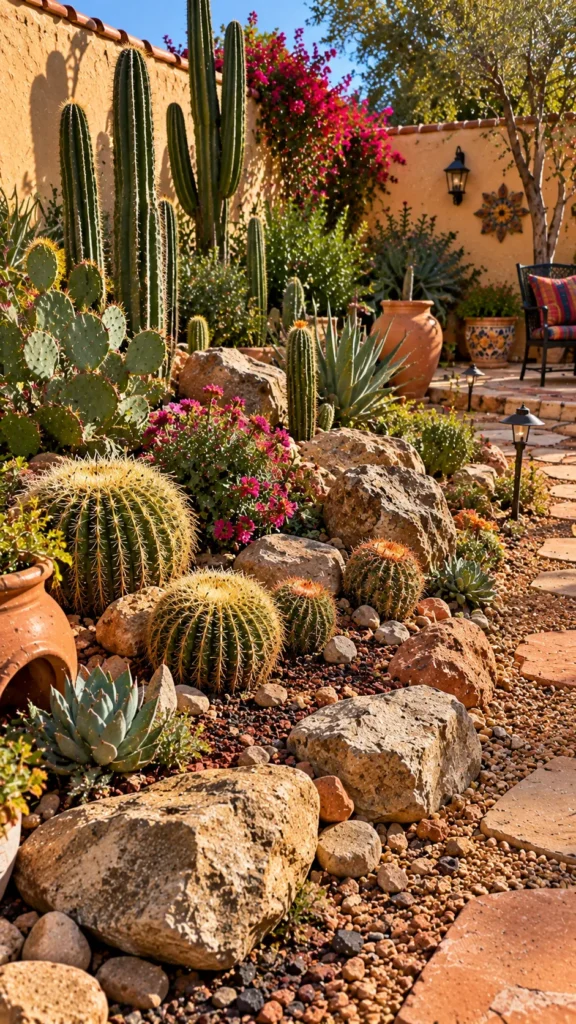
Create a natural-looking cactus garden by combining different sizes of rocks, gravel, and sculptural cacti in layers. Place taller plants toward the back and smaller varieties near the front so every plant remains visible. The rocks should look casually arranged rather than perfectly symmetrical. This design works especially well in sunny corners where traditional grass struggles and provides strong texture without requiring frequent watering.
What You’ll Need
Cacti, coarse gravel, decorative rocks, cactus soil, landscape edging, gardening gloves, and a sunny planting area.
Quick How-To
Remove existing weeds and improve drainage before planting. Arrange your largest rocks first, then position the cacti with enough space for mature growth. Fill the remaining surface with gravel and check that water can drain away quickly after watering.
Styling Tip
Mix rounded stones with a few larger angular rocks to make the landscape feel more natural and less manufactured.
2. Colorful Cactus Pot Collection
Description
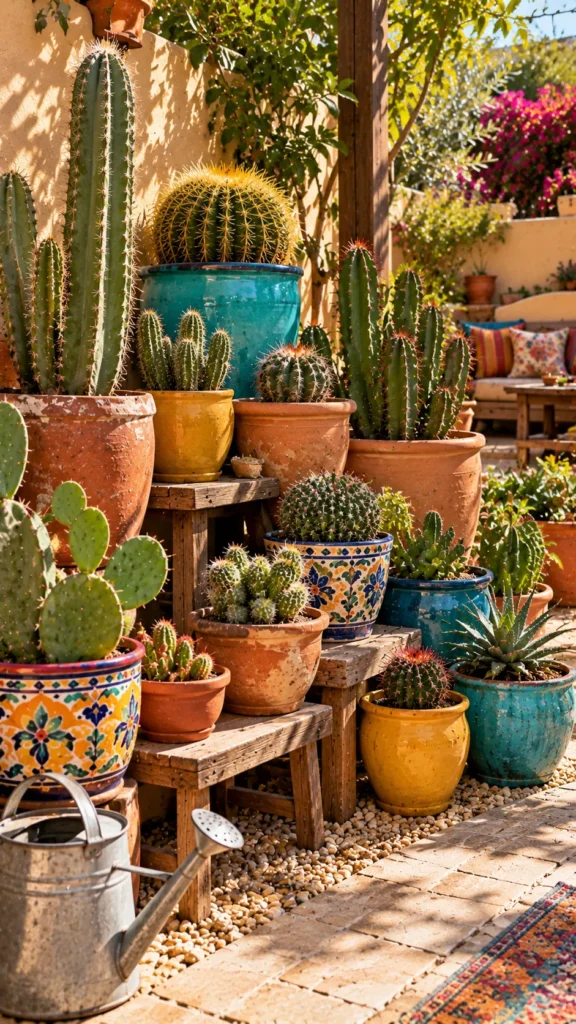
A collection of colorful pots is an easy way to create a cactus garden on a patio, balcony, or small backyard. Combine terracotta, turquoise, mustard, cream, and patterned ceramic containers while keeping the plants relatively simple. Different pot heights add visual interest without requiring complicated landscaping, and individual containers make it much easier to move plants when temperatures or sunlight change.
What You’ll Need
Cacti, pots with drainage holes, cactus potting mix, saucers, small gravel, and a selection of colorful outdoor containers.
Quick How-To
Choose pots that are only slightly larger than each cactus root system. Fill them with fast-draining soil and position the plants at different heights. Group several pots together while leaving enough space for airflow and easy watering.
Styling Tip
Repeat one color across several pots rather than giving every container a completely different color palette.
3. Cactus Garden Along a Backyard Wall
Description
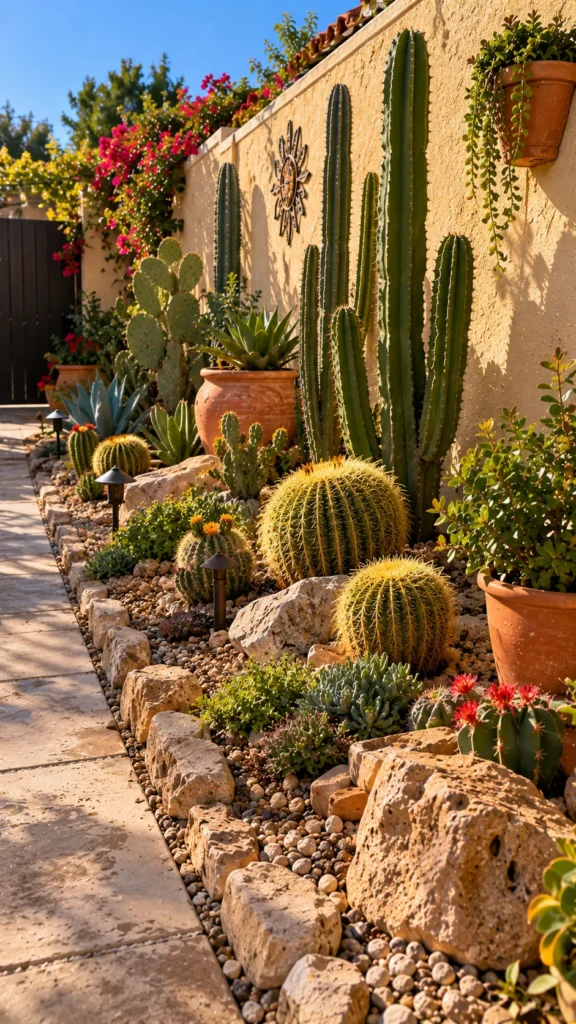
Turn an unused sunny strip beside a backyard wall into a narrow cactus garden. Use gravel as the base and plant upright cacti alongside lower-growing varieties to create contrast. A warm stucco, brick, or stone wall provides a strong background for the plants. This approach is particularly useful for narrow spaces where there is not enough room for traditional flower beds.
What You’ll Need
Cacti suited to your climate, cactus soil, gravel, decorative stones, landscape edging, and optional wall-mounted planters.
Quick How-To
Measure the planting strip before purchasing plants and check how much direct sunlight reaches it. Improve the soil with a gritty, fast-draining mix, then position plants according to their mature size. Finish with a gravel layer to reduce exposed soil and keep the area visually clean.
Styling Tip
Use upright cactus varieties near the wall and round or spreading forms toward the front for a simple layered effect.
4. Mini Cactus Rockery
Description
A small rockery can create a complete cactus landscape in just a few square feet. Use miniature cacti, small succulents, pebbles, and one or two statement stones to create a miniature desert scene. The trick is to avoid overcrowding. Young cacti may look tiny when planted, but they need room for growth and airflow, especially in humid conditions.

What You’ll Need
Small cacti, compact succulents, gritty soil, small pebbles, decorative rocks, and a shallow outdoor planting area or container.
Quick How-To
Create a drainage layer and add a gritty cactus mix. Position the largest plant first, then arrange smaller plants around it with visible gaps between them. Cover exposed soil with pebbles and avoid placing rocks directly against cactus stems.
Styling Tip
Choose stones in similar earthy tones so the plants remain the main visual feature.
5. Cactus Garden With Gravel Path
Description
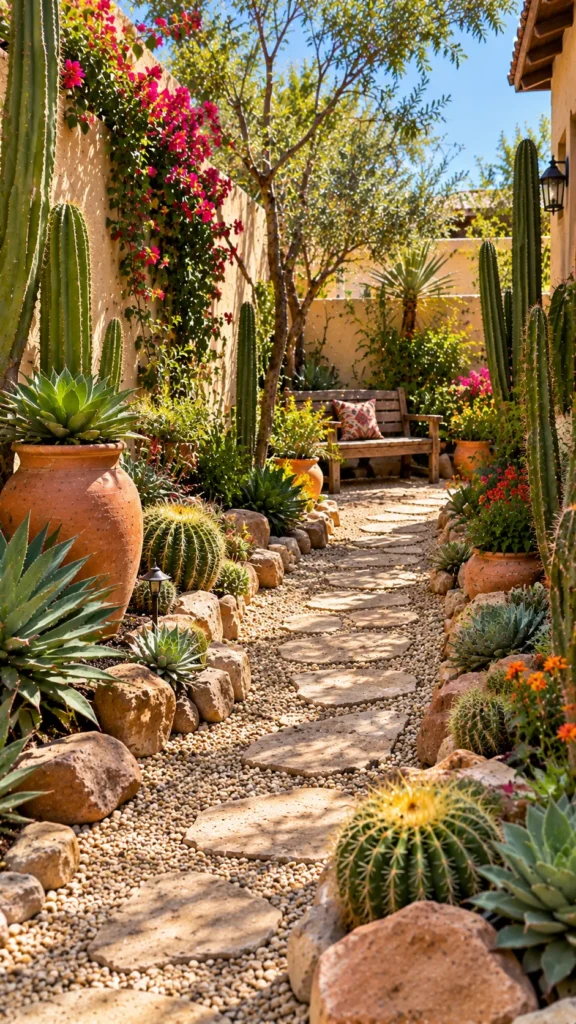
Combine a cactus planting bed with a narrow gravel path to create a practical backyard feature. The path makes it easier to reach plants for maintenance while giving the garden a more intentional layout. Use larger stepping stones through the gravel and place cacti on both sides. This design is especially useful for dry climates where a lawn would require considerably more water.
What You’ll Need
Cacti, gravel, stepping stones, cactus soil, landscape edging, weed barrier if appropriate, and gardening tools.
Quick How-To
Mark the path and planting areas before digging. Install a stable base beneath stepping stones and keep the walking surface level. Plant the cacti away from the main footpath, then spread gravel evenly around both the plants and pathway.
Styling Tip
Keep the path slightly wider than you think you need so maintenance tools and wheelbarrows can pass comfortably.
6. Raised Cactus Garden Bed
Description
A raised bed is a practical solution when the existing backyard soil drains poorly. Build a low garden bed from stone, brick, wood suitable for outdoor use, or concrete blocks, then fill it with a gritty cactus-growing mix. Raising the planting area improves drainage and also gives the garden a stronger visual boundary, making the cacti feel like a deliberate landscape feature.

What You’ll Need
Raised-bed materials, cactus soil mix, gravel, drainage material if needed, cacti, and landscape tools.
Quick How-To
Choose a location with adequate sunlight and construct a stable low border. Fill the bed with a fast-draining growing medium rather than heavy garden soil. Arrange plants according to mature height and leave enough room around each plant for growth.
Styling Tip
Use a simple border material and let the variety of cactus shapes provide most of the visual interest.
7. Cactus Garden In Large Terracotta Pots
Description
Large terracotta pots make excellent focal points for a cactus garden, particularly on patios and entry areas. Choose one dramatic cactus or combine several compatible small varieties in a wide container. The natural orange color of terracotta works beautifully with green plants, gravel, stone, and warm outdoor furniture while also giving the garden a timeless handmade feel.

What You’ll Need
Large terracotta pots, cactus soil, drainage material, gravel, cacti, and pot feet if the containers sit on a hard surface.
Quick How-To
Confirm that each pot has a drainage hole before planting. Use a gritty cactus mix and avoid filling the container completely with dense soil. Position the largest plant first, add smaller plants if appropriate, and finish with a thin gravel top layer.
Styling Tip
Raise large pots slightly with pot feet so water can escape freely and the container does not stay against a wet patio surface.
8. Modern Black-and-White Cactus Garden
Description
For a more contemporary backyard, pair sculptural cacti with black gravel, pale stones, and simple concrete or matte-black containers. Keep the color palette restrained so the unusual cactus shapes become the focus. This style works particularly well around modern patios and outdoor seating areas because the strong geometric forms complement clean architectural lines without adding unnecessary decoration.

What You’ll Need
Architectural cacti, black gravel, pale decorative stones, modern planters, cactus soil, and simple outdoor edging.
Quick How-To
Create a clean planting area and separate dark and light gravel into deliberate sections. Position the tallest cactus as the focal point, then add smaller plants around it. Keep accessories minimal and maintain clear spaces between each plant.
Styling Tip
Use three or four carefully selected cactus shapes rather than filling the garden with too many varieties.
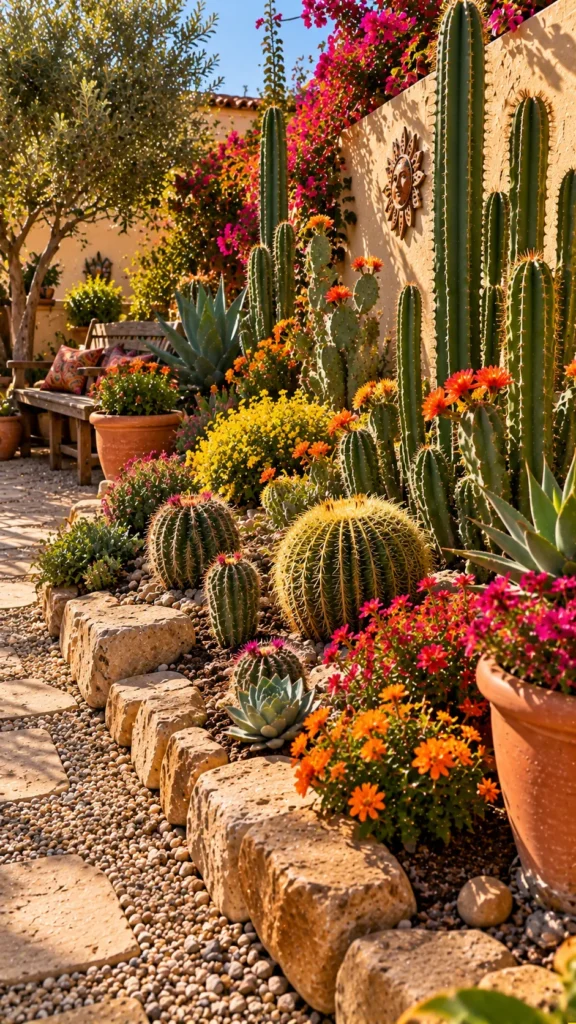
9. Cactus Garden With Desert Flowers
Description
Add seasonal color to a cactus garden by combining drought-tolerant flowering plants with your cactus collection. Small flowering succulents and suitable desert plants can soften the strong shapes of spiny cacti without creating a high-maintenance flower bed. Choose plants with similar water requirements so you do not accidentally overwater the cacti while caring for the flowers.
What You’ll Need
Cacti, drought-tolerant flowering plants, gritty soil, gravel, decorative stones, and suitable garden edging.
Quick How-To
Research the mature size and watering needs of each plant before combining them. Place taller flowering plants toward the rear and shorter varieties around the cactus bases. Use gravel between groups to keep the planting area visually organized.
Styling Tip
Choose one or two flower colors rather than mixing every available shade. Controlled color makes the garden look more intentional.
10. Vertical Cactus Garden
Description
A vertical cactus garden is useful when floor space is limited. Use sturdy wall planters, shelves, or a properly supported vertical planting structure to display smaller cacti and succulents. This design adds greenery to a bare wall while keeping the footprint small. Because containers dry differently at different heights, regular checks are important before watering.

What You’ll Need
Small cacti and succulents, sturdy outdoor planters, wall brackets or a vertical garden frame, cactus soil, and suitable mounting hardware.
Quick How-To
Install the structure securely before adding plants. Choose lightweight containers for upper sections and make sure every planter has drainage. Arrange plants according to sunlight exposure and regularly check soil moisture rather than watering everything on the same schedule.
Styling Tip
Leave some empty space between planters. A little breathing room makes the vertical arrangement look cleaner and helps showcase individual plants.
11. Cactus Garden Around a Seating Area
Description
Surround an outdoor seating area with a carefully planned cactus border to create a relaxed desert-inspired retreat. Use larger cacti toward the edges and smaller, spineless, or low-growing varieties closer to seating areas where people may walk. Keep enough clearance around chairs and pathways so the garden remains comfortable and safe for everyday use.

What You’ll Need
Cacti appropriate for your climate, gravel, decorative stones, outdoor seating, cactus soil, and landscape edging.
Quick How-To
Arrange the furniture first so you understand where people will walk and sit. Plant larger specimens farther away from traffic areas and use smaller plants near the edges. Cover the remaining soil with gravel and check the arrangement from the seating position.
Styling Tip
Avoid placing spiny cacti directly beside frequently used chairs or narrow walkways. Beauty is important, but practical spacing makes the garden much more enjoyable.
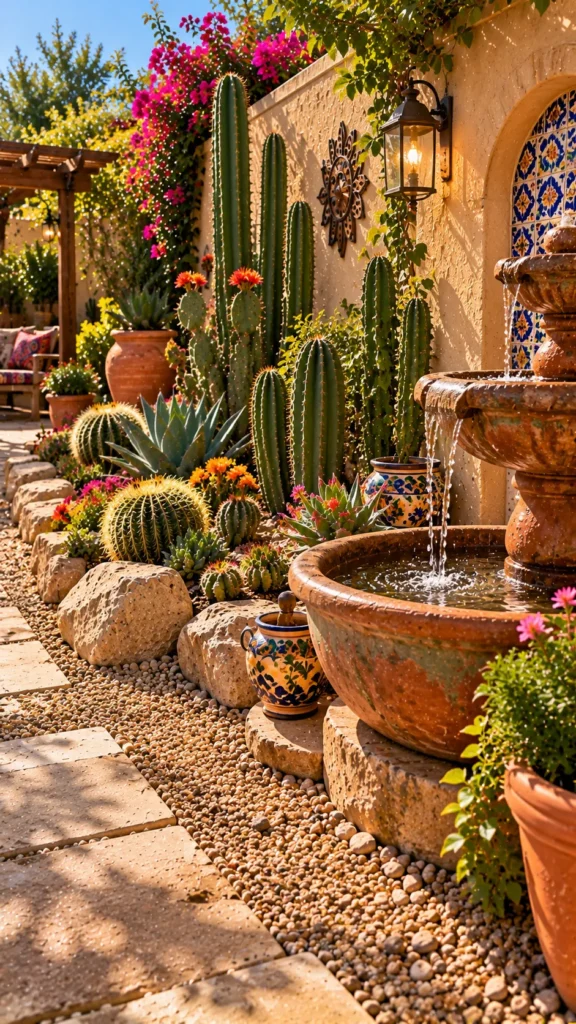
12. Cactus Garden With a Water-Wise Fountain
Description
Create an interesting contrast by pairing a dry cactus garden with a small decorative water feature. The combination of sculptural cacti, gravel, natural stone, and gently moving water creates a relaxing backyard focal point. Keep the fountain visually separate from the main cactus planting so splashing water does not constantly wet plants that prefer dry conditions.
What You’ll Need
Cacti, gravel, natural stones, a small outdoor fountain, drought-tolerant plants, cactus soil, and a stable base for the water feature.
Quick How-To
Place the fountain on a level surface and keep it away from the main cactus planting zone. Build the cactus bed using fast-draining soil and arrange stones around the fountain to visually connect both areas. Check the fountain regularly for algae, debris, and water-level changes.
Styling Tip
Use natural stone around the fountain and warm terracotta near the cactus beds to create a cohesive desert-inspired palette.
FAQ SECTION
How often should a cactus garden be watered?
Watering depends on the climate, season, soil, and individual cactus species. In general, allow the growing medium to dry thoroughly before watering again. Frequent small amounts of water can be more problematic than occasional deep watering because consistently damp soil can encourage root problems.
What type of soil is best for a cactus garden?
Use a fast-draining cactus or succulent mix. Heavy garden soil can retain too much moisture, especially in containers. Adding appropriate gritty material can improve drainage, but the exact mixture should suit your local climate and the plants you are growing.
Does a cactus garden need full sun?
Many cacti prefer several hours of bright sunlight, but requirements vary by species. Before planting, check the light requirements of each variety. Newly purchased plants may also need gradual exposure to strong direct sun to reduce the risk of sun damage.
Can I grow a cactus garden in containers?
Yes. Container gardening is one of the easiest ways to create a cactus collection. Always choose containers with drainage holes and avoid oversized pots that hold unnecessary moisture around the roots.
How do I keep weeds out of a cactus garden?
A gravel mulch layer can reduce exposed soil and make occasional weeds easier to remove. Landscape edging can also help separate the cactus bed from lawns and other planting areas. Avoid placing dense organic mulch directly around cactus stems because it can retain moisture.
Are cactus gardens low maintenance?
They can be, especially when the plants are matched to the local climate and planted in well-draining soil. The main maintenance tasks are occasional watering, weed removal, checking for pests, removing damaged growth when appropriate, and protecting sensitive varieties from unsuitable weather.
Can I mix cacti and succulents?
Yes, as long as the plants have similar light, drainage, and watering requirements. Combining different shapes and textures can make a garden more interesting, but avoid grouping plants with dramatically different moisture needs.
RELATED CONTENT
CLOSING
A cactus garden is one of my favorite ways to create a strong outdoor look without turning the garden into a constant maintenance project. The combination of sculptural plants, gravel, stone, terracotta, and simple containers gives you plenty of texture and personality while keeping the overall design practical.
Start with the conditions you already have. Look at your sunlight, drainage, available space, and local climate before choosing plants. From there, add the decorative elements gradually rather than trying to create everything at once. Even a small collection of well-positioned cacti can completely change the feel of a patio or backyard corner.
I hope these cactus garden ideas inspire you to create a space that feels natural, stylish, and easy to enjoy. Try your favorite idea, make it fit your own backyard, and have fun watching your little desert garden grow.



2 Comments