
12 Cactus Flowers for a Dreamy Desert-Inspired Garden

Cactus Flowers
Cactus flowers are some of the most surprising and beautiful blooms in the plant world. A cactus may spend months displaying nothing but green stems, sculptural shapes, and protective spines before suddenly producing a vibrant flower in pink, yellow, orange, red, or white. Some blooms last only a day, while others remain open for several days, making the moment they appear especially rewarding.

Whether you grow cacti on a sunny windowsill, decorate a patio with desert plants, or simply love colorful botanical displays, understanding cactus flowers can help you enjoy their beauty while keeping your plants healthy. These 12 cactus flower ideas explore different varieties, growing conditions, and ways to appreciate their blooms, with practical tips for encouraging flowering and avoiding common care mistakes.
1. Bright Pink Moon Cactus Flowers
Description
Moon cacti are popular for their colorful tops and compact size, but their flowering behavior depends on the variety and growing conditions. Some produce small, delicate flowers in shades of pink or pale yellow, adding another layer of color to an already eye-catching plant.

What You’ll Need
- Healthy moon cactus
- Pot with drainage holes
- Well-draining cactus mix
- Bright indirect light
- Small watering can
Quick How-To
Place your moon cactus where it receives bright light without intense, prolonged direct sun if its colorful top is sensitive to scorching. Water only when the growing medium has dried sufficiently, and never leave the pot sitting in water. Flowering is not guaranteed, especially in young or grafted plants. Check the plant’s health and growing conditions before trying to encourage blooms.
Styling Tip
Display a moon cactus in a simple white or terracotta pot. Its vivid top becomes the main feature, while a neutral container keeps the arrangement from looking too busy.
2. Golden Yellow Prickly Pear Flowers
Description
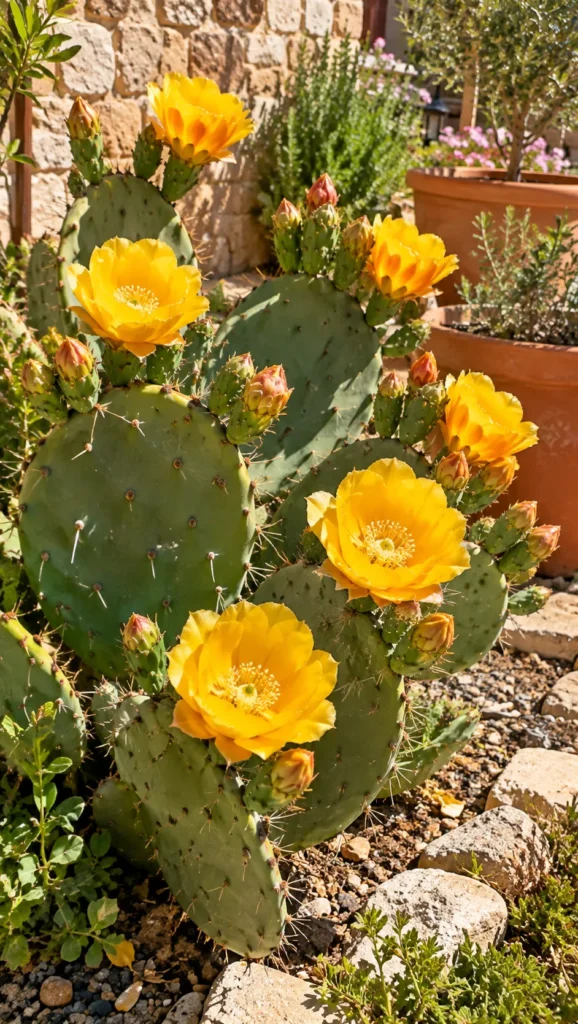
Prickly pear cacti produce cheerful, cup-shaped flowers that often appear in bright yellow, orange, or pink, depending on the species. Their blooms stand out against flat green pads, creating a dramatic desert-inspired display in a sunny outdoor garden.
What You’ll Need
- Suitable prickly pear species
- Large pot or well-drained garden bed
- Gritty cactus soil
- Sunny outdoor location
- Thick protective gloves and long-handled tools
Quick How-To
Choose a location with plenty of sunlight and excellent drainage. Allow the soil to dry between waterings, and avoid heavy, waterlogged garden beds. Mature plants are more likely to flower than young ones. Handle the pads carefully because fine glochids can irritate skin, even when the larger spines appear manageable.
Styling Tip
Pair prickly pear with gravel, natural stones, and drought-tolerant plants that have similar watering needs. Keep the plant away from narrow walkways where people or pets might brush against its spines.
3. Elegant White Night-Blooming Cereus Flowers
Description
Night-blooming cereus is famous for its large, fragrant flowers that open after dark. Depending on the species, blooms may be white with long petals and a dramatic central structure. Watching one open in the evening can become a memorable event for anyone who loves unusual plants.

What You’ll Need
- Correctly identified night-blooming cactus
- Container with drainage
- Appropriate cactus or epiphytic cactus mix
- Bright filtered light, depending on species
- Support or trellis for climbing varieties
Quick How-To
First, identify your cactus because different night-blooming species have different needs. Desert types generally require more direct sun and drier soil, while tropical epiphytic types often prefer filtered light and a more moisture-retentive but airy mix. Water according to the species, and avoid changing its conditions drastically when buds appear.
Styling Tip
Place the plant where you can observe the flowers after sunset without moving it unnecessarily. A simple outdoor table or bright indoor corner near a window makes a lovely spot to appreciate the bloom.
4. Fiery Orange Easter Cactus Flowers
Description
Easter cactus produces star-shaped flowers in vibrant shades of orange, pink, red, or white. Unlike many desert cacti, it grows naturally in forest environments, so its care requirements are different from those of sun-loving desert varieties.

What You’ll Need
- Easter cactus
- Pot with drainage holes
- Airy, slightly moisture-retentive potting mix
- Bright indirect light
- Balanced houseplant fertilizer
Quick How-To
Grow Easter cactus in bright, indirect light and water when the upper layer of the mix begins to dry. Avoid leaving it completely dry for extended periods, but never let its roots remain waterlogged. To support flowering, provide appropriate seasonal conditions and avoid repeatedly moving the plant while buds are forming.
Styling Tip
Use a colorful ceramic pot that complements the flowers without competing with them. A windowsill with filtered daylight is ideal for showing off the blooms while protecting the plant from harsh afternoon sun.
5. Vibrant Red Christmas Cactus Flowers
Description
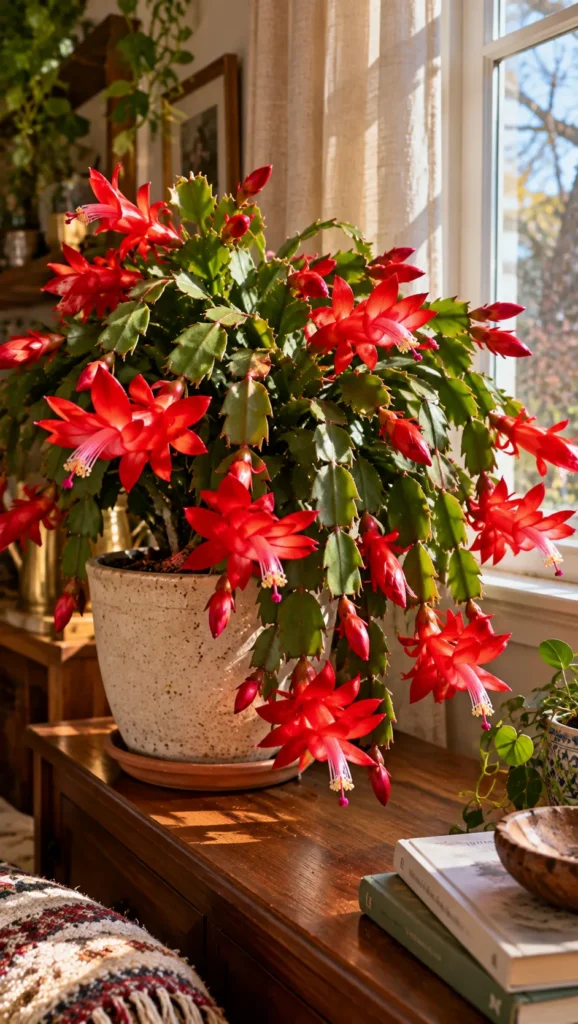
Christmas cactus produces graceful, tubular flowers in red, pink, purple, orange, or white. Its arching stems and colorful blooms make it a popular indoor plant, particularly during the holiday season, when flowering branches can brighten a room.
What You’ll Need
- Healthy Christmas cactus
- Pot with drainage holes
- Well-draining, airy potting mix
- Bright indirect light
- Suitable houseplant fertilizer
Quick How-To
Keep the plant in bright indirect light and water when the surface of the mix starts to dry. To encourage seasonal flowering, Christmas cactus generally benefits from longer nights and cooler temperatures for several weeks, depending on its growing conditions. Avoid sudden changes, excessive watering, or moving the plant repeatedly after buds form.
Styling Tip
Display it on a shelf or side table where its stems can arch naturally over the container. A plain pot in cream, terracotta, or deep green helps the red flowers stand out.
6. Soft Pink Hedgehog Cactus Flowers
Description
Hedgehog cacti often produce colorful flowers near the top of their rounded or cylindrical stems. Depending on the species, the blooms may be pink, magenta, red, or purple, creating a striking contrast with the plant’s spines and compact form.

What You’ll Need
- Correctly identified hedgehog cactus
- Small pot with drainage
- Gritty cactus substrate
- Bright sunlight appropriate to the species
- Long-handled watering tool
Quick How-To
Provide strong light and a potting mix that drains quickly. Water thoroughly when the plant is actively growing and the soil has dried, then allow excess water to escape completely. Many species need maturity and suitable seasonal conditions before flowering, so avoid overwatering or excessive fertilizing in an attempt to force blooms.
Styling Tip
Place a flowering hedgehog cactus in a shallow terracotta pot with a thin layer of decorative gravel. Keep enough space around the plant to appreciate its natural shape without touching the spines.
7. Golden Barrel Cactus with Yellow Flowers
Description
Golden barrel cactus is recognized by its rounded shape and golden spines. Mature plants may produce small yellow flowers around the crown, creating a subtle but beautiful contrast with their sculptural form. Flowering usually requires maturity and suitable growing conditions.

What You’ll Need
- Golden barrel cactus
- Heavy pot with drainage holes
- Mineral-rich cactus mix
- Sunny location
- Protective gloves and appropriate handling tools
Quick How-To
Choose a bright location and allow the soil to dry between waterings. Use a stable container that will not easily tip over as the plant grows. Avoid placing the cactus in a decorative pot without drainage unless it remains in a separate draining nursery pot that can be removed for watering. Be patient, because small or immature specimens may not flower.
Styling Tip
Set the cactus against a warm stone wall or beside natural gravel to highlight its round form and golden spines. Use a sturdy container and position it away from frequently used paths.
8. Delicate White Mammillaria Cactus Flowers
Description
Many Mammillaria species produce rings or crowns of small flowers in white, cream, pink, or magenta. Their compact size makes them especially appealing for windowsills and small plant collections, where a cluster of blooms can look like a tiny floral wreath.

What You’ll Need
- Flowering-size Mammillaria cactus
- Small pot with drainage
- Well-draining cactus mix
- Bright light
- Fine gravel for the surface, if desired
Quick How-To
Provide bright light and good airflow, gradually acclimating the plant if you move it into stronger sunshine. Water when the mix has dried, using less water during cool periods when growth slows. Avoid burying the stem in soil or keeping the crown constantly damp. Flowering often becomes more reliable as a healthy plant matures.
Styling Tip
Arrange several small Mammillaria plants in individual matching pots on a sunny shelf. Leave enough room between them for airflow and to prevent spines from catching on neighboring plants.
9. Magenta Orchid Cactus Flowers
Description
Orchid cacti, also known as epiphyllums, produce large, dramatic flowers in colors such as magenta, pink, orange, red, and white. Their flattened, leaf-like stems and impressive blooms make them a distinctive choice for bright indoor spaces or sheltered patios.

What You’ll Need
- Epiphyllum or orchid cactus
- Container with drainage
- Airy epiphytic cactus mix
- Bright filtered light
- Gentle support for long stems, if needed
Quick How-To
Grow orchid cactus in bright, indirect light rather than the intense full sun preferred by many desert cacti. Use a loose mix that retains some moisture without becoming soggy. Water when the upper portion of the mix begins to dry, and protect the plant from harsh temperature changes. Mature plants may need time and stable conditions to produce their large blooms.
Styling Tip
Use a hanging planter or elevated shelf so the stems can cascade naturally. Choose a neutral container to let the vivid flowers become the centerpiece of the arrangement.
10. Bright Pink Rebutia Cactus Flowers
Description
Rebutia cacti are small, rounded plants known for producing abundant flowers in bright pink, orange, red, or yellow. On a healthy mature plant, several blooms may appear around the lower part of the stem, creating a colorful display that feels surprisingly generous for such a compact cactus.

What You’ll Need
- Rebutia cactus
- Small pot with drainage holes
- Gritty cactus mix
- Bright light
- Watering can with a narrow spout
Quick How-To
Give the plant plenty of light and use a fast-draining growing medium. Water thoroughly during active growth once the mix has dried, then reduce watering during cooler rest periods as appropriate for the species. Avoid keeping the roots constantly moist, and do not assume a lack of flowers means the plant needs more fertilizer. Light, maturity, and seasonal conditions are often more important.
Styling Tip
Display Rebutia in a small terracotta pot on a bright windowsill. Its compact shape and colorful blooms look especially effective when surrounded by simple, uncluttered decor.
11. Purple-Red Gymnocalycium Cactus Flowers
Description
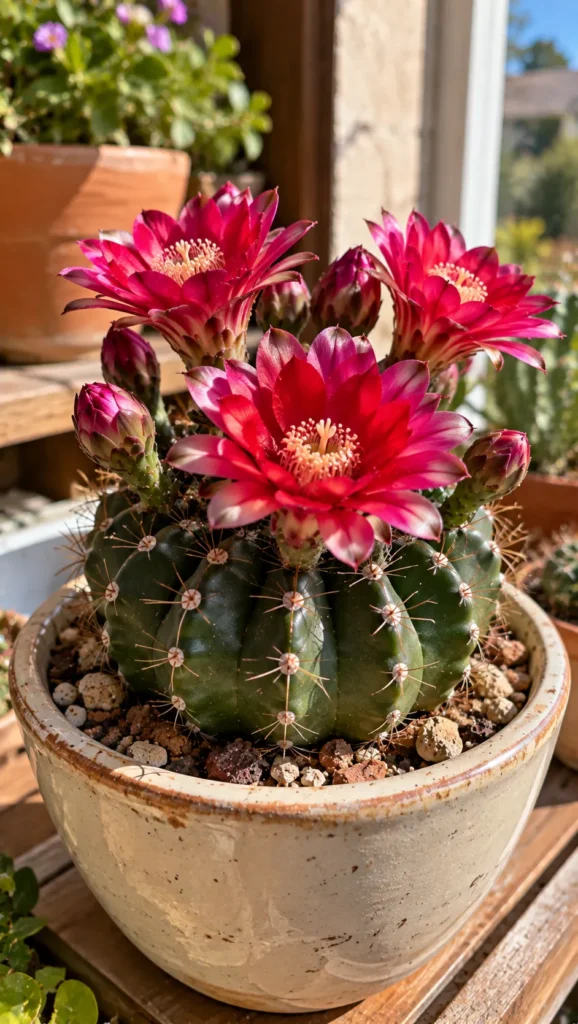
Gymnocalycium cacti often produce elegant trumpet-shaped flowers in white, pale pink, or shades of red, depending on the species. Their smooth, rounded bodies and relatively delicate blooms offer a softer appearance than the spiny silhouettes of many desert cacti.
What You’ll Need
- Healthy Gymnocalycium cactus
- Pot with drainage holes
- Well-draining cactus substrate
- Bright light suited to the species
- Watering can
Quick How-To
Place the cactus in bright light, adjusting sun exposure to the needs of the particular species. Water only after the growing medium has dried sufficiently, and make sure the pot drains freely. Inspect the roots and stem if the plant remains soft or discolored, as excess moisture can cause serious damage. Give it time to mature rather than relying on heavy feeding to trigger flowers.
Styling Tip
Choose a muted blue, cream, or terracotta pot to complement the flowers. A single flowering specimen on a sunny shelf creates a clean botanical display without taking up much space.
12. Yellow and Pink Mixed Cactus Flower Collection
Description
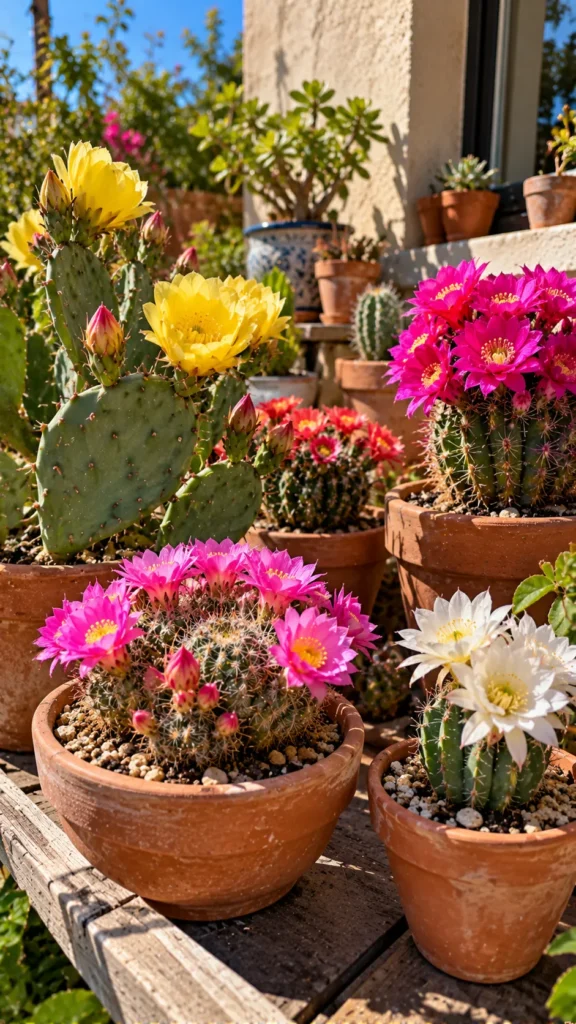
A mixed cactus collection brings together different flower shapes and colors, from bright yellow and soft white to coral, pink, and magenta. The key is choosing compatible plants and giving each variety the growing conditions it needs, rather than grouping every cactus together simply for appearance.
What You’ll Need
- Several correctly identified flowering cacti
- Individual pots with drainage
- Appropriate soil mixes for each species
- A bright shelf or outdoor growing area
- Plant labels
Quick How-To
Select healthy plants with different bloom colors and arrange them together while keeping each in its own suitable container. Group desert cacti with similar sunlight and watering needs, and keep tropical forest cacti separate if their requirements differ. Rotate pots occasionally for balanced growth, but avoid repeatedly moving plants with developing buds. Check each plant individually before watering.
Styling Tip
Arrange pots at different heights using a sturdy shelf or plant stand. Mix terracotta with a few colorful ceramic pots, but leave enough space between plants for airflow, easy watering, and safe handling.
FAQ SECTION
How often do cactus flowers bloom?
It depends on the species, age, health, and growing conditions. Some cacti flower annually when mature and given appropriate seasonal conditions, while others may take several years to bloom. Certain flowers last only a few hours or a single day, whereas others remain open for longer.
Why is my cactus not flowering?
Common reasons include insufficient light, immaturity, excessive watering, poor drainage, too much fertilizer, or a lack of suitable seasonal conditions. Identify your cactus first, because desert cacti and tropical forest cacti have different needs. A healthy plant with the right light and care has a better chance of flowering, but blooms cannot be guaranteed.
Do cactus flowers need direct sunlight?
Not all of them. Many desert cacti prefer strong light and may tolerate direct sun after gradual acclimation. Christmas cactus, Easter cactus, and orchid cactus generally prefer bright filtered light. Research the particular species before moving it into intense sunshine, which can scorch stems and flowers.
How long do cactus flowers last?
Some species, including certain night-blooming cacti, produce flowers that open for just one night. Other varieties may keep their flowers for several days. Temperature, light, and the specific plant variety can affect how long the blooms remain attractive.
Should I water a cactus more when it flowers?
Not automatically. Continue watering according to the species, soil dryness, temperature, and growth stage. A flowering cactus still needs good drainage, and keeping its roots constantly wet can cause rot. Check the growing medium instead of watering on a fixed schedule.
Can cactus flowers grow indoors?
Yes. Many cacti can flower indoors if they receive suitable light, appropriate seasonal conditions, and well-draining soil. A bright window may work for some species, while others need stronger light or a seasonal outdoor period. Choose varieties that suit your available space and climate.
RELATED CONTENT
CLOSING
Cactus flowers remind us that even the most unusual plants can produce delicate, colorful blooms when their needs are understood. From the cheerful yellow flowers of prickly pear to the dramatic petals of night-blooming cereus, every variety offers something different to appreciate. Start by identifying the cactus you own, then focus on the right light, drainage, and watering routine rather than trying to force it to flower. If you grow several varieties, you may discover that their different blooming seasons keep your collection interesting throughout the year. I’d love to know which cactus flower is your favorite and which variety you’d like to grow next. Choose a plant that suits your space, give it time to thrive, and enjoy the flowers when they finally appear.




One Comment