
12 Living Room Decor Ideas Aesthetic for a Modern and Cozy Look

Living Room Decor Ideas Aesthetic
Your living room should feel like a place where you can relax, express your personality, and enjoy spending time at home. Creating an aesthetic living room doesn’t mean buying all-new furniture or copying a perfectly staged space from Pinterest. Often, the most beautiful rooms combine thoughtful colors, cozy textures, meaningful decorations, and practical arrangements that work for everyday life.

Whether you love warm neutrals, colorful accents, vintage finds, or modern minimalist interiors, these 12 living room decor ideas aesthetic will help you create a space that feels inviting and personal without wasting money. I’ll share practical ways to style each idea, what materials are worth investing in, and the small details that make a real difference.
1. Create a Warm Neutral Living Room with Layered Textures
Description
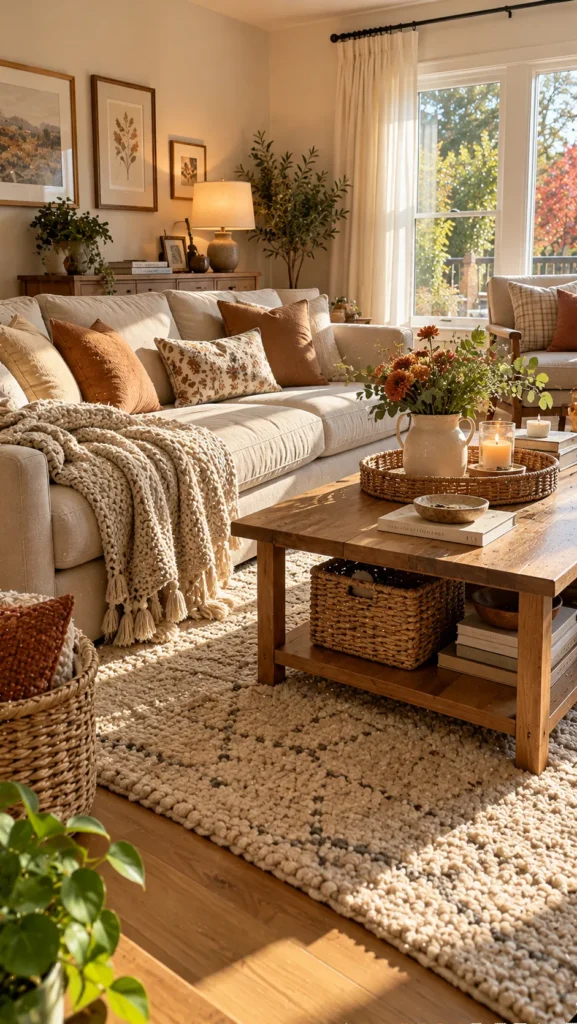
A warm neutral living room feels calm and sophisticated without looking plain. Combine cream, beige, soft brown, and warm white with different textures to create depth. The secret is balancing similar colors with materials that feel distinct, rather than filling the room with matching beige accessories.
What You’ll Need
- Cream or beige cushion covers
- A textured throw blanket
- A neutral area rug
- Linen-style curtains
- Wooden or woven decorative accents
Quick How-To
Start with the largest surfaces, such as your sofa, rug, and curtains. Choose two or three complementary neutral shades and repeat them throughout the room. Add cushions in different textures, such as cotton, boucle, and knitted fabric. Introduce natural wood or woven baskets to prevent the room from feeling flat. If your sofa and walls are both light, include a darker accent through a wooden coffee table or brown cushion. Keep the main walking paths open and make sure the rug is large enough to connect the seating area visually.
Styling Tip
Use warm white lighting instead of harsh cool-white bulbs. The softer light makes cream and beige fabrics feel more welcoming, especially in the evening.
2. Style a Cozy Living Room with Earthy Green Accents
Description
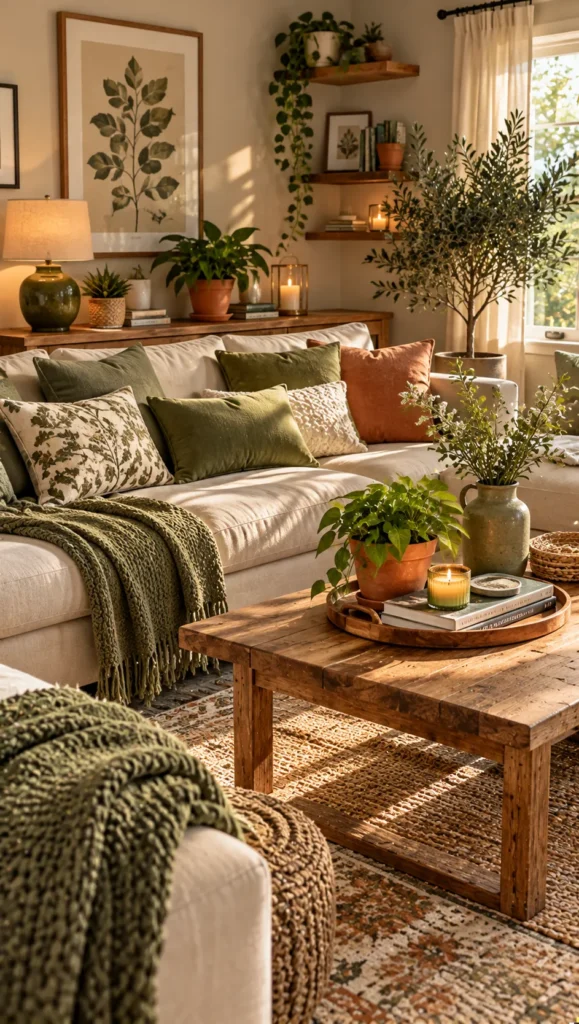
Earthy green accents bring a natural, relaxing feeling to a living room without requiring a complete makeover. Sage, olive, and muted forest green work beautifully with cream walls, natural wood, and warm fabrics. A few repeated green details create a cohesive look without overwhelming the space.
What You’ll Need
- Green cushion covers or a throw
- One or two indoor plants
- A ceramic vase
- Wooden decorative accessories
- Optional green artwork
Quick How-To
Choose one main green shade and use it in several places, such as cushions, artwork, and a planter. Keep the larger furniture pieces relatively neutral so the color remains balanced. Add a healthy indoor plant suited to the room’s light conditions, and place smaller accessories at different heights. If you have a dark sofa, use lighter sage accents to create contrast. Avoid introducing too many unrelated green shades, which can make the room feel disorganized.
Styling Tip
Pair sage green with warm wood and cream textiles for a soft, natural appearance. If you prefer a richer look, use olive green with walnut-colored furniture and brass-toned details.
3. Add a Gallery Wall with Personal Artwork
Description
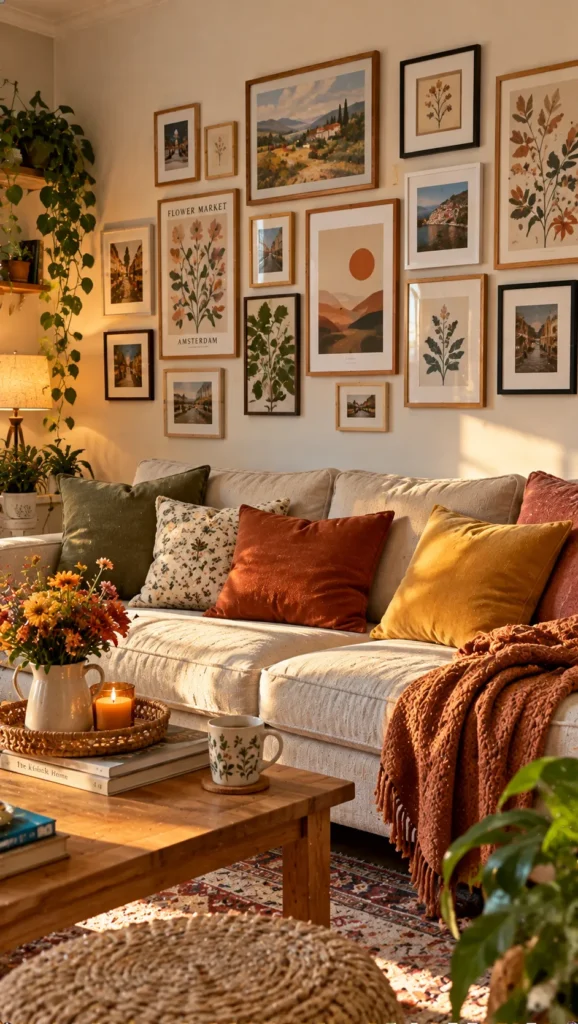
A gallery wall can turn an empty living room wall into a personal focal point. Instead of buying an entire matching art collection, combine photographs, illustrations, small prints, and meaningful pieces. The result feels more authentic when the artwork reflects your interests and has a consistent visual connection.
What You’ll Need
- A selection of framed prints or photographs
- Picture frames in two or three finishes
- Measuring tape and paper templates
- Suitable wall hooks or hanging hardware
- Optional picture ledge
Quick How-To
Lay your frames on the floor before hanging anything. Choose a unifying element, such as a shared color palette, similar frame finishes, or a common subject. Cut paper templates the size of each frame and arrange them on the wall with removable tape. Keep the spacing reasonably consistent and center the overall arrangement around eye level when viewed from the main seating area. Use wall fixings appropriate for the wall type and frame weight. For renters, a picture ledge or approved removable hanging system can offer more flexibility.
Styling Tip
Mix larger pieces with smaller prints, but avoid making every frame the same size. A slightly varied arrangement feels collected and personal while still looking intentional.
4. Create an Aesthetic Living Room with Statement Lighting
Description
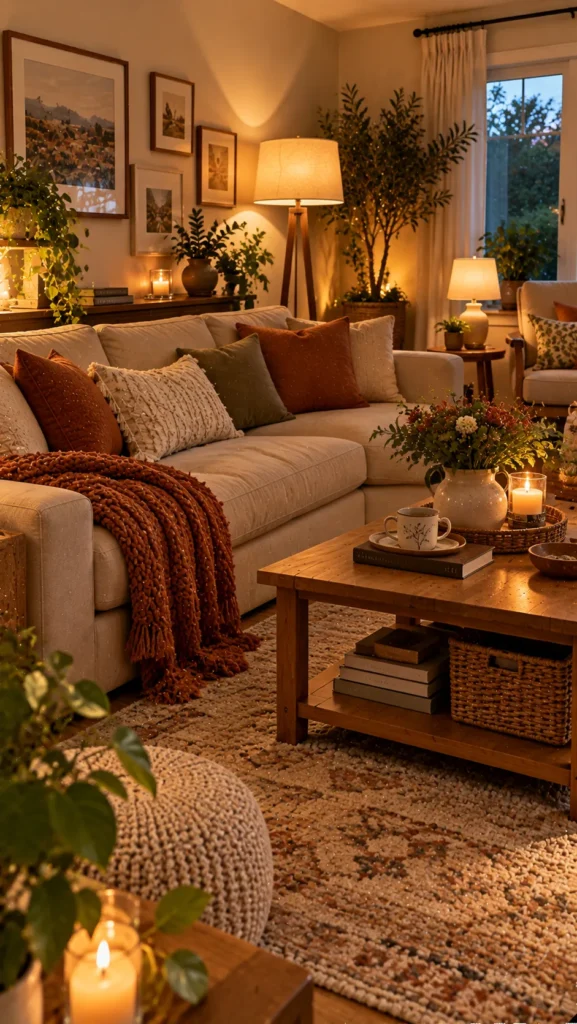
Lighting can change the entire atmosphere of a living room, especially when overhead lighting feels too bright or flat. Combining a floor lamp, a table lamp, and gentle accent lighting creates a layered effect that feels comfortable and visually interesting without requiring expensive furniture.
What You’ll Need
- A floor lamp or table lamp
- Warm-white light bulbs
- A small lamp table or sideboard
- Optional rechargeable accent light
- Cable clips or a cable organizer
Quick How-To
Begin with your existing ceiling light, then add a lamp near the sofa for reading and another light source in a darker corner. Choose warm-white bulbs with a comfortable brightness for relaxing. Position lamps so they illuminate the room without shining directly into your eyes or reflecting harshly on the television. Hide loose cables safely and avoid overloading outlets. If you want a softer evening atmosphere, switch on two or three smaller light sources rather than relying on one bright overhead fixture.
Styling Tip
A paper, fabric, or frosted-glass lampshade can soften the light and introduce texture. Choose a lamp shape that complements your furniture rather than competing with it.
5. Decorate with a Curated Coffee Table Display
Description
A thoughtfully styled coffee table adds character to the living room while remaining useful for everyday life. A small collection of books, a ceramic object, and a simple vase can create a polished appearance without making the table feel crowded or difficult to use.
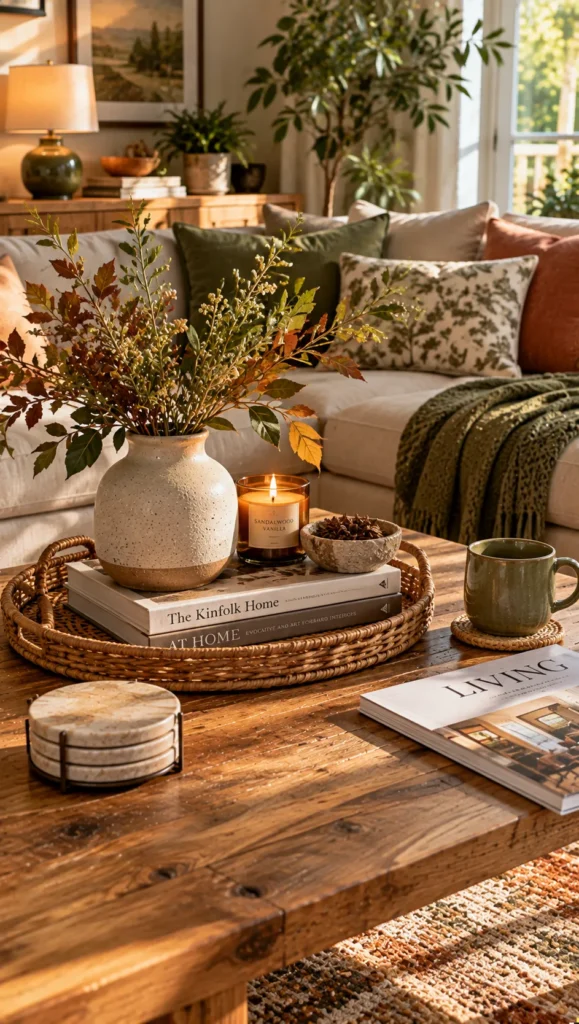
What You’ll Need
- A decorative tray
- Two or three coffee-table books
- A small vase or ceramic object
- Optional fresh or dried flowers
- A coaster set
Quick How-To
Start by clearing the entire tabletop. Place a tray slightly off-center, then add one or two books and a decorative object with a different height or texture. Leave enough empty space for drinks, remote controls, and everyday items. If the table is small, use fewer objects rather than miniature decorations scattered everywhere. Choose materials that complement the sofa and rug, such as wood, ceramic, glass, or woven fibers. Avoid tall arrangements that block conversation across the seating area.
Styling Tip
Use an odd number of objects when it helps create a natural arrangement, but don’t follow the rule rigidly. The most important thing is keeping the display balanced and practical.
6. Make a Small Living Room Feel Bigger with Mirrors
Description
Mirrors can help a small living room feel brighter and more open by reflecting natural light and creating a stronger sense of depth. The best placement depends on what the mirror reflects. A well-positioned mirror can highlight a window, an attractive view, or a favorite part of the room.

What You’ll Need
- A large wall mirror or a few smaller mirrors
- Suitable wall fixings
- Measuring tape
- A microfiber cleaning cloth
- Optional decorative frame
Quick How-To
Look at the room during daylight and identify where the natural light enters. Position a mirror to reflect that light into a darker area without directing glare toward the sofa or television. A large mirror above a console can create a useful focal point, while a tall mirror can emphasize ceiling height. Measure carefully before installation and use fixings rated for the mirror’s weight. In narrow rooms, avoid placing mirrors where their reflections create visual clutter or make the space feel busier.
Styling Tip
Choose a frame that suits your decor. A thin black frame feels modern, natural wood creates warmth, and an antique-style frame adds vintage character.
7. Bring Nature Indoors with a Living Room Plant Corner
Description
A small plant corner introduces natural shapes, fresh color, and texture into an aesthetic living room. Combining plants with different leaf sizes creates more visual interest than placing identical pots in a straight line. You can create the look with one statement plant or a few smaller varieties.
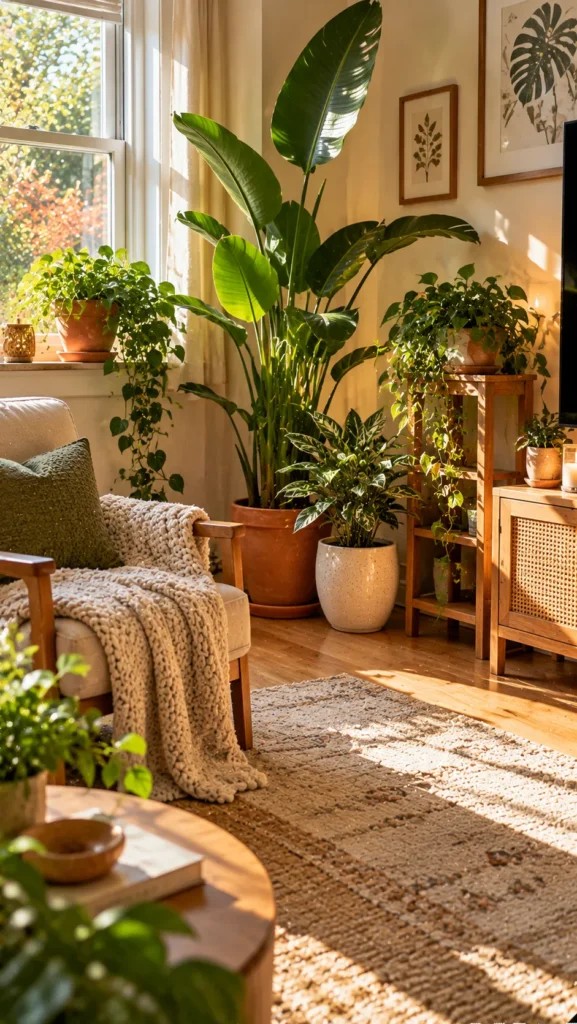
What You’ll Need
- Indoor plants suited to your available light
- Pots with drainage holes
- Plant saucers
- A plant stand or sturdy side table
- Suitable potting mix, if repotting
Quick How-To
Check how much natural light the intended corner receives before choosing plants. Place taller plants toward the back and smaller ones in front, leaving enough space for each plant to grow. Use pots in complementary materials or colors to create a unified look. Protect wooden floors and furniture with suitable saucers, and make sure water can drain properly. Rotate plants when appropriate for even growth, and remove dead leaves regularly. If pets live in your home, check plant safety before bringing new varieties indoors.
Styling Tip
Combine one taller plant with two smaller plants rather than filling every available corner. Leaving space around the leaves makes the arrangement look more natural and less crowded.
8. Add Personality with Vintage and Thrifted Decor
Description
Vintage and thrifted accessories can make a living room feel more individual than a collection of brand-new matching pieces. Look for interesting frames, ceramic vases, wooden bowls, small side tables, and decorative objects with character. A few carefully chosen finds can add warmth without making the room look cluttered.
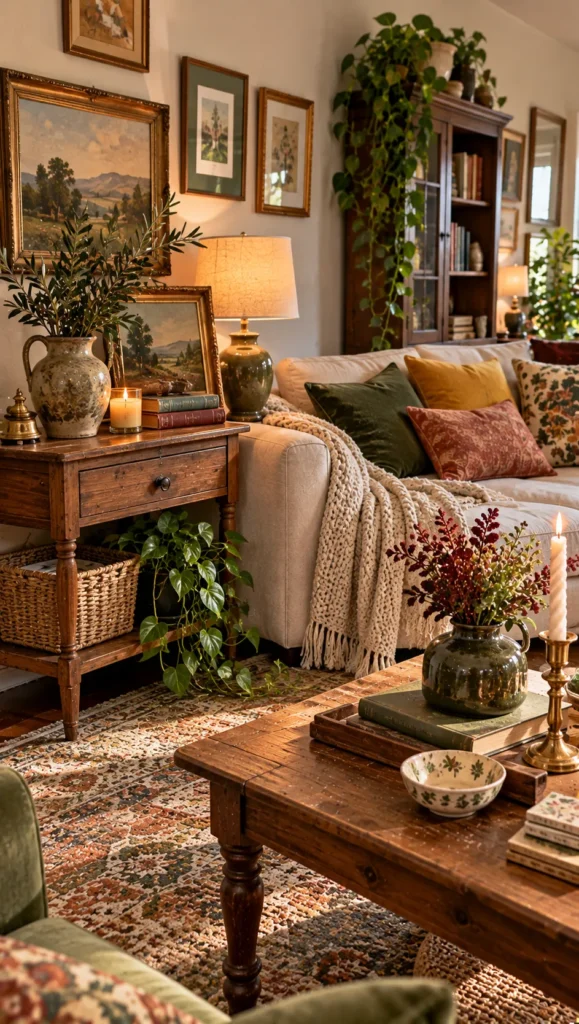
What You’ll Need
- One or two secondhand decorative pieces
- A small side table or shelf
- A microfiber cloth and suitable cleaner
- Optional paint or repair supplies
- A simple color palette to guide your choices
Quick How-To
Start with one item that fills a real need or adds something missing from your room. Check secondhand furniture for stability, odors, pests, and damage before bringing it home. Clean pieces using methods suitable for their materials, and repair loose hardware or rough edges where necessary. Mix vintage accessories with modern furniture to create contrast. Avoid buying objects simply because they are inexpensive; choose pieces that suit your colors, scale, and available storage.
Styling Tip
Repeat one detail, such as warm wood, aged brass, or cream ceramics, across several parts of the room. This creates a connection between different vintage finds without making them look like a matching set.
9. Use Curtains to Create a Softer, Taller-Looking Space
Description
The right curtains can make a living room feel taller, softer, and more complete. Lightweight fabrics allow natural light to filter through, while heavier curtains can add warmth and privacy. Choosing the correct length and hanging position often matters more than choosing an expensive fabric.
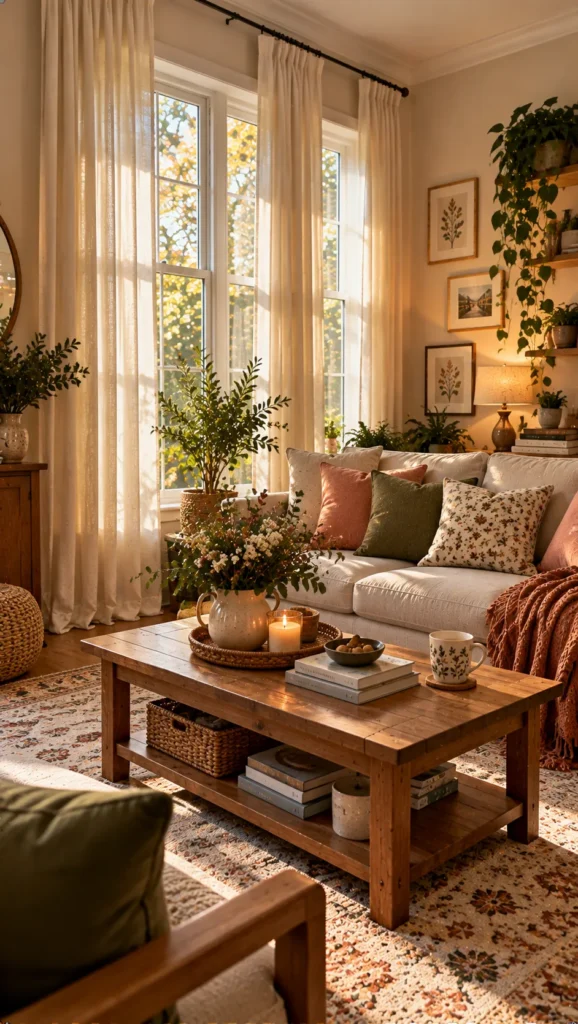
What You’ll Need
- Curtains suited to the room’s light and privacy needs
- A curtain rod and appropriate brackets
- Measuring tape
- A drill or suitable installation tools
- Curtain rings or clips, if needed
Quick How-To
Measure the window and the intended curtain length before purchasing fabric. Mount the rod higher than the top of the window when practical, and extend it beyond the window frame so the curtains can stack to the sides. This helps preserve daylight and makes the window appear wider. Choose a width that allows the fabric to hang in soft folds when closed. Follow installation instructions carefully, especially for heavy curtains or plasterboard walls.
Styling Tip
Cream or warm-white curtains suit many living rooms, while muted green, dusty rose, or terracotta can introduce color. Let the fabric complement the rug and cushions instead of matching every item exactly.
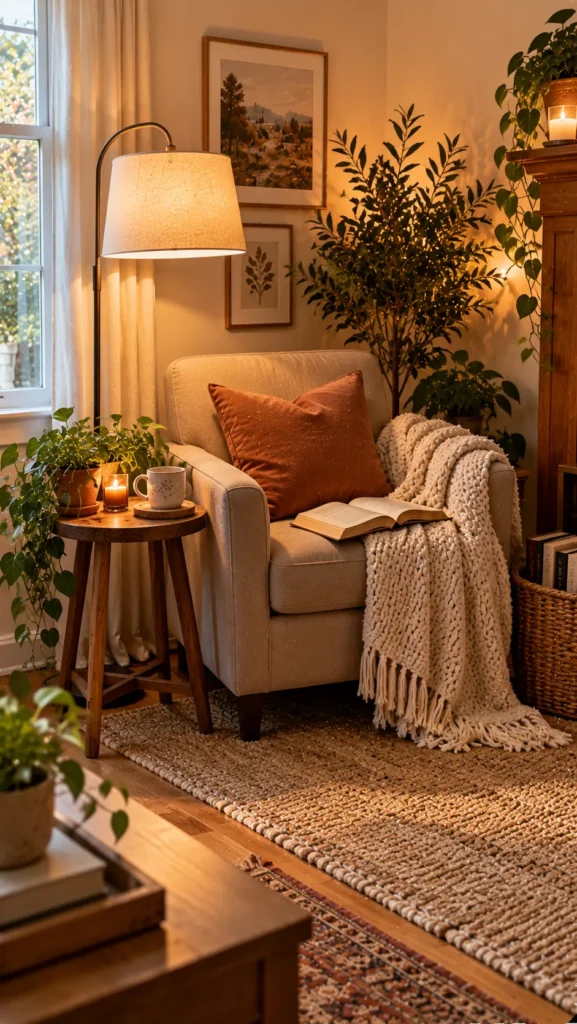
10. Create a Reading Nook in an Unused Corner
Description
A quiet reading nook makes an underused living room corner feel purposeful and inviting. You don’t need a dedicated reading chair or a large budget. A comfortable seat, good lighting, a small surface for a drink, and a soft throw can create a cozy spot for reading or relaxing.
What You’ll Need
- A comfortable armchair or existing accent chair
- A floor or table lamp
- A small side table
- A cushion and throw blanket
- A compact bookshelf or basket for books
Quick How-To
Choose a corner that doesn’t obstruct doorways or the main walking path. Position the chair so you can read comfortably in daylight, then add a lamp for evening use. Place a small table within easy reach and store books in a basket or on a nearby shelf. Add a cushion for support and a throw that suits the room’s color palette. Make sure the chair has enough clearance to sit down and stand up easily.
Styling Tip
Use one accent color from the rest of your living room in the cushion or throw. This makes the nook feel connected to the overall design rather than like a separate decorating project.
11. Style Open Shelves with Books, Art, and Decorative Objects
Description
Open shelves can display your personality while providing practical storage for books and everyday accessories. A mix of vertical books, small framed prints, ceramics, and natural materials creates a relaxed look. The key is editing the arrangement so the shelves remain attractive and easy to maintain.

What You’ll Need
- A sturdy bookshelf or wall shelves
- Books and a few decorative objects
- Small framed artwork
- Storage baskets
- Suitable fixings for wall-mounted shelves
Quick How-To
Begin by removing everything from the shelves and grouping your belongings by type or color. Place heavier books on lower shelves and distribute their weight evenly. Mix vertical book arrangements with a few horizontal stacks, leaving small gaps for ceramics or artwork. Use baskets for loose items that would otherwise look messy. If the shelves are wall-mounted, install them with fixings appropriate for the wall and expected load. Avoid filling every inch, because empty space helps the display feel balanced.
Styling Tip
Repeat a few colors throughout the shelves, such as cream, green, and warm brown. You can still display colorful books and personal treasures without making the arrangement feel chaotic.
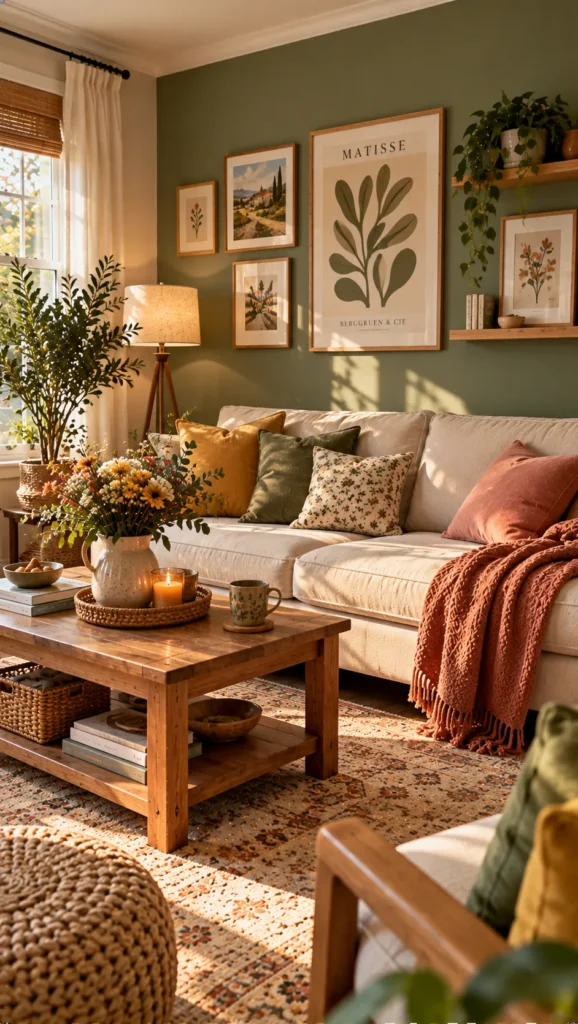
12. Add Color with an Affordable Accent Wall
Description
An accent wall is a simple way to give a living room more personality without repainting the entire space. A muted green, warm terracotta, dusty blue, or soft clay shade can create a focal point behind the sofa or television. The right color depends on your room’s natural light and existing furnishings.
What You’ll Need
- Interior paint suitable for your walls
- Paint rollers and brushes
- Painter’s tape and a drop cloth
- A small sample pot
- Wall-preparation supplies
Quick How-To
Choose a wall that naturally draws attention, such as the wall behind the sofa. Test paint samples at different times of day because natural and artificial lighting can change how a color appears. Clean the surface, repair small imperfections, and protect floors and adjacent areas before painting. Apply primer when recommended and use even coats, allowing the paint to dry according to the manufacturer’s instructions. Reintroduce your furniture and decor gradually, checking that the new color works with the rest of the room.
Styling Tip
Use cushions, artwork, or a vase to repeat the accent-wall color elsewhere in the living room. This creates a coordinated look without requiring every accessory to match.
FAQ SECTION
How can I make my living room look aesthetic on a budget?
Start by rearranging the furniture, decluttering surfaces, and choosing a consistent color palette. Update cushion covers, improve lighting, add a plant, or frame affordable artwork. Small changes can make a noticeable difference without replacing large furniture pieces.
Which colors make a living room look cozy?
Warm white, cream, beige, terracotta, muted green, and soft brown can create a welcoming atmosphere. You can also use darker colors for contrast, especially when balanced with lighter textiles and suitable lighting.
How do I decorate a small living room without making it look crowded?
Choose furniture that fits the room, keep walkways clear, and avoid too many small decorative objects. Mirrors, appropriately sized rugs, lightweight curtains, and vertical storage can help the space feel more open.
What is the easiest way to make a living room look more expensive?
Focus on visual consistency, proper curtain placement, layered lighting, and a few quality-looking textures. Keeping the room clean and organized often matters more than purchasing expensive decorations.
How often should I update my living room decor?
There is no fixed schedule. You can refresh the space seasonally by changing cushion covers, rearranging accessories, or adding flowers and plants. Keep larger purchases for items that genuinely improve your comfort or suit your long-term style.
How do I choose a living room decor style?
Start by saving examples of rooms you genuinely like and identify what they have in common, such as colors, materials, furniture shapes, or lighting. Choose two or three main design elements and build around them, allowing room for personal objects and practical needs.
RELATED CONTENT
- Kitschy Christmas Decor Ideas for a Whimsical Festive Look
- Small Living Room Decorating Ideas on a Budget
CLOSING
Creating an aesthetic living room is really about making your home feel more like you. You don’t have to follow every trend or buy everything at once. Start with one idea that fits your space, whether that’s adding a gallery wall, styling a coffee table, introducing greenery, or improving the lighting.
Pay attention to the small details, keep your everyday needs in mind, and give yourself permission to experiment until the room feels right. Some of the most beautiful living rooms are built slowly, with meaningful objects and affordable updates collected over time.
I hope these ideas inspire you to give your living room a little refresh. Try your favorite project, add your own personal touch, and share which idea you loved most. Happy decorating!



One Comment