
12 Fire Safety Activities for Kids to Learn Important Skills

Fire Safety Activities
Fire safety is an essential life skill that children can learn through simple, engaging, age-appropriate activities. Instead of relying only on explanations, hands-on games, drawing exercises, role-playing, and practice drills can help children recognize hazards and understand what to do in an emergency.

The most effective activities focus on a few clear actions: staying away from fire, recognizing smoke alarms, knowing how to escape, and asking trusted adults for help. These 12 fire safety activities are suitable for classrooms, homeschool lessons, community programs, and family learning sessions. Always supervise children closely and use paper props, pictures, and pretend scenarios rather than real flames or hot objects.
1. Draw Your Family Fire Escape Plan
Description
Help children understand how to leave their home safely by drawing a simple floor plan. Include doors, windows, stairs, and two possible exits from each room when available. The goal is to make escape routes familiar before an emergency occurs, not to create a perfect architectural drawing.

What You’ll Need
- Paper
- Colored pencils or crayons
- Ruler
- Simple home floor plan, if available
Quick How-To
Ask children to draw their bedroom and the nearest exits. Use arrows to mark escape routes and choose a safe outdoor meeting place with the family. Review the plan together and check that doors and windows can be opened safely.
Styling Tip
Use different colors for rooms, exits, and escape arrows so children can understand the plan at a glance.
2. Stop, Drop, and Roll Practice
Description
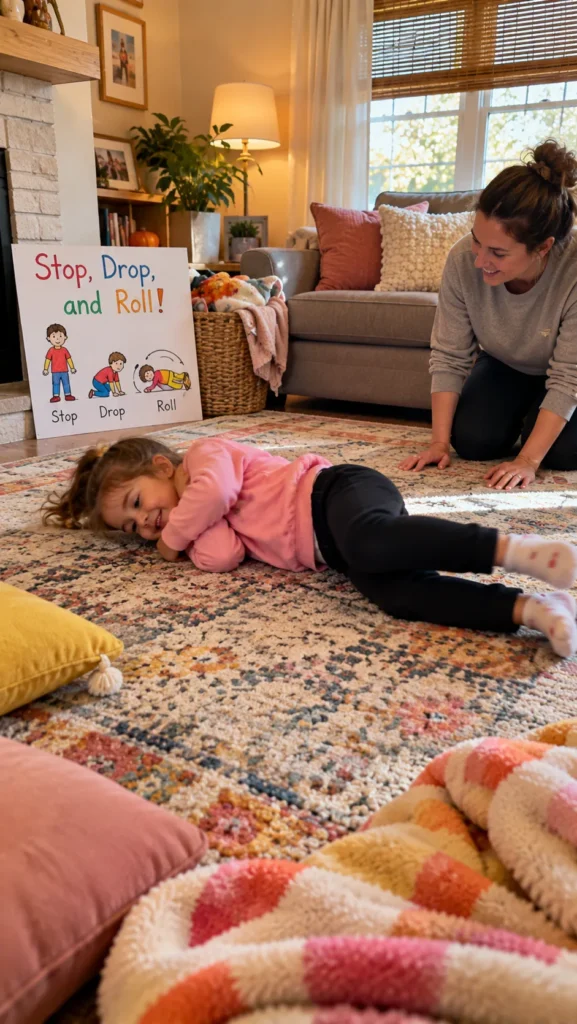
This activity teaches children what to do if their clothing catches fire. Practicing the movements slowly on a clear, soft floor helps them remember the sequence without frightening them. Explain that running can make flames spread and that children should call for adult help immediately.
What You’ll Need
- Open floor space
- Soft mat or carpet
- Picture cards showing each step
Quick How-To
Demonstrate how to stop moving, drop to the ground, cover the face with hands, and roll back and forth until the flames are out. Let children practice the sequence without any fire or heat, then review when to call for help.
Styling Tip
Make a simple three-picture poster showing stop, drop, and roll, and display it at children’s eye level.
3. Smoke Alarm Sound Recognition Game
Description
Children need to recognize a smoke alarm and understand that its sound means they must act quickly. This listening game helps them connect the sound with the correct response: alert an adult if appropriate, leave the building immediately, and go to the agreed meeting place. Never encourage children to investigate the source of an alarm.

What You’ll Need
- Smoke alarm safety audio or a picture card
- Speaker, if needed
- Response cards
- Open practice space
Quick How-To
Play a safe recording of a smoke alarm or show a picture of one. Ask children what the sound means, then practice walking quickly to the designated exit and meeting point. Explain that they must never return inside for toys or pets.
Styling Tip
Use large, simple picture cards with clear symbols for the alarm, exit, and outdoor meeting point.
4. Firefighter Role-Play Station
Description
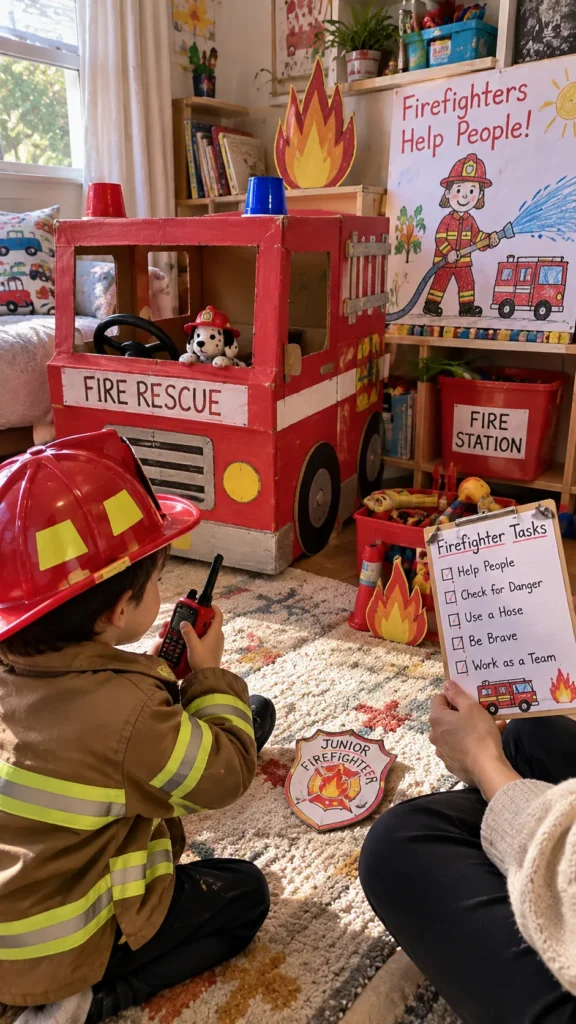
Role-playing helps children become familiar with firefighters and understand that emergency responders are there to help. Children can pretend to answer simple safety questions, follow an evacuation route, or explain where their meeting point is. Emphasize that they should never hide from firefighters during an emergency.
What You’ll Need
- Toy firefighter helmet
- Paper badges
- Toy walkie-talkie
- Picture cards
- Pretend emergency phone
Quick How-To
Set up a pretend emergency station and let children take turns being firefighters and people needing help. Practice giving a name, describing a location with adult assistance, and following instructions from emergency responders.
Styling Tip
Create a small classroom corner with a red paper sign, simple props, and safety posters rather than realistic emergency equipment.
5. Safe or Unsafe Picture Sorting
Description
This activity helps children distinguish everyday fire hazards from safer choices. Use illustrations showing items such as unattended candles, overloaded outlets, matches, clear exits, and adults supervising cooking. Focus on recognition rather than asking children to handle potentially dangerous objects.

What You’ll Need
- Printed safety pictures
- Two labeled sheets: Safe and Unsafe
- Glue sticks
- Scissors
- Crayons
Quick How-To
Show one picture at a time and ask children to explain whether it represents a safe choice. Help them sort the images and discuss what they should do when they notice a hazard: stay away and tell a trusted adult.
Styling Tip
Use green and red headings with large pictures so younger children can participate even if they are still learning to read.
6. Emergency Number Learning Activity
Description
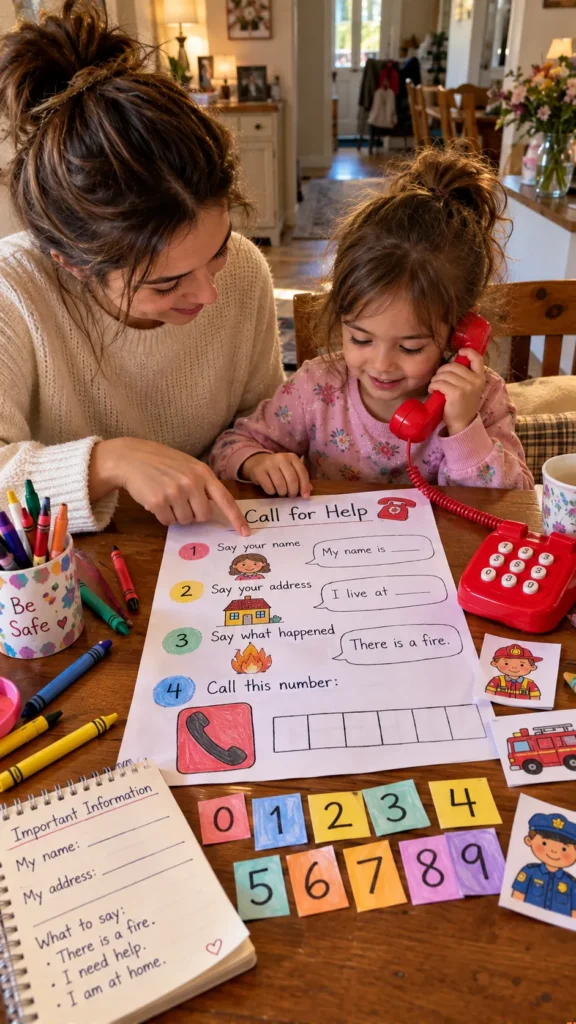
Children should know how to seek help in an emergency, but emergency numbers differ by country. This activity introduces the correct local emergency number and teaches children to share essential information calmly. Explain that emergency services should only be contacted for genuine emergencies, not as part of a pretend call to a real operator.
What You’ll Need
- Paper telephone template
- Crayons
- Local emergency number information
- Simple role-play cards
Quick How-To
Write the correct local emergency number on a large card. Use a toy phone to practice a pretend call, explaining that children should state that there is a fire, give their location if they know it, and follow the operator’s instructions.
Styling Tip
Make a large, easy-to-read emergency number poster and place it near the classroom’s safety learning area.
7. Crawl-Low Escape Demonstration
Description
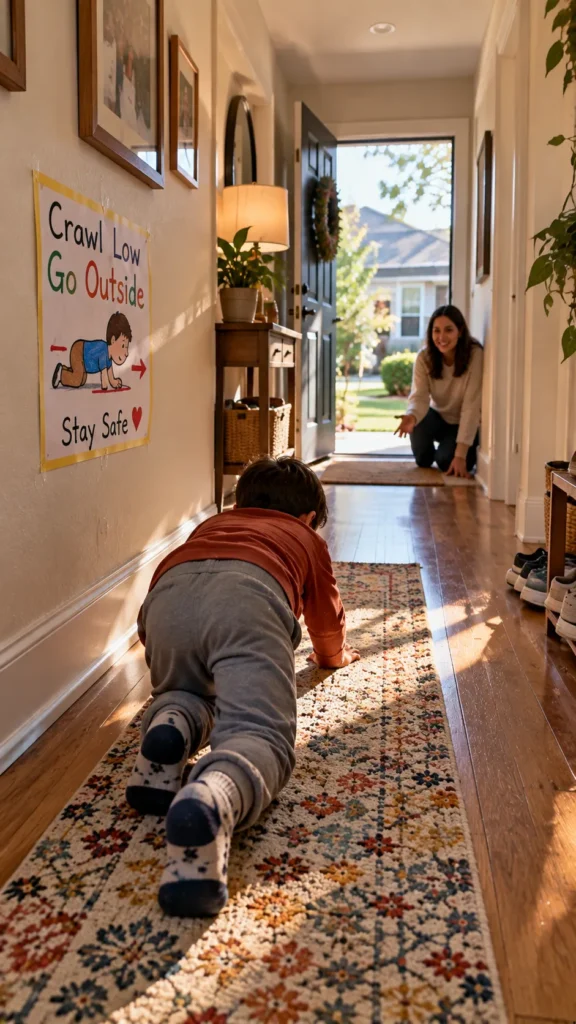
Smoke can make it difficult to breathe and see during a fire. This activity teaches children the principle of staying low while escaping through smoke, but it should remain a simple movement demonstration rather than a simulation that exposes children to smoke or reduced visibility.
What You’ll Need
- Clear floor space
- Soft mat
- Exit picture cards
- Cones or floor markers
Quick How-To
Explain that smoke rises and that children should stay low while moving toward a safe exit if smoke is present. Practice crawling or crouching along a clear route in a smoke-free room. Tell children not to stop to collect belongings and to follow their escape plan.
Styling Tip
Use floor arrows and bright exit signs to create a simple route children can follow during practice.
8. Fire Safety Storybook and Discussion
Description
A story can help younger children understand fire safety without making the lesson frightening. Choose a child-friendly book that explains smoke alarms, safe exits, firefighters, and asking adults for help. Pause at key moments and ask what the character should do next to encourage practical thinking.

What You’ll Need
- Age-appropriate fire safety book
- Picture cards
- Paper
- Crayons
Quick How-To
Read the story aloud and discuss the safety choices made by the characters. Afterward, ask children to draw one important lesson, such as leaving immediately when an alarm sounds or meeting their family outside.
Styling Tip
Create a small reading display with the book, children’s drawings, and a few clear fire safety reminders.
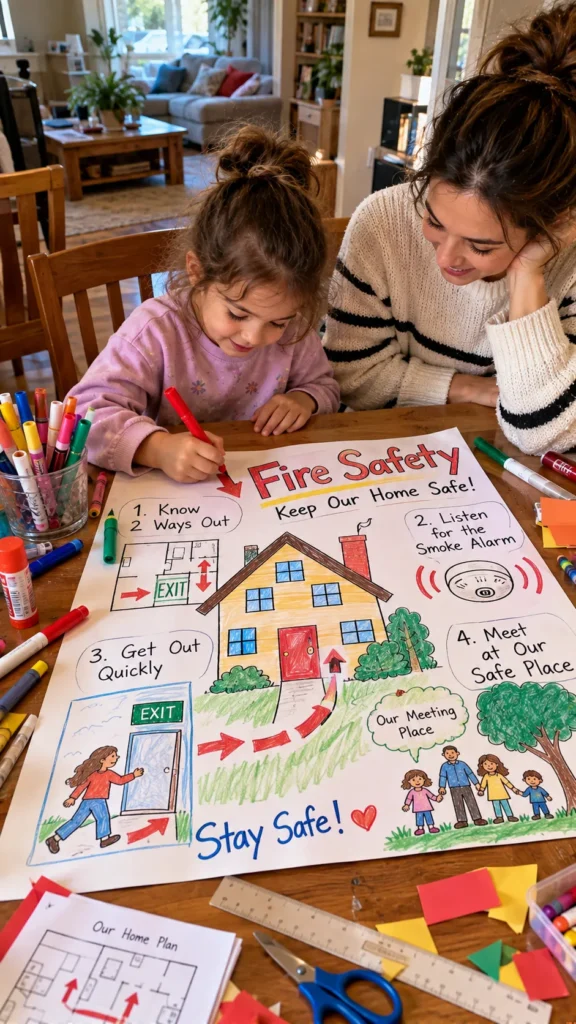
9. Design a Fire Safety Poster
Description
Creating a poster gives children a chance to repeat important safety messages in their own words and pictures. Keep the message focused on one or two actions, such as recognizing a smoke alarm, leaving quickly, or meeting outdoors. Avoid filling the poster with too much text, particularly for younger children.
What You’ll Need
- Poster paper
- Markers
- Crayons
- Safety picture references
- Ruler
Quick How-To
Ask each child to choose one fire safety message and illustrate it. Help them add a short heading, such as “Leave When the Alarm Sounds” or “Meet Outside,” and discuss the meaning of the finished poster.
Styling Tip
Display the posters at children’s eye level near the classroom entrance or safety learning station.
10. Family Meeting Place Challenge
Description
Choosing a safe outdoor meeting place helps families know where to gather after leaving a burning building. Children can learn the location through a simple map activity and a supervised walk to the designated spot. The meeting place should be away from the building and clear of emergency vehicle access.

What You’ll Need
- Simple home or neighborhood map
- Paper
- Colored pencils
- Outdoor meeting place marker
Quick How-To
Ask children to mark the family meeting place on a map. With an adult, walk the route when there is no emergency and practice gathering at the same location. Explain that nobody should re-enter the building to search for a missing person or pet.
Styling Tip
Use a bright star on the map to identify the meeting place and a different color to mark the escape route.
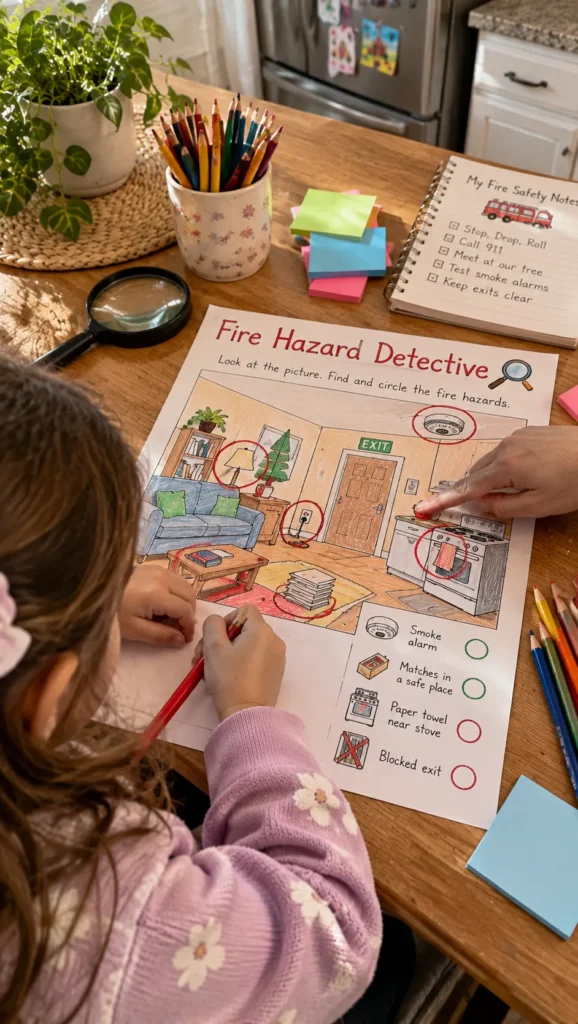
11. Fire Hazard Detective Worksheet
Description
Turn fire prevention into a supervised observation activity using drawings or photographs of everyday rooms. Children can look for blocked exits, unattended cooking, damaged electrical cords, or matches left within reach. They should report hazards to an adult rather than attempting to fix or move dangerous items themselves.
What You’ll Need
- Room safety worksheets
- Pencils
- Hazard picture cards
- Checklist
- Crayons
Quick How-To
Give children a worksheet showing a room with several illustrated hazards. Ask them to circle each unsafe situation and explain how an adult could make the area safer. Finish by discussing why clear exits and careful handling of electrical equipment matter.
Styling Tip
Use a simple magnifying-glass illustration on the worksheet to make the detective theme fun and easy to recognize.
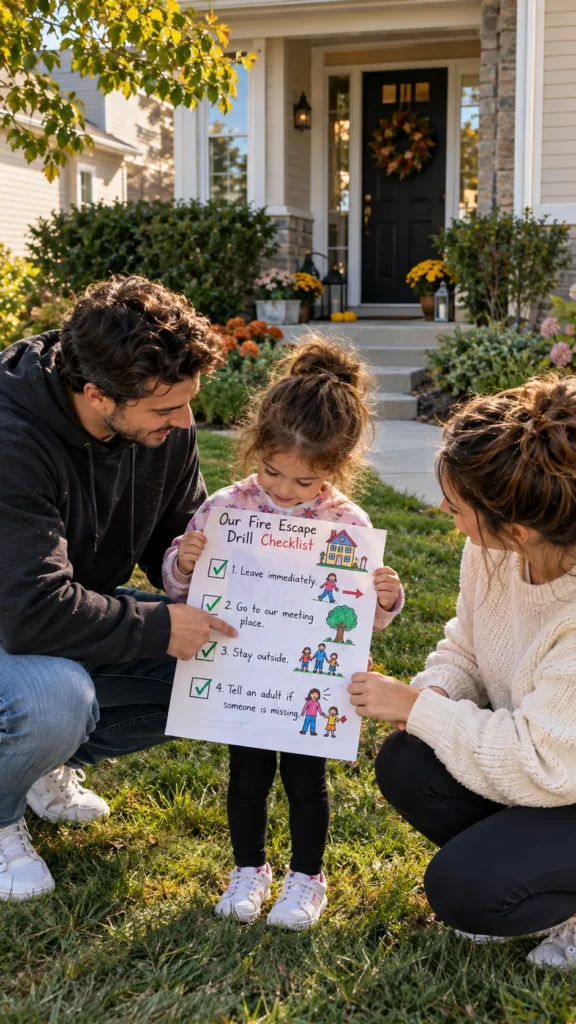
12. Family Fire Escape Drill
Description
A supervised escape drill helps children turn fire safety knowledge into a familiar routine. Practice responding to a smoke alarm, leaving through a safe exit, and gathering at the outdoor meeting point. Keep the drill calm and age-appropriate, and never use real smoke, flames, or locked exits to make the activity more realistic.
What You’ll Need
- Working smoke alarms
- Family escape plan
- Timer, optional
- Outdoor meeting point
- Simple checklist
Quick How-To
Explain the drill before beginning so children understand what will happen. Practice leaving promptly by the safest available route and gathering outside. Review any confusion afterward, check that smoke alarms work, and make changes to the plan if necessary.
Styling Tip
Use a simple checklist with boxes for “heard the alarm,” “left safely,” and “reached the meeting place” to track what the family has practiced.
FAQ SECTION
At what age should children learn fire safety?
Children can begin learning simple rules in preschool, including staying away from matches, recognizing smoke alarms, and telling a trusted adult about danger. Older children can practice escape plans and learn how to communicate with emergency services.
How often should families practice a fire escape plan?
Practice regularly and whenever the home layout or family circumstances change. Check local fire safety guidance for recommended drill frequency, and make sure everyone knows at least two possible exits where available.
What should children do when a smoke alarm sounds?
They should leave immediately using their planned escape route, stay low if smoke is present, and go to the agreed outdoor meeting place. They should never hide or go back inside to retrieve belongings.
Should fire safety activities include real flames?
No. Children’s fire safety activities should use drawings, stories, role-play, and supervised drills without real flames, smoke, or hot objects. Practical fire handling should be left to trained adults and professionals.
How can teachers make fire safety lessons engaging?
Use picture sorting, storytelling, posters, role-play, and short practice drills. Repeating the same few essential actions in different ways helps children remember them.
What should a family fire escape plan include?
It should identify possible exits from rooms, a safe outdoor meeting place, working smoke alarms, and a plan for helping young children or family members who need assistance. Everyone should know not to re-enter a burning building.
RELATED CONTENT
CLOSING
Teaching fire safety does not have to feel frightening or complicated. Small, repeated activities can help children learn how to recognize danger, leave a building safely, and ask for help when they need it. The most important lessons are simple: stay away from fire, respond to smoke alarms, follow the escape plan, and meet everyone outside.
Choose activities that match the children’s ages and repeat the key messages regularly. Review your family’s escape plan, check that smoke alarms work, and make sure every child knows the outdoor meeting place.
I hope these activities help you create a useful and engaging fire safety lesson at home or in the classroom. Try a few, adapt them to your children’s needs, and help them build safety habits that can last a lifetime.




One Comment