
12 Fabric Ceiling Ideas for a Soft and Dreamy Bedroom

Fabric Ceiling Ideas
Fabric ceilings are a creative way to transform an ordinary room into a space that feels softer, warmer, and more visually interesting. From elegant draped panels in a bedroom to colorful fabric installations in a living room, this decorating technique can introduce texture, movement, and personality without requiring a complete renovation.

The best part is that fabric ceilings can suit many styles, including bohemian, romantic, rustic, contemporary, and even minimalist interiors. However, choosing the right fabric, planning the installation, and understanding the room’s conditions are essential for getting a beautiful result. Lightweight materials, secure supports, and thoughtful placement make a significant difference in both appearance and safety. Whether you want a dramatic focal point or a subtle decorative detail, these 12 fabric ceiling ideas offer practical inspiration for creating a distinctive space.
1. Romantic Sheer Fabric Ceiling Drapes
Description
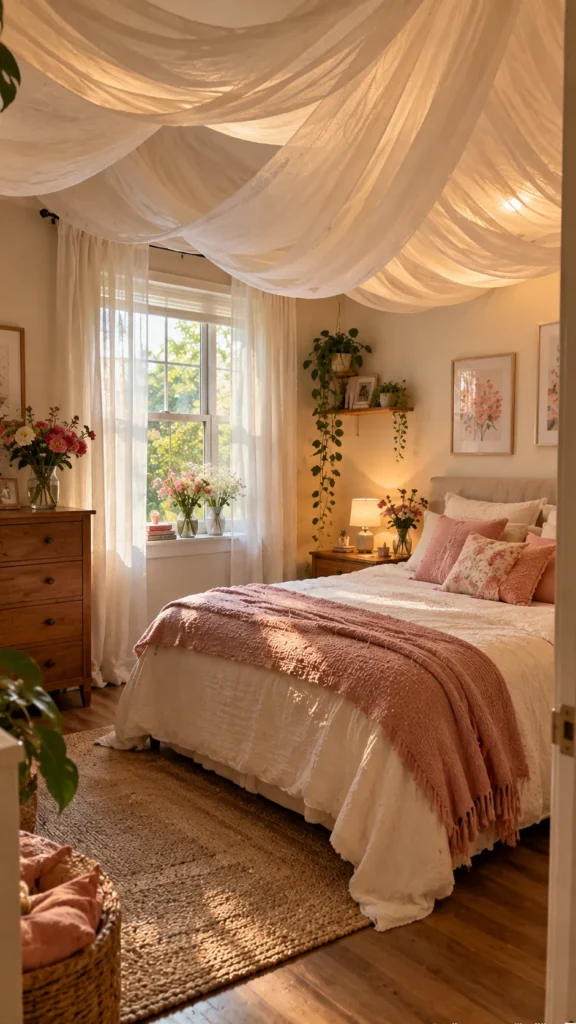
Sheer fabric draped across the ceiling creates a light, romantic atmosphere that works beautifully in bedrooms, dressing areas, and intimate sitting rooms. White, ivory, or soft blush voile allows light to filter through while adding gentle movement. The key is to create controlled folds rather than hanging the fabric too loosely, which can make the ceiling feel cluttered.
What You’ll Need
Lightweight voile or sheer polyester fabric, ceiling-rated hooks or an approved mounting system, measuring tape, fabric scissors, and a step ladder.
Quick How-To
Measure the ceiling and decide where the fabric should begin and end. Allow extra material for soft folds, then attach it only to suitable, securely installed supports. Arrange the fabric in shallow swags, checking that it remains well above head height and away from lights, fans, and other heat sources.
Styling Tip
Pair ivory drapes with warm bedside lighting, neutral bedding, and natural wood furniture. For a polished finish, keep the folds consistent instead of allowing the fabric to bunch randomly.
2. Bohemian Canopy Ceiling with Colorful Fabrics
Description
A bohemian fabric ceiling combines layered colors, relaxed patterns, and tactile materials to create a welcoming, expressive interior. Rust, terracotta, mustard, teal, and muted pink work especially well together. This look suits creative bedrooms, reading corners, and eclectic living spaces, particularly when the rest of the room uses simpler furniture to balance the visual richness.

What You’ll Need
Lightweight patterned cotton, thin woven fabric, measuring tape, fabric clips, and an appropriate ceiling mounting system.
Quick How-To
Choose two or three complementary fabrics rather than mixing every available pattern. Plan the arrangement on the floor first, then install the panels in deliberate sections with gentle overlaps. Secure every panel independently where necessary so the entire arrangement does not depend on a single attachment point.
Styling Tip
Combine geometric prints with small floral patterns and solid colors. Keep the walls relatively calm, and repeat one or two ceiling colors in cushions or rugs to connect the entire room.
3. Elegant Satin Fabric Ceiling for a Luxury Bedroom
Description
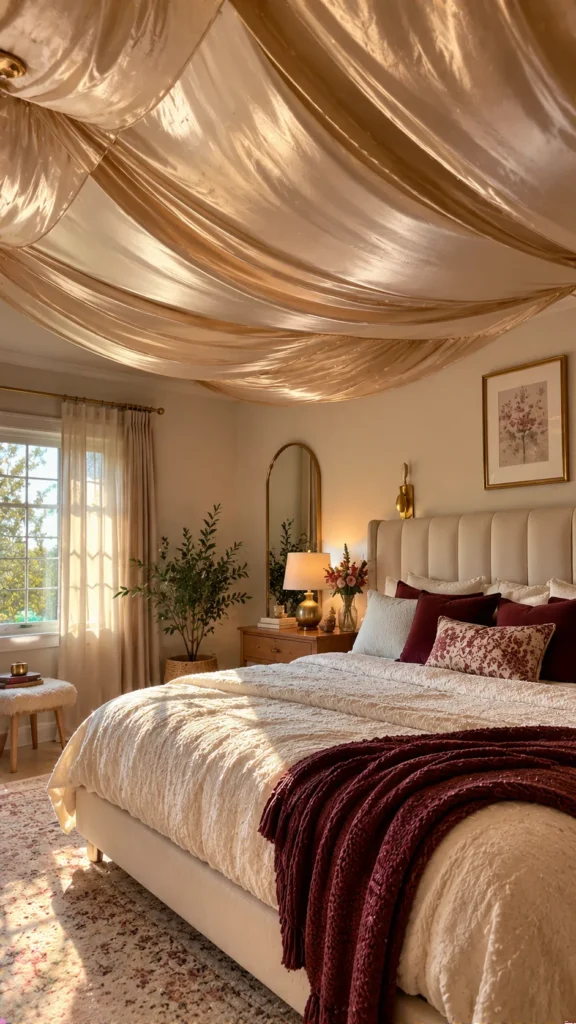
A satin fabric ceiling introduces a sophisticated sheen that reflects light and makes a bedroom feel more luxurious. Champagne, pearl, deep navy, and burgundy can all create striking results. Because satin highlights wrinkles and uneven folds, this style requires careful measuring and neat installation to avoid a messy appearance.
What You’ll Need
Lightweight satin or satin-look polyester, fabric measuring tools, suitable mounting hardware, and a compatible support structure.
Quick How-To
Measure each section carefully and cut the material with enough allowance for the planned finish. Create straight panels or evenly spaced folds, then secure them to an approved support system. Avoid pulling satin excessively tight, as this can distort its appearance and put unnecessary strain on the attachment points.
Styling Tip
Use champagne satin with cream bedding and brushed brass accents for understated elegance. Choose matte finishes elsewhere in the room so the ceiling remains the main reflective feature.
4. Rustic Linen Ceiling Panels
Description
Linen ceiling panels bring natural texture and a relaxed, understated character to rustic bedrooms, farmhouse interiors, and cozy living rooms. Their slightly irregular weave adds depth without relying on bold colors or complicated patterns. Beige, oatmeal, warm gray, and natural flax are particularly versatile, especially when paired with timber furniture and earthy accessories.

What You’ll Need
Lightweight linen or linen-look fabric, measuring tape, scissors, a suitable mounting system, and optional fabric edge tape.
Quick How-To
Measure the ceiling in sections and plan the panel layout before cutting. Finish the edges to prevent fraying, then mount the panels evenly using supports designed for the ceiling structure. If the linen is washable, check its care instructions before installation and avoid using material that may shrink significantly.
Styling Tip
Pair natural linen with wooden beams, woven baskets, and cream-colored textiles. For a more contemporary finish, arrange the panels in clean, straight lines instead of decorative swags.
5. A Starry Night Fabric Ceiling
Description
A starry night ceiling uses deep-colored fabric to create a dreamy atmosphere in a bedroom, reading nook, or themed relaxation space. Midnight blue, charcoal, or dark indigo provides a dramatic background for small star-shaped decorations or subtle decorative lighting. The effect works best when the design remains restrained and does not overwhelm the rest of the room.

What You’ll Need
Dark lightweight fabric, removable decorative stars, suitable ceiling supports, measuring tape, and optional low-heat LED lighting specifically rated for the intended installation.
Quick How-To
Plan a smooth fabric layout or a series of gentle folds, then attach the fabric securely to suitable supports. Add lightweight star decorations only if their attachment method is appropriate for the material. If you introduce lighting, follow the manufacturer’s installation instructions and keep fabric clear of heat-producing components.
Styling Tip
Use a few warm-white decorative points rather than covering every inch with stars. Pale bedding and simple furniture help the dark ceiling feel intentional rather than heavy.
6. Color-Blocked Fabric Ceiling
Description
A color-blocked fabric ceiling uses large areas of contrasting or complementary colors to introduce a contemporary design feature. Combinations such as terracotta and cream, sage green and beige, or dusty blue and white can make a room feel coordinated and distinctive. This idea is particularly useful when you want color overhead without committing to permanent paint.

What You’ll Need
Lightweight fabric in two or three colors, measuring tape, fabric scissors, edge-finishing materials, and a suitable mounting system.
Quick How-To
Sketch the ceiling layout and decide where each color should meet. Measure every panel separately, allowing for hems and any planned overlaps. Install the sections in a consistent order and check the alignment from different points in the room before completing the arrangement.
Styling Tip
Repeat one ceiling color in artwork, cushions, or a small decorative accessory. Avoid adding too many unrelated colors, because the ceiling can quickly become the busiest part of the room.
7. Floral Fabric Ceiling for a Cottage-Inspired Room
Description
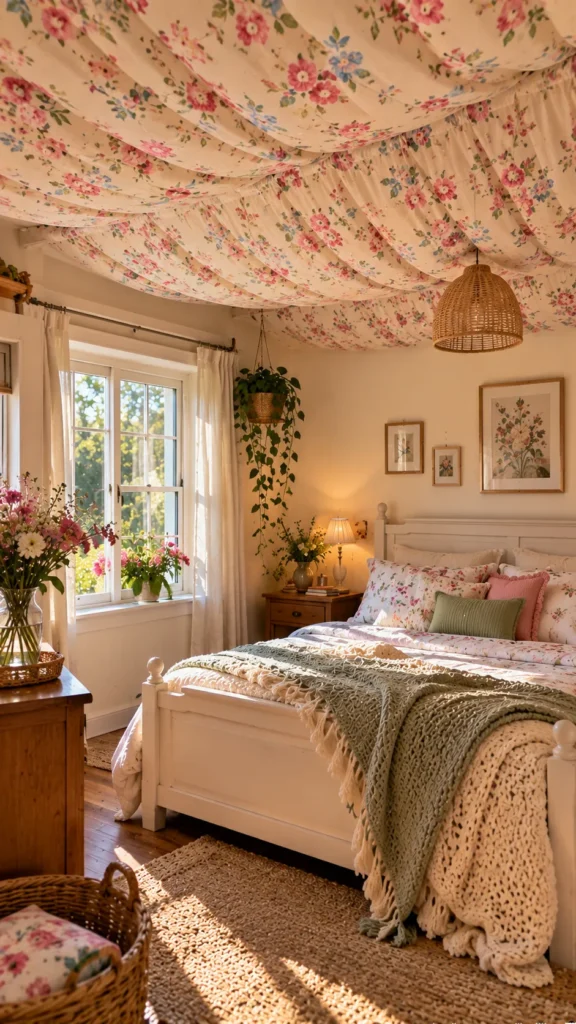
Floral fabric brings a garden-inspired feeling indoors and works beautifully in cottage bedrooms, sunrooms, and feminine dressing spaces. Small-scale botanical prints create a gentle, traditional look, while oversized flowers make a stronger statement. A pale background usually keeps the ceiling feeling airy, even when the print includes several colors.
What You’ll Need
Lightweight floral cotton, a measuring tape, fabric scissors, a suitable ceiling mounting system, and optional coordinating plain fabric.
Quick How-To
Check the direction of the floral pattern before cutting so the design appears consistent across panels. Install the fabric with enough support to prevent sagging, and align prominent motifs where separate sections meet. Test a small sample in the room first to see how the colors look under daylight and evening lighting.
Styling Tip
Coordinate the ceiling with one or two colors from the floral print. Keep bedding, curtains, or upholstery relatively simple so the pattern remains attractive without competing with everything around it.
8. Pleated Fabric Ceiling for a Tailored Look
Description
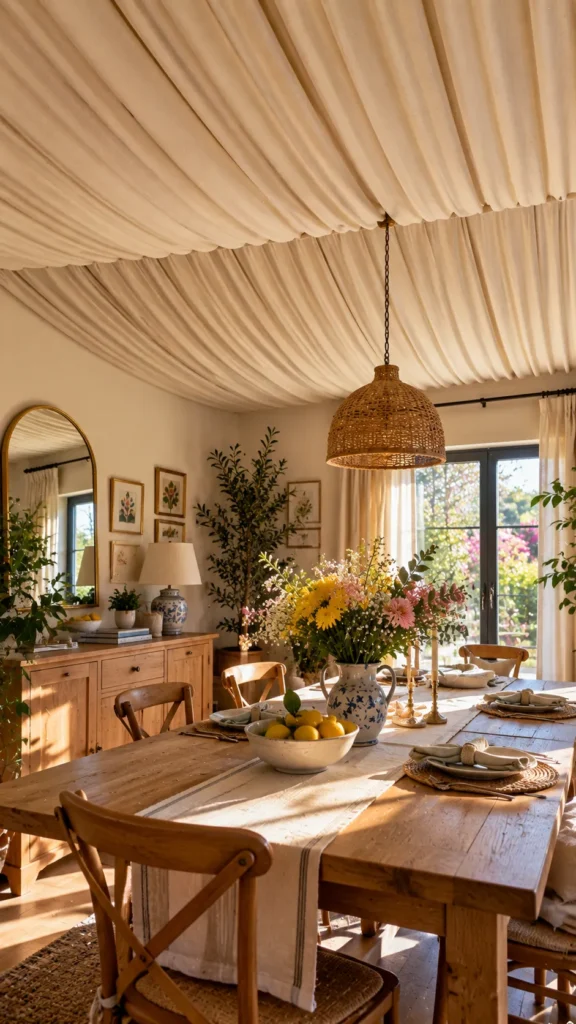
A pleated fabric ceiling offers a structured alternative to loose draping. Evenly spaced folds create rhythm and visual depth, making this approach suitable for dining rooms, formal sitting areas, and sophisticated bedrooms. Neutral materials provide a subtle architectural effect, while darker fabrics make the pleats more noticeable through their shadows.
What You’ll Need
Lightweight fabric with good drape, measuring tape, fabric clips, a suitable support framework, and tools appropriate for the mounting system.
Quick How-To
Determine the desired pleat width and calculate how much extra fabric is needed to form the folds. Mark the spacing before installation and secure the pleats to a properly designed support structure. Work in manageable sections, checking the spacing regularly rather than trying to correct the entire ceiling at the end.
Styling Tip
Choose a single fabric color and let the pleats create the visual interest. This technique looks particularly refined with simple furniture, understated wall colors, and discreet lighting.
9. Rustic Burlap-Inspired Fabric Ceiling
Description
A burlap-inspired ceiling introduces an earthy, handcrafted look that suits rustic interiors, country-style spaces, and casual covered areas where the material is appropriate. Its visible weave creates strong texture, but genuine burlap can shed fibers and may be difficult to clean. A lightweight woven fabric with a similar appearance can offer a more practical alternative indoors.

What You’ll Need
Lightweight woven fabric, preferably with finished edges, measuring tape, suitable mounting hardware, and optional plain fabric for layering.
Quick How-To
Check the fabric for loose fibers and fraying before installation. Measure the ceiling carefully, finish the edges, and secure each section using a mounting method appropriate for the material and ceiling structure. Avoid using this approach in damp spaces or near cooking areas where grease, moisture, and dust can collect.
Styling Tip
Combine the textured ceiling with reclaimed wood, simple pottery, and warm neutral colors. Use the material as a focused accent rather than covering a small room with several competing rustic textures.
10. Two-Tone Draped Fabric Ceiling
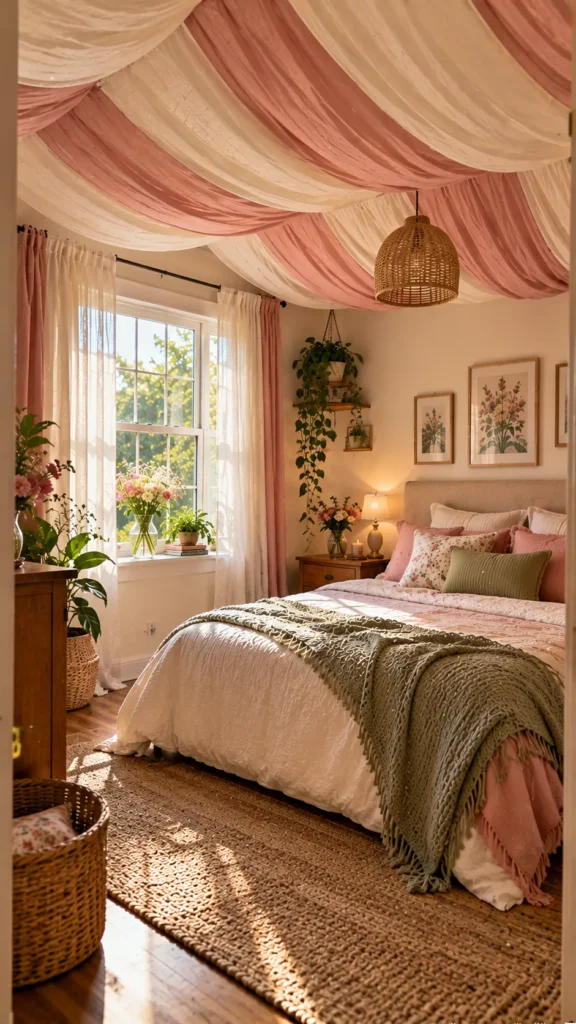
Description
A two-tone draped ceiling creates dimension by combining two fabrics in complementary shades. Cream and sage, dusty pink and ivory, or blue and white can produce different moods without requiring complicated patterns. The main challenge is controlling the overlap so both colors remain visible and the arrangement looks deliberate from the entrance to the room.
What You’ll Need
Two lightweight fabrics, measuring tape, fabric scissors, suitable ceiling supports, and clips for arranging the panels before final installation.
Quick How-To
Lay out both fabrics on the floor and experiment with the color placement. Measure each panel separately, then mount the sections with consistent spacing and shallow folds. Secure the materials independently wherever needed and inspect the arrangement from several angles to check that neither color disappears behind the other.
Styling Tip
Let one color dominate and use the second as an accent. Repeating the accent shade in a throw pillow, lampshade, or small artwork helps the design feel coordinated.
11. Fabric Ceiling with Wooden Beam Accents
Description
Combining fabric with wooden beam accents creates a layered ceiling that feels warm, architectural, and inviting. The fabric softens the hard lines of the beams, while the wood gives the installation a sense of structure. This idea suits farmhouse interiors, rustic bedrooms, and cottage-style living rooms, provided the beams and mounting points are suitable for the intended load.

What You’ll Need
Lightweight fabric, existing suitable beams or a professionally installed support structure, measuring tape, fabric scissors, and approved attachment hardware.
Quick How-To
Identify the actual structural capacity of the beams before planning the installation; decorative beam covers may not support additional loads. Measure the spaces between beams and cut the fabric to fit each section. Secure the panels using an appropriate method that does not damage electrical wiring or compromise the ceiling.
Styling Tip
Use natural linen or cream cotton between medium-toned wooden beams. Keep the fabric relatively flat or gently pleated so the wood remains visible and the ceiling does not feel crowded.
12. Minimalist White Fabric Ceiling
Description
A minimalist white fabric ceiling adds softness while preserving a clean, uncluttered interior. It works especially well in small bedrooms, rental-friendly decorating projects, and neutral living spaces where permanent architectural changes are not possible. White, ivory, and pale warm gray reflect available light differently, so choosing the right undertone can help the ceiling blend naturally with the walls.

What You’ll Need
Lightweight white or ivory fabric, measuring tape, fabric scissors, a suitable mounting system, and optional edge-finishing tape.
Quick How-To
Choose a fabric that is opaque enough to conceal distracting ceiling details but light enough for the intended support system. Measure the room, finish the edges, and install the material in clean, evenly spaced sections. Avoid excessive gathering if you want a smooth minimalist result, and confirm that all fittings remain accessible where required.
Styling Tip
Combine the ceiling with pale wood, simple bedding, and a few textured accessories. If the walls are bright white, a slightly warmer ivory fabric can add depth without introducing a noticeable color contrast.
FAQ SECTION
Are fabric ceilings suitable for every room?
Fabric ceilings can work in many bedrooms, living rooms, and other dry interior spaces. However, they are generally unsuitable for damp bathrooms, areas exposed to grease, or locations where fabric could interfere with ventilation, sprinklers, smoke detectors, or other safety equipment. Always assess the room before choosing a material.
What is the best fabric for a ceiling?
Lightweight polyester, voile, and suitable cotton fabrics are popular options because they can be easier to handle than heavy upholstery materials. The best choice depends on the desired appearance, cleaning requirements, fire-safety requirements, and mounting system. Check the product specifications before installation.
Can I install a fabric ceiling without damaging the ceiling?
Some installations can use existing suitable supports or professionally designed removable systems, but there is no universal damage-free method. Adhesives and ordinary removable hooks may fail or damage painted surfaces. Choose a mounting method designed for the ceiling type and fabric load, and obtain permission before modifying a rental property.
How do I keep fabric ceiling decorations clean?
Dust can collect in folds, so regular gentle cleaning is important. Use a vacuum with a suitable soft-brush attachment only if the fabric and installation allow it. For washable material, follow the care label and consider how the fabric can be safely removed and reinstalled.
Are fabric ceilings safe around lights?
Fabric must be kept clear of hot bulbs, heating equipment, and other sources of heat. Do not drape fabric over light fixtures, conceal electrical components, or block smoke detectors and sprinklers. Follow fixture clearances and local fire-safety requirements, and consult a qualified professional when the layout is uncertain.
Can fabric make a room look smaller?
Heavy colors, dense patterns, and deep folds can make a low ceiling feel lower. Lightweight, pale fabrics with restrained gathering usually create a more open appearance. In compact rooms, use fabric in a limited section or choose a tailored panel design rather than covering the entire ceiling with thick material.
How can I prevent fabric from sagging?
Start with lightweight material and a properly designed support system. Calculate the fabric’s weight, account for the extra material used in folds, and avoid relying on weak adhesive strips or decorative hooks. For large installations, obtain professional advice about support spacing and safe attachment methods.
RELATED CONTENT
CLOSING
A fabric ceiling can change the feeling of a room by introducing softness, color, texture, and a little unexpected personality. Whether you prefer romantic sheer drapes, tailored pleats, rustic linen, or a simple white finish, the most successful design is one that suits your space and everyday needs. Start by choosing a lightweight fabric, testing the colors in your room, and planning a secure installation before committing to the full design. Remember that beautiful decorating should always work alongside practical considerations such as cleaning, ventilation, and fire safety.
I hope these fabric ceiling ideas inspire you to look at your room from a new perspective. Choose the style that feels most like you, adapt it to your budget, and take your time getting the details right. I would love to see how you make the idea your own, so save your favorite inspiration and share your finished space with others who enjoy creative home decorating.




One Comment