12 Living Room Wall Decor Ideas with TV for a Stylish Space

Living Room Wall Decor Ideas with TV
The television is often one of the largest visual elements in a living room, so decorating the wall around it can make a big difference to the entire space. The challenge is finding a balance: you want the TV to feel naturally integrated into your decor without making the wall look crowded or distracting from the screen. Whether you have a small apartment, a modern family living room, or a cozy home filled with colorful accessories, there are plenty of creative ways to make your TV wall more attractive.
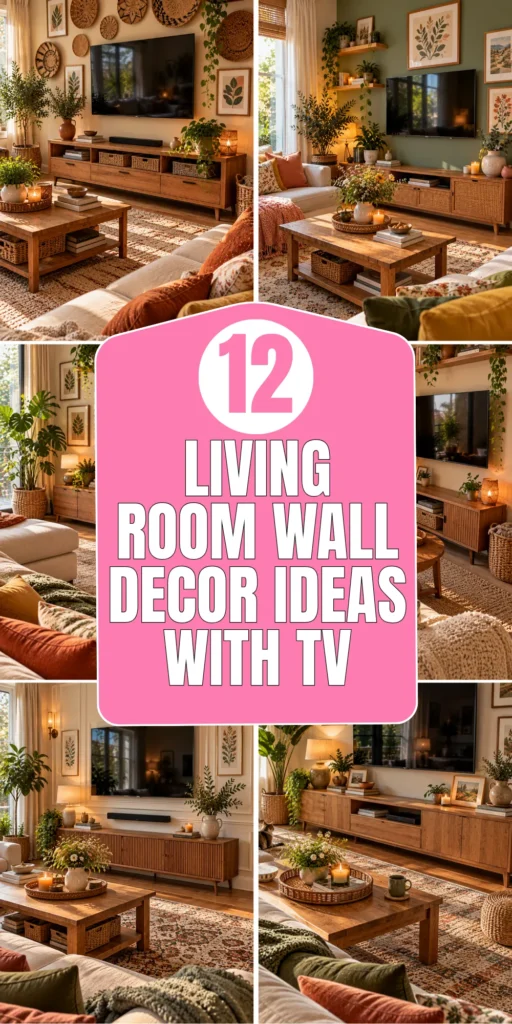
The best TV wall designs do not always require expensive built-ins or professional installation. Sometimes, a few floating shelves, a fresh coat of paint, a collection of personal artwork, or well-chosen plants can completely change the look. These ideas focus on practical decorating solutions, affordable materials, and realistic styling choices that work in everyday homes.
1. Create a Warm and Colorful Gallery Wall Around the TV
Description
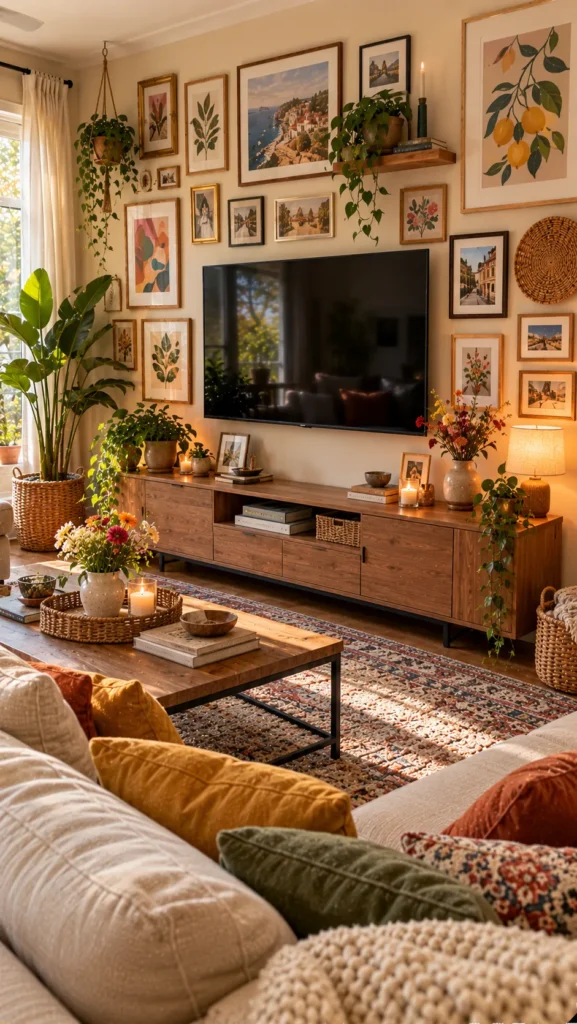
A gallery wall can make a television feel like part of your living room decor rather than an isolated black rectangle. Combine framed artwork, personal photographs, and colorful prints in different sizes. The key is leaving enough breathing room around the screen so the arrangement feels balanced instead of crowded.
What You’ll Need
- A selection of framed prints and photographs
- Frames in wood, white, or black finishes
- Measuring tape and wall-safe hanging hardware
- Paper templates for planning the arrangement
Quick How-To
Start by measuring the television and marking its position on the wall. Arrange your artwork on the floor first, experimenting with different frame sizes and spacing. Use paper templates to test the layout before making holes. Place larger frames farther from the screen and smaller pieces between them. Keep the overall arrangement visually balanced without forcing perfect symmetry.
Styling Tip
Choose artwork that shares two or three colors with your sofa cushions or rug. This creates a natural connection between the TV wall and the rest of the room.
2. Decorate the TV Wall with Floating Wooden Shelves
Description
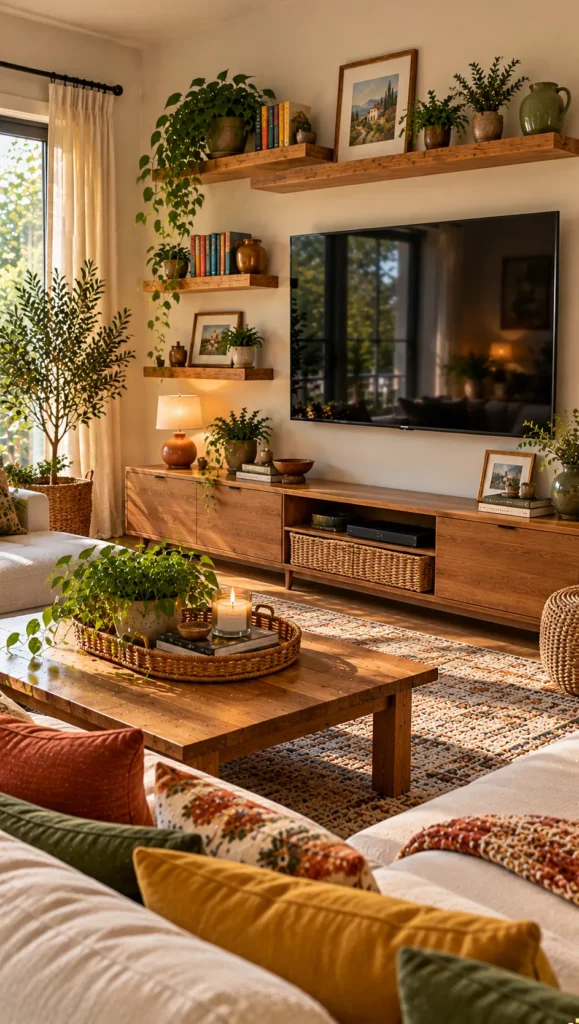
Floating shelves add useful storage and personality without taking up floor space. They are especially practical for smaller living rooms where a large bookcase would feel overwhelming. Natural wood shelves bring warmth to a plain TV wall while providing space for books, small plants, ceramics, and carefully selected decorative objects.
What You’ll Need
- Two or three floating wooden shelves
- Appropriate wall anchors and mounting brackets
- A spirit level and measuring tape
- Books, small plants, and decorative accessories
Quick How-To
Choose shelves that complement the width of your TV without extending too far into the viewing area. Locate wall studs or use suitable anchors for your wall type, then install the shelves according to the manufacturer’s instructions. Arrange heavier objects close to the brackets and distribute accessories with enough empty space to avoid a cluttered appearance.
Styling Tip
Mix horizontal books, small ceramic pieces, and trailing plants. Vary their heights and leave some sections empty so the shelves look naturally collected rather than overly arranged.
3. Add a Colorful Painted Accent Wall Behind the TV
Description
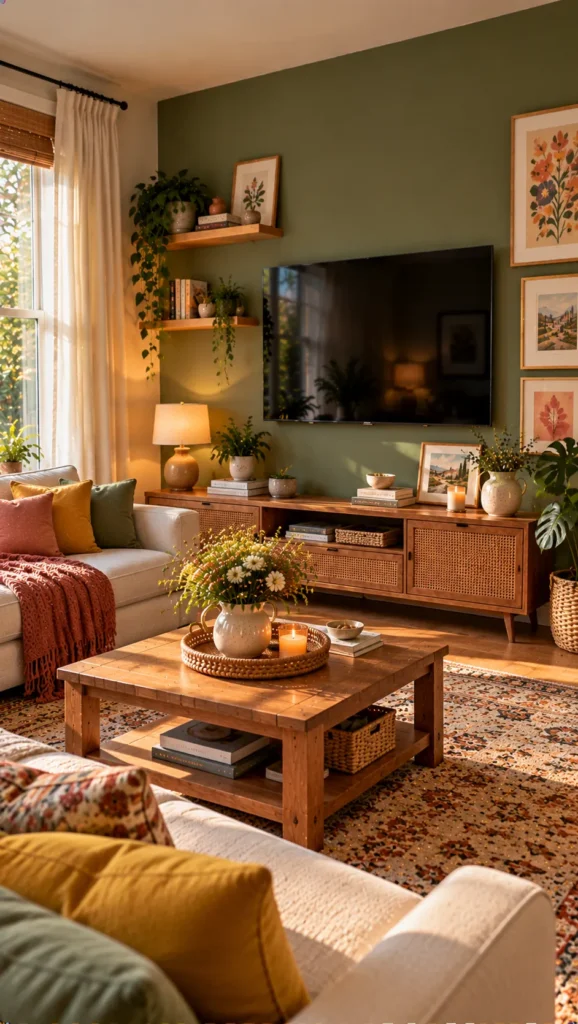
A painted accent wall is one of the simplest ways to give a television area a stronger visual identity. Sage green, muted terracotta, dusty blue, or warm olive can create a beautiful background without competing with the screen. Unlike complicated wall installations, paint is relatively affordable and easy to update when your decorating style changes.
What You’ll Need
- Interior wall paint
- Primer if required for the existing surface
- Paint roller, brushes, and paint tray
- Painter’s tape and protective floor covering
Quick How-To
Test a few paint samples on different parts of the wall and observe them in morning and evening light. Prepare the surface by cleaning it and filling visible holes. Protect the surrounding areas with painter’s tape, then apply primer if necessary and two thin coats of paint. Allow each coat to dry according to the product instructions before reinstalling decorations.
Styling Tip
Choose a color that works with your existing furniture instead of selecting a shade in isolation. A muted green wall looks especially inviting with natural wood, cream upholstery, and terracotta accessories.
4. Create a Rustic Wood Slat TV Feature Wall
Description
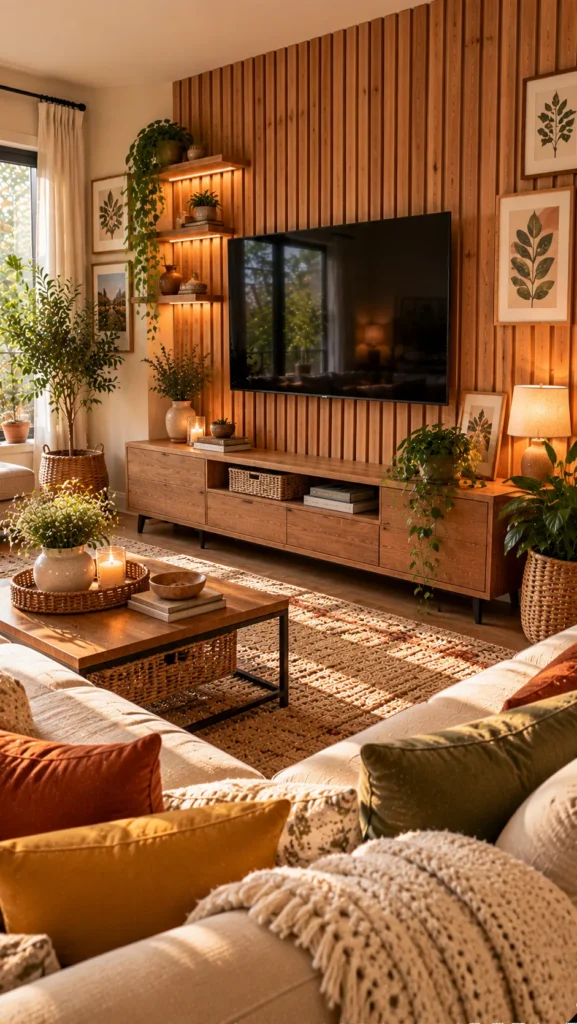
A wooden slat feature wall adds natural texture and makes a simple television area feel more finished. Vertical timber strips can also create the impression of greater ceiling height. This look works particularly well in modern, Scandinavian, and rustic living rooms, especially when paired with a low wooden media console and warm neutral furniture.
What You’ll Need
- Timber slats or suitable decorative wood panels
- Measuring tape and a level
- Appropriate wall fixings or installation system
- Saw, sanding materials, and wood finish if required
Quick How-To
Measure the wall carefully and plan the spacing between each slat before purchasing materials. Prepare and finish the wood, then install it using a fixing method suitable for the wall and product. Keep the TV mounting area accessible and ensure the installation does not interfere with ventilation, cables, or electrical connections. If you are unsure about mounting requirements, use a qualified installer.
Styling Tip
Choose a natural or lightly stained wood finish rather than a very dark color if your living room is small. Pair it with cream walls and simple accessories to keep the feature wall from feeling too heavy.
5. Style the TV Wall with a Long Low Console and Personal Decor
Description
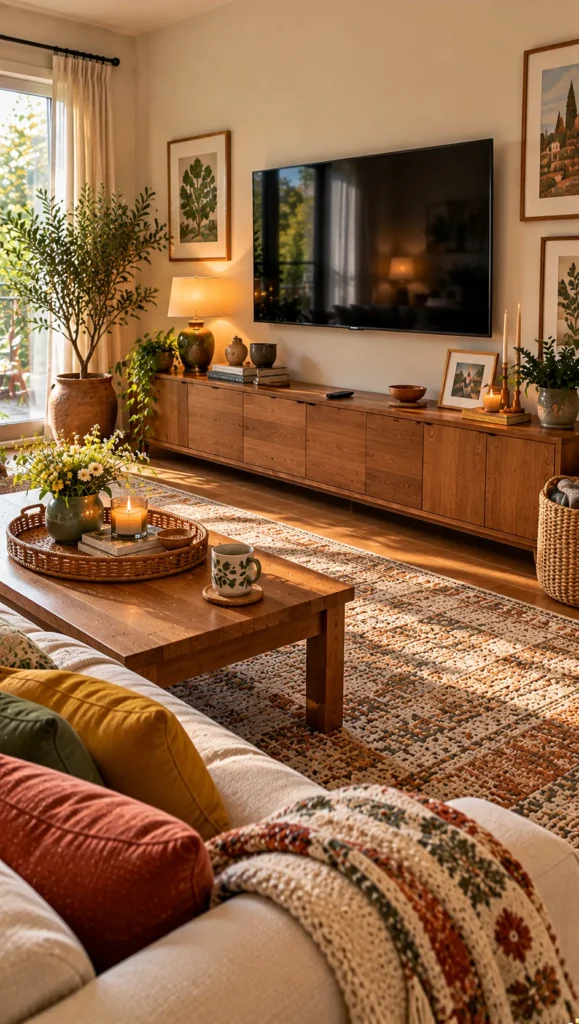
A long, low TV console creates a strong foundation for the television and provides practical storage for everyday living room essentials. It also gives you a place to display personal decorations without filling the entire wall. This is an especially useful option when you want a polished look but prefer furniture that can move with you.
What You’ll Need
- A low TV console or media cabinet
- A table lamp or decorative vase
- A few books and framed photographs
- Small plants and storage baskets
Quick How-To
Choose a console wide enough to look visually balanced beneath the television. Position it securely and organize electronics, remotes, and accessories inside its storage compartments. Keep the top surface simple by grouping a lamp, a small stack of books, and one or two decorative objects at opposite ends. Make sure the TV has enough clearance and that cables remain organized.
Styling Tip
Use a combination of personal photographs, handmade ceramics, and natural materials. These details make the wall feel like part of your home instead of a generic entertainment setup.
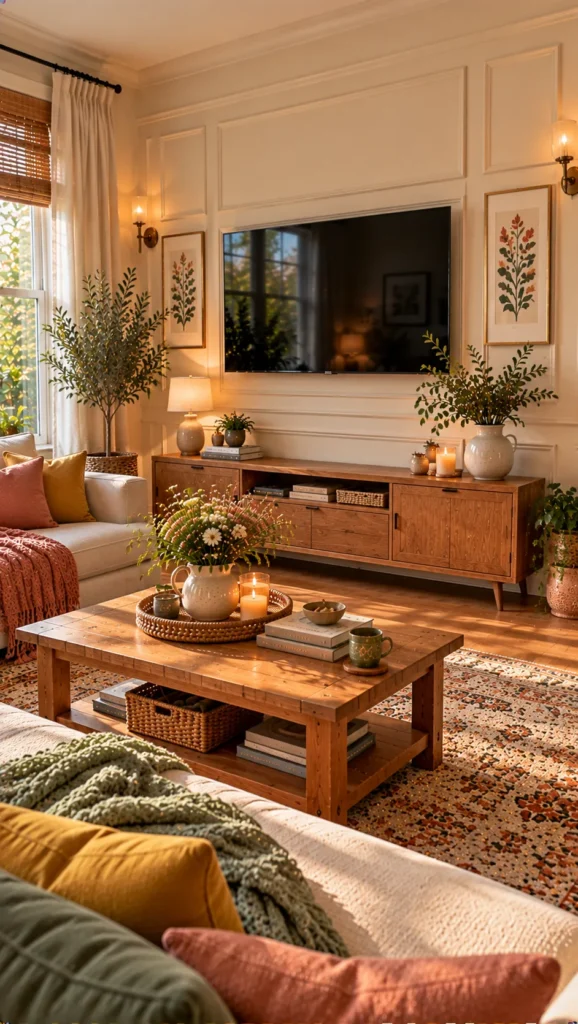
6. Use Decorative Wall Molding Around the TV
Description
Decorative wall molding can give a plain television wall a classic architectural look without requiring a complete renovation. Simple rectangular frames painted in the same color as the wall create subtle depth and make the TV area feel more intentional. This idea works beautifully in traditional, contemporary, and transitional living rooms.
What You’ll Need
- Decorative wall molding or lightweight trim
- Measuring tape and spirit level
- Suitable adhesive or mounting materials
- Paint, caulk, and basic decorating tools
Quick How-To
Plan the molding layout before cutting anything, making sure the television fits comfortably inside the main section. Measure each rectangle carefully and use a level to mark the positions. Install the trim using the manufacturer’s recommended method, fill small gaps, and paint the finished wall. Avoid placing molding where it could interfere with the TV bracket or cable access.
Styling Tip
Paint the molding and wall the same soft shade for a subtle, elegant finish. Warm white, pale beige, and muted greige are easy to coordinate with different furniture styles.
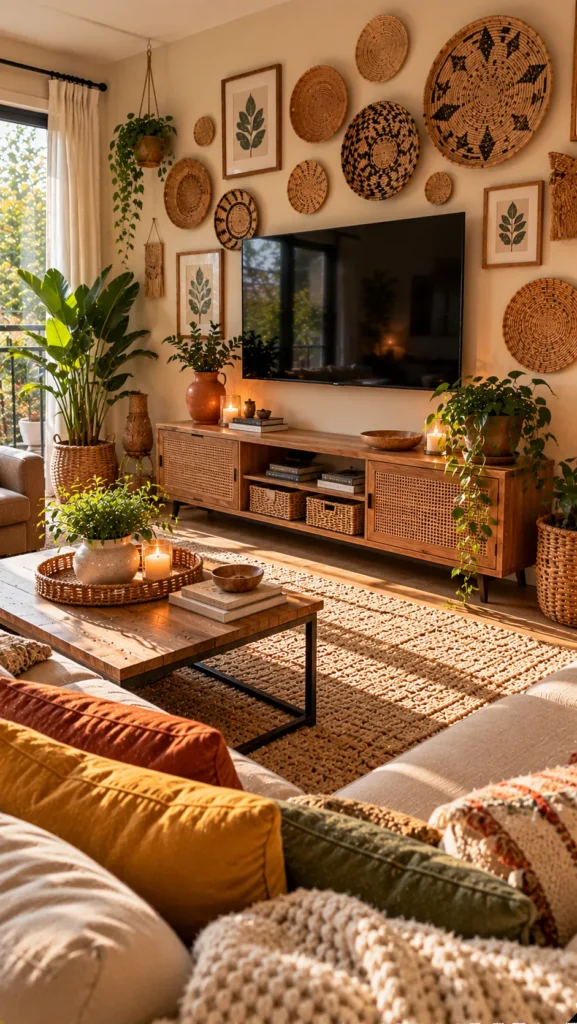
7. Bring Natural Texture to the TV Wall with Woven Decor
Description
Woven baskets and natural fiber wall decorations add warmth and handmade character to a television area. Their irregular shapes and textures soften the straight lines of the screen and modern furniture. This approach is ideal for bohemian, rustic, and relaxed eclectic living rooms where natural materials play an important role.
What You’ll Need
- Handmade woven baskets or wall pieces
- Suitable wall hooks or hanging hardware
- A few framed botanical prints
- Natural wood or woven accessories
Quick How-To
Select a small collection of woven pieces in different sizes and arrange them around the TV. Keep the larger pieces farther from the screen, leaving enough space so the display does not feel crowded. Test the arrangement on the floor before hanging anything, and use suitable fixings for the weight of each piece.
Styling Tip
Mix natural woven textures with a little color through cushions, artwork, or ceramic accessories. Avoid using too many similar baskets; a combination of round, oval, and irregular shapes looks more authentic.
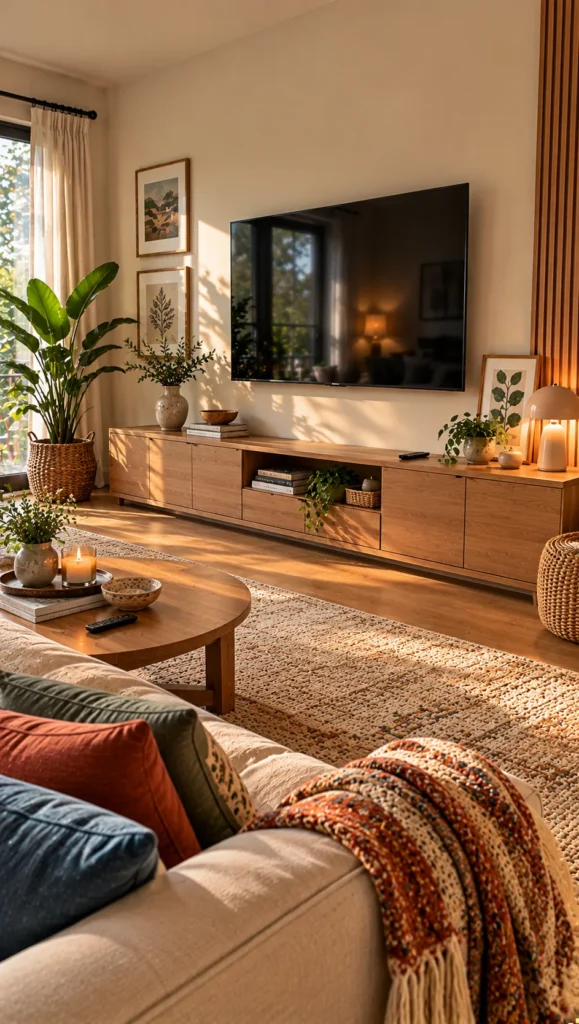
8. Create a Modern Minimalist TV Wall with Hidden Storage
Description
A minimalist TV wall can look stylish while solving one of the most common living room problems: visible clutter. Closed cabinets provide space for remotes, gaming accessories, cables, and other everyday items, while a few carefully selected decorations keep the wall from feeling empty. It is a practical choice for busy households and smaller spaces.
What You’ll Need
- A simple media cabinet with closed storage
- Cable management clips or covers
- A few decorative accessories
- A small plant or framed print
Quick How-To
Start by identifying what needs to be stored near the television. Choose a cabinet with enough internal space and suitable ventilation for any electronics placed inside. Mount the TV securely and organize cables using products designed for that purpose. Finish with just a few decorative pieces, leaving most of the wall visually clear.
Styling Tip
Use warm wood, soft beige, and one accent color to prevent minimalism from feeling cold. A textured rug or colorful cushion can add personality without creating visual clutter.
9. Add a Cozy Fireplace-Inspired TV Wall
Description
A fireplace-inspired TV wall creates a welcoming focal point even in homes without a traditional fireplace. A decorative mantel, simple wall detailing, and warm accessories can recreate the cozy appearance of a fireplace area while keeping the television central. It is a lovely option for living rooms where comfort and traditional character are important.

What You’ll Need
- A decorative mantel or suitable mantel shelf
- Wall trim or decorative panels
- Framed prints and ceramic accessories
- A decorative electric fireplace insert, if desired
Quick How-To
Plan the layout around the TV first, making sure the screen is positioned at a comfortable viewing height. Install the mantel and decorative elements using appropriate fixings. If you include an electric fireplace, follow its clearance, ventilation, and installation instructions carefully. Never place a television or flammable decorations where heat from a real or electric fireplace could damage them.
Styling Tip
Use a simple greenery arrangement, a few framed prints, and warm-toned ceramics. Keep the mantel decoration low and restrained so it does not distract from the screen.
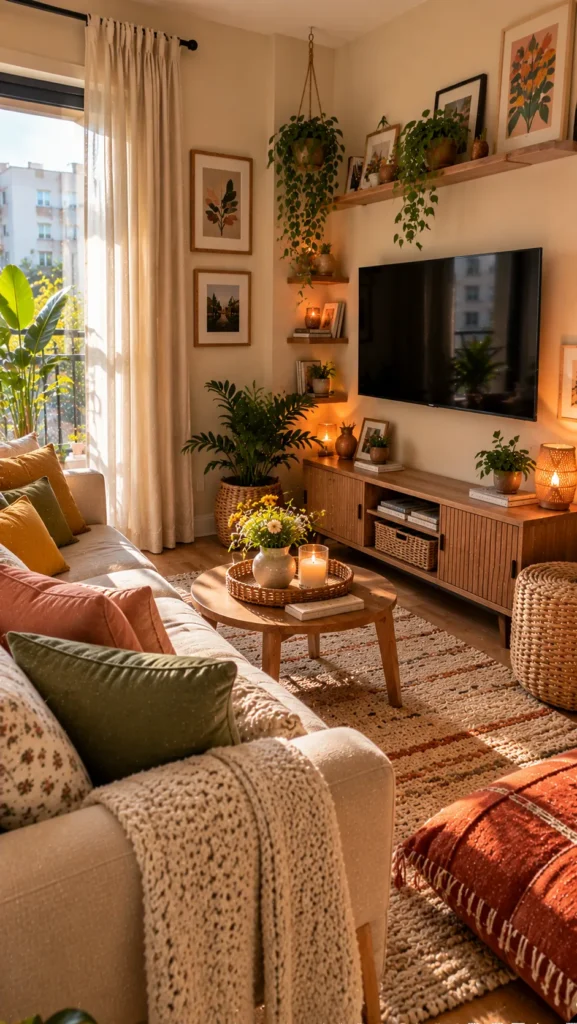
10. Decorate a Small TV Wall with a Corner Arrangement
Description
A small living room does not need a large feature wall to look attractive. A compact corner arrangement can make good use of limited space while keeping the television area organized. A narrow shelf, a small piece of artwork, and a slim media cabinet add personality without taking up valuable floor space.
What You’ll Need
- A slim TV cabinet or floating media unit
- One narrow floating shelf
- A small framed print
- A compact plant and storage basket
Quick How-To
Measure the available wall and corner space before choosing furniture. Position the television where it can be viewed comfortably from the main seating area. Add one shelf above or beside it, making sure it does not obstruct the screen. Use a slim cabinet for storage and keep floor decorations to a minimum so the room remains easy to move around.
Styling Tip
Choose furniture with visible legs or a floating design to create a lighter appearance. A mirror placed on a nearby wall can also help reflect daylight and make the room feel more open.
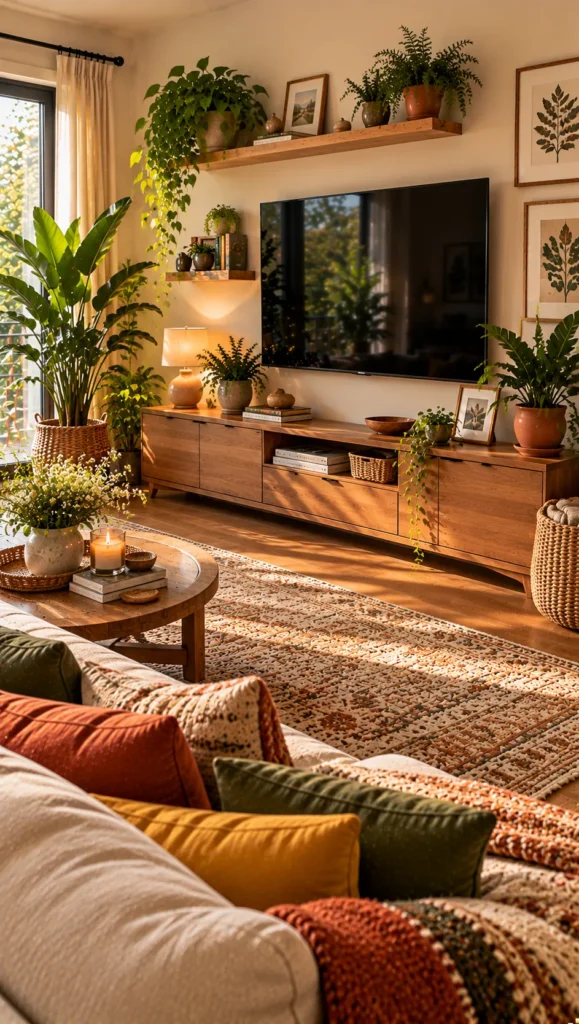
11. Add Plants and Greenery Around the TV Wall
Description
Plants bring life and natural color to a television wall, making the entertainment area feel softer and more welcoming. A floor plant beside the media console, a small plant on a shelf, and a few compact pots can create a relaxed indoor garden effect. The important thing is choosing suitable plants and arranging them without blocking the screen or electronics.
What You’ll Need
- One medium-sized floor plant
- Small indoor plants or trailing varieties
- Plant pots in different materials
- A floating shelf or plant stand if needed
Quick How-To
Choose plants according to the natural light available in your living room. Position taller plants beside the TV unit rather than directly in front of the screen. Place smaller pots on shelves or the console, using waterproof saucers to protect furniture. Keep watering and drainage away from electrical equipment, cables, and power outlets.
Styling Tip
Combine different leaf shapes and pot textures instead of buying several identical plants. Terracotta, woven baskets, and simple ceramic pots create a relaxed, collected look.
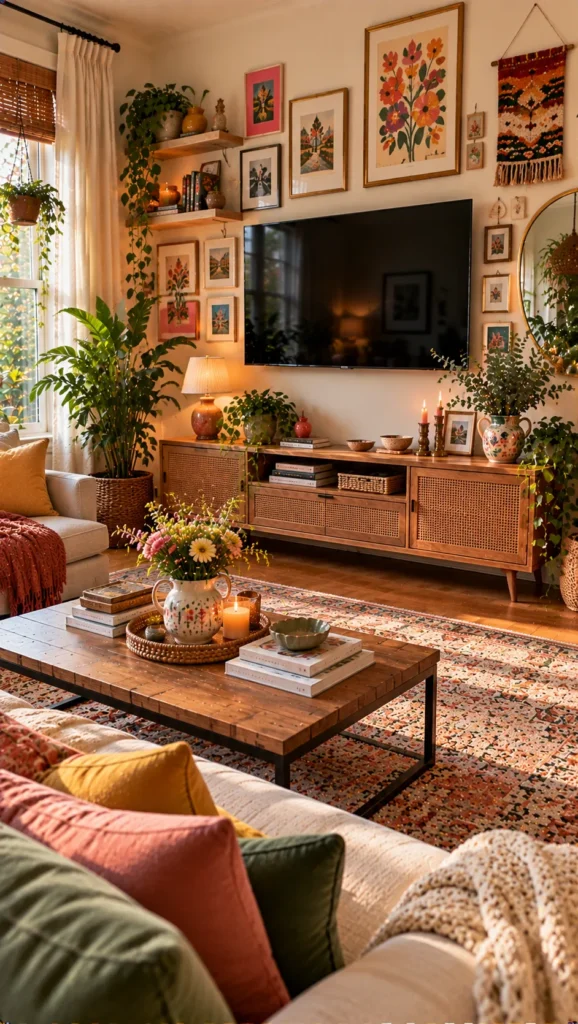
12. Create a Colorful Eclectic TV Wall with Personal Touches
Description
An eclectic TV wall is a wonderful way to show your personality through colors, artwork, and meaningful decorations. Instead of following one strict decorating style, combine thrifted mirrors, framed prints, handmade objects, and small shelves around the television. The result can feel cheerful and original while still keeping the screen as the main functional feature.
What You’ll Need
- A mixture of framed artwork and photographs
- A small thrifted mirror
- One or two floating shelves
- Handmade ceramics and colorful accessories
Quick How-To
Choose a loose color palette before collecting decorations. Start with the television as the central point, then arrange artwork and accessories around it in a balanced composition. Mix different frame styles and shapes, but repeat a few colors to connect everything. Leave enough empty wall space around the screen and check that shelves and decorations are securely mounted.
Styling Tip
Use pieces that have personal meaning, such as travel photographs, handmade artwork, or secondhand finds. A few imperfect and unusual objects will make the wall feel more authentic than buying an entire matching decoration set.
FAQ SECTION
How do I decorate a living room wall with a TV?
Start by treating the television as the central element of the wall. Add a media console, floating shelves, artwork, wall molding, or plants to create a balanced arrangement. Keep decorations from blocking the screen and avoid overcrowding the surrounding space.
What colors look best behind a TV?
Warm white, beige, sage green, muted blue, terracotta, and soft gray are popular choices. The best color depends on your furniture, natural lighting, and overall decorating style. Test paint samples before committing to a full wall.
Should artwork go above or beside a TV?
Artwork can work above or beside a TV, depending on the wall size and layout. Smaller pieces often look better beside the screen, while a larger gallery arrangement can surround it. Keep enough space between decorations and the television to avoid a crowded appearance.
How can I decorate a TV wall on a budget?
Try repainting the wall, making your own artwork, using secondhand frames, installing simple floating shelves, or decorating with plants you already own. Rearranging existing accessories can also make a noticeable difference without buying new furniture.
How do I hide cables on a TV wall?
Use cable covers, cable management clips, or a media cabinet designed to conceal wires. Choose products compatible with your wall and electrical setup. For cables that need to run inside a wall, consult a qualified professional and follow local electrical requirements.
How do I make a small TV wall look bigger?
Choose a slim media cabinet, use light wall colors, and avoid oversized decorations. Floating furniture can make more floor space visible, while a nearby mirror can help reflect light. Keep the arrangement simple and use a few well-chosen accessories.
Is it better to mount a TV or place it on a stand?
Wall mounting saves console space and can create a clean appearance, while a TV stand is easier to reposition and may be more suitable for rented homes. Whichever option you choose, make sure the television is stable, securely installed, and positioned at a comfortable viewing height.
Can I put shelves around my TV?
Yes. Floating shelves can add storage and decorative interest around a television. Make sure they are securely installed, do not obstruct the screen, and leave enough room for electronics to ventilate properly.
RELATED CONTENT
- Living Room Decor Ideas Aesthetic for a Modern and Cozy Look
- Small Living Room Decorating Ideas That Maximize Space
CLOSING
Decorating the wall around your television is a great opportunity to make your living room feel more personal, comfortable, and complete. You do not need an expensive renovation or perfectly matching furniture to create a beautiful result. A few thoughtful details, some DIY touches, and decorations that reflect your personality can make all the difference.
Start with one idea that works for your space and budget, then build the look gradually. I love seeing how simple changes can transform an ordinary corner into a cozy part of the home. Try one of these ideas, make it your own, and share your finished TV wall with us. I would love to see what you create!
The trick is to focus on what you actually need: a reliable cooking area, enough room for food preparation, convenient storage, and comfortable surroundings. Whether you have a tiny patio or a spacious backyard, these 12 outdoor kitchen ideas on a budget offer realistic ways to create a beautiful setup without overspending. Each project can be adapted to your available space, existing furniture, and DIY skills.
1. Build a Rustic Outdoor Kitchen Counter with Reclaimed Wood
Description
Reclaimed wood can become an affordable outdoor kitchen counter with a warm, rustic appearance. This idea works particularly well in casual gardens where you need extra preparation space without investing in custom cabinetry. Choose sound timber and protect it properly against moisture.
What You’ll Need
- Suitable reclaimed timber or exterior-rated lumber
- Exterior-rated screws and brackets
- Drill, saw, and measuring tape
- Exterior wood sealant
- Weather-resistant countertop material
Quick How-To
Measure the space and build a stable wooden frame with a practical lower shelf. Attach the boards securely, sand rough edges, and apply a suitable outdoor wood finish. Add a durable countertop that can be cleaned easily after food preparation. Keep wooden components safely away from grills and open flames, and never use reclaimed timber with unknown chemical treatments.
Styling Tip
Combine natural wood with terracotta pots, woven baskets, and a few fresh herbs. Keep the countertop mostly clear so it remains useful for cooking.
2. Transform an Old Potting Bench into an Outdoor Kitchen Station
Description
An old potting bench can become a charming outdoor kitchen station with minimal modifications. Its existing shelves provide convenient storage for plates, utensils, and accessories, making it especially useful for small patios or flexible garden setups.
What You’ll Need
- A sturdy secondhand potting bench
- Exterior-rated paint or wood finish
- Washable food-preparation surface
- Storage baskets
- Weather-resistant hooks
Quick How-To
Check the bench for loose joints, rust, or damaged wood before using it. Repair weak areas, clean the surface, and apply a suitable protective finish. Add a removable, washable preparation board to the top and organize the lower shelves with covered containers. Keep gardening chemicals and dirty tools completely separate from food-related supplies.
Styling Tip
Paint the bench sage green or warm cream, then add small herb pots and matching baskets. This creates a relaxed garden-inspired look without expensive decorations.
3. Create a Budget Outdoor Kitchen with Concrete Blocks
Description
Concrete blocks offer an affordable way to build a sturdy outdoor kitchen base. Their open sections can provide practical storage for cookware and accessories, while a suitable countertop completes the workspace without the cost of custom cabinets.
What You’ll Need
- Concrete blocks suitable for the structure
- A stable, level base
- Outdoor-rated countertop
- Measuring tape and level
- Appropriate masonry materials
Quick How-To
Plan the counter height and width before purchasing materials. Prepare a firm, level foundation and arrange the blocks according to your design. Secure the structure where required and check that the countertop is properly supported. Use suitable materials for the expected weight and weather conditions. If adding a grill or heavy appliance, follow its installation and clearance requirements.
Styling Tip
Leave some block sections open for storage and add woven baskets to hide smaller accessories. Natural concrete also pairs beautifully with wooden surfaces and green plants.
4. Use a Rolling Cart for a Small Outdoor Kitchen
Description
A rolling utility cart provides flexible preparation and serving space when your patio is too small for permanent cabinets. It can hold everyday accessories, fresh herbs, and lightweight cookware while moving out of the way whenever you need more space.
What You’ll Need
- Sturdy outdoor utility cart
- Locking wheels
- Covered storage containers
- Washable serving tray
- Outdoor-safe hooks
Quick How-To
Choose a cart that fits your available space and has a suitable weight capacity. Check that the wheels lock securely and that the frame is stable. Arrange frequently used items on top and covered storage containers below. Keep the cart away from grill heat and uneven paving. Cover it or bring it indoors during poor weather, especially if its materials are not fully weather-resistant.
Styling Tip
Choose matching containers and add one small herb planter. A simple color palette helps the cart feel like a natural part of the outdoor kitchen.
5. Repurpose an Old Table into an Outdoor Kitchen Counter
Description
A sturdy secondhand table can provide an affordable preparation area without complicated construction. This is an excellent option when you already have a portable grill and simply need somewhere to arrange ingredients, prepare food, and serve meals.
What You’ll Need
- Strong secondhand table
- Suitable exterior wood finish, if needed
- Washable cutting board
- Weather-resistant storage bins
- Outdoor furniture cover
Quick How-To
Inspect the table legs, joints, and surface for damage. Tighten loose connections and repair unstable sections before using it. Protect suitable wooden furniture with an exterior finish, then use a separate washable cutting board for food preparation. Store utensils in covered containers and position the table outside the grill’s required safety clearance.
Styling Tip
Add a wooden serving tray, a simple linen towel, and a bowl of fresh vegetables. Keep decorative accessories removable so the table stays practical.
6. Add a Portable Outdoor Sink Station
Description
A portable sink can make an outdoor kitchen more convenient without installing permanent plumbing. Purpose-built refillable systems provide a practical handwashing option for gardens where a fixed water connection is unavailable.
What You’ll Need
- Purpose-built portable sink
- Clean-water container
- Separate wastewater tank
- Stable stand
- Soap dispenser and clean towel
Quick How-To
Choose a portable station designed for your intended use. Place it on a stable surface near the preparation area but away from heat and electrical hazards. Fill the clean-water container with potable water and collect wastewater in the separate tank. Empty and clean both containers regularly. Follow local sanitation requirements and use an appropriate setup for any food-preparation or dishwashing tasks.
Styling Tip
Add a small towel hook and a simple covered soap dispenser. A nearby herb planter can make the station feel more connected to the garden.
7. Install Affordable Open Shelving for Outdoor Storage
Description
Open shelving provides convenient storage without the expense of outdoor cabinets. It works especially well for displaying durable plates, cooking accessories, and covered containers while keeping frequently used items within easy reach.
What You’ll Need
- Exterior-rated wooden shelves
- Suitable brackets and fasteners
- Measuring tape and level
- Covered storage baskets
- Weather-resistant protective finish
Quick How-To
Choose a wall or freestanding structure that can safely support the shelves and their contents. Install suitable brackets and check that each shelf is level. Keep heavier items lower and store clean utensils in covered containers. Avoid placing shelves directly above cooking flames or where grease and smoke will collect. Inspect the fixings regularly for signs of weather damage.
Styling Tip
Mix practical storage with a few ceramic pots and small herb containers. Leave some empty space between objects so the shelves look organized rather than crowded.
8. Create a Gravel Patio for Your Outdoor Kitchen
Description
A gravel patio can define an outdoor cooking and dining area without the cost of installing a large paved surface. It suits informal gardens and works particularly well when combined with simple furniture, natural plants, and practical outdoor accessories.
What You’ll Need
- Suitable decorative gravel
- Ground preparation tools
- Landscape edging
- Ground-stabilizing material, if needed
- Stable furniture base pads
Quick How-To
Mark the area and check how rainwater drains through the garden. Remove unwanted vegetation, prepare the ground, and install suitable edging. Spread the gravel evenly to the recommended depth and compact or stabilize it where appropriate. Check that tables and cooking equipment stand securely. Keep gravel away from drainage openings and door thresholds.
Styling Tip
Use neutral gravel with wooden furniture, terracotta planters, and a simple outdoor rug. Repeating a few natural materials makes the area feel thoughtfully designed.
9. Turn a Secondhand Cabinet into an Outdoor Serving Bar
Description
A secondhand cabinet can become an attractive serving bar for drinks, plates, and outdoor dining accessories. This project is particularly useful when your cooking equipment is already in place but you need additional storage and a dedicated serving surface.
What You’ll Need
- Sturdy secondhand cabinet
- Exterior-rated paint or protective finish
- Weather-resistant handles
- Washable serving trays
- Suitable outdoor cover
Quick How-To
Inspect the cabinet for rot, water damage, pests, and unstable panels. Repair it before applying a suitable finish. Replace damaged hardware and position the cabinet in a sheltered location unless it is designed for full outdoor exposure. Use covered containers for clean accessories and keep the top clear enough for serving food and drinks.
Styling Tip
Paint the cabinet muted green, navy, or warm cream. Add a wooden tray and a small decorative lantern to create a welcoming serving corner.
10. Create a Small Herb Garden Beside the Cooking Area
Description
A small herb garden is an affordable way to make an outdoor kitchen more useful and colorful. Growing basil, parsley, rosemary, and thyme in containers keeps fresh ingredients nearby while adding natural greenery to the cooking space.
What You’ll Need
- Pots with drainage holes
- Suitable potting mix
- Herb seeds or seedlings
- Watering can
- Small plant labels
Quick How-To
Choose herbs according to the available sunlight. Place rosemary and thyme in a brighter position, while mint generally benefits from its own container because it spreads quickly. Use suitable potting mix and pots with drainage holes. Water according to each plant’s needs and harvest small amounts regularly without removing too much foliage.
Styling Tip
Arrange pots at different heights using a small wooden shelf or plant stand. Choose terracotta and neutral ceramic containers for a relaxed garden look.
11. Build a Safe and Simple Portable Grill Station
Description
A portable grill can become the centerpiece of a budget outdoor kitchen when paired with a separate preparation table and organized storage. Starting with one reliable cooking appliance allows you to build the rest of the setup gradually.
What You’ll Need
- Portable grill suitable for outdoor use
- Stable, level, noncombustible placement area
- Separate preparation table
- Long-handled cooking tools
- Appropriate grill cover
Quick How-To
Choose a grill that fits your cooking needs and available space. Follow the manufacturer’s instructions for clearance from walls, fences, overhead structures, and combustible furniture. Place it on a stable surface and keep children and pets away from the hot area. Position the preparation table outside the required heat-clearance zone. Store fuel safely and never use an outdoor grill inside an enclosed space.
Styling Tip
Use a simple side table for plates and cooking tools, with a covered storage bin underneath. Coordinate the furniture finish with nearby garden seating for a more unified appearance.
12. Create a Cozy Outdoor Kitchen with String Lights and Simple Seating
Description
Comfortable seating and warm lighting can make even a basic outdoor kitchen feel like a complete backyard destination. A small dining table, practical chairs, and outdoor-rated string lights create a welcoming atmosphere without requiring expensive furniture or renovations.
What You’ll Need
- Compact outdoor dining table
- Weather-resistant chairs
- Outdoor-rated string lights
- Suitable mounting hardware
- Outdoor cushions and storage box
Quick How-To
Arrange the seating near the kitchen while keeping a safe distance from cooking equipment. Leave enough room for people to move comfortably between the preparation area and dining table. Install outdoor-rated lights according to the manufacturer’s instructions and protect electrical connections from moisture. Store cushions when rain is expected and keep the main walking paths clear.
Styling Tip
Choose warm-white lighting and cushions in terracotta, mustard, or muted green. Add a few potted plants around the seating area without overcrowding the space.
FAQ SECTION
How can I build an outdoor kitchen on a small budget?
Start with the essentials: a safe cooking appliance, a sturdy preparation surface, and covered storage. Repurpose suitable furniture, use affordable materials, and add extra features gradually. Prioritize stability, hygiene, and weather protection before buying decorative accessories.
What is the cheapest way to create an outdoor kitchen?
Using a secondhand table, a portable grill, and a few storage containers is often one of the most affordable approaches. You can improve the setup over time with shelving, a serving cart, or a small herb garden.
What materials are best for a budget outdoor kitchen?
Concrete blocks, suitable reclaimed timber, exterior-rated shelving, stainless steel, and weather-resistant countertops can all be practical choices. The best option depends on your climate, available space, and how often you plan to cook outside.
Can I have an outdoor kitchen without plumbing?
Yes. A basic outdoor kitchen can work perfectly well with a portable grill, preparation table, and organized storage. A purpose-built portable handwashing station can also be useful when permanent plumbing is unavailable.
How do I protect my outdoor kitchen from rain?
Choose weather-resistant materials, protect suitable wooden surfaces with exterior finishes, and cover appliances according to their manufacturers’ instructions. Store cushions and loose accessories indoors when necessary. Regularly inspect furniture, shelves, and fixings for moisture damage.
How much space do I need for an outdoor kitchen?
You can create a simple outdoor cooking station in a relatively small patio area. Focus on a stable grill location, enough preparation space, and clear walking paths. Always follow the required safety clearances for cooking appliances.
RELATED CONTENT
- Living Room Decor Ideas Aesthetic for a Modern and Cozy Look
- Cozy Patio Decorating Ideas for Every Season
CLOSING
Creating an outdoor kitchen doesn’t have to happen all at once. A simple table, a portable grill, or a few well-organized shelves can be the beginning of a beautiful and practical cooking space. The best setup is one that fits your garden, works with your budget, and makes outdoor meals easier to enjoy.
Start with one project that solves a real problem, then add personal touches as you go. Remember to choose suitable materials, protect your furniture from the weather, and always prioritize safe cooking arrangements.
I hope these outdoor kitchen ideas on a budget inspire you to make the most of your backyard or patio. Choose your favorite idea, add your own creative touch, and enjoy creating a space where friends and family can gather. I’d love to hear which project you decide to try and how it turns out!