12 Tiny House Living Room Ideas That Make Small Spaces Feel Bigger

Tiny House Living Room Ideas
Living in a tiny house doesn’t mean giving up a comfortable, stylish living room. In fact, smaller spaces can be some of the most interesting to decorate because every piece of furniture, every color choice, and every storage solution has a purpose. The challenge is finding the right balance between comfort and functionality without making the room feel crowded.
A successful tiny house living room should feel open enough to relax in, practical enough for everyday life, and personal enough to feel like home.
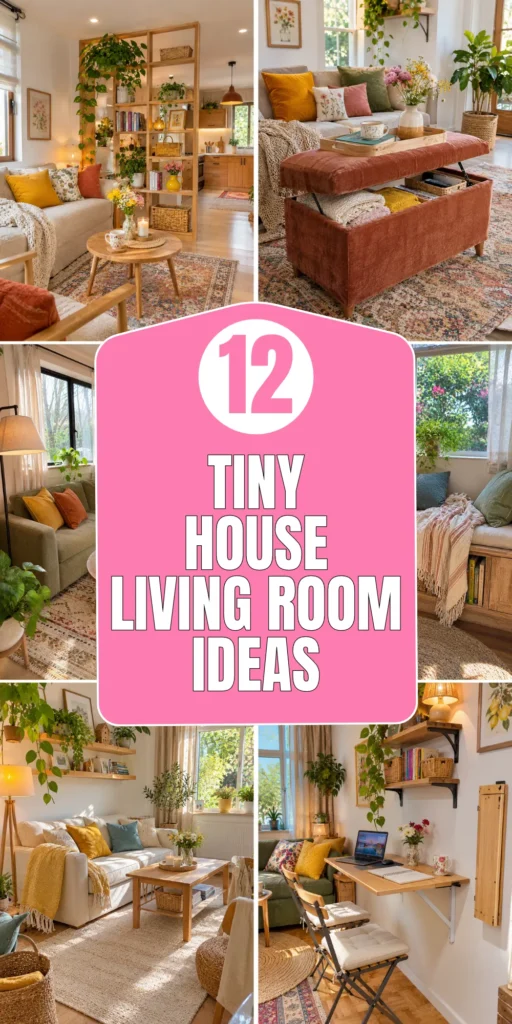
Instead of filling the space with miniature furniture, focus on pieces that serve more than one purpose, smart layouts, thoughtful lighting, and decorative details that add character without taking up valuable floor space.
Whether your tiny house has an open-plan layout, a narrow living area, or a compact corner beside the kitchen, these 12 tiny house living room ideas will help you make the most of every inch. Each idea includes practical decorating suggestions, useful materials, and realistic tips for creating a space that feels welcoming rather than cramped.
1. Built-In Sofa with Hidden Storage
Description
A built-in sofa is an excellent way to use an awkward wall or narrow corner in a tiny house. Adding storage underneath creates a comfortable seating area while keeping blankets, books, and everyday essentials out of sight.

What You’ll Need
- Custom or modular bench seating
- Plywood or finished storage drawers
- Comfortable seat cushions
- Back cushions
- Hinges or drawer hardware
- Storage baskets
Quick How-To
- Measure the available wall length and leave enough clearance for walking paths and nearby doors.
- Build a sturdy bench base with accessible storage compartments underneath.
- Add a hinged top or pull-out drawers, depending on how much space is available in front.
- Choose cushions that fit the seating depth without extending too far into the room.
- Add soft back cushions to make the bench comfortable for longer periods.
- Organize the storage by category so frequently used items remain easy to reach.
Styling Tip
Use a cushion fabric that complements your curtains or rug. Keep the base a light wood or neutral color to make the built-in seating feel less visually heavy.
2. Compact L-Shaped Sofa for an Open Layout
Description
A small L-shaped sofa can define the living room in an open-plan tiny house without needing a bulky divider. Its corner layout creates comfortable seating while leaving the center of the room available for movement.

What You’ll Need
- Compact L-shaped sofa
- Small nesting coffee tables
- Slim floor lamp
- Lightweight area rug
- Wall-mounted shelves
Quick How-To
- Measure the living area and mark the sofa footprint before buying furniture.
- Position the longer side against a wall and use the shorter section to define the seating zone.
- Keep the sofa away from doors, kitchen walkways, and storage access points.
- Choose a model with visible legs or a low-profile base to maintain a sense of openness.
- Add nesting tables that can be moved when extra floor space is needed.
- Use a rug to visually connect the seating pieces.
Styling Tip
Choose a sofa in warm beige, soft grey, or muted sage. A compact model with narrow arms often provides more usable seating without occupying unnecessary space.
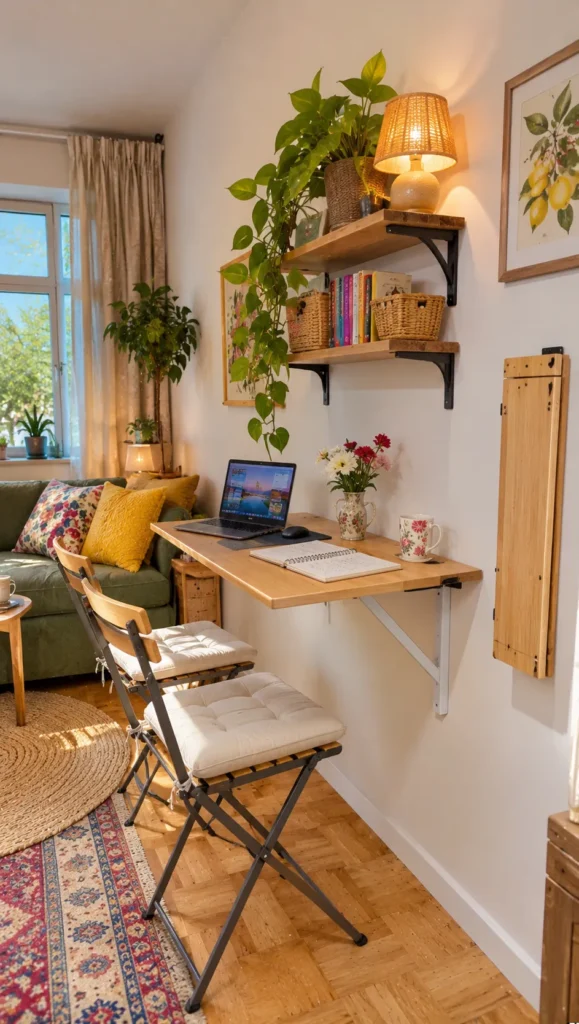
3. Fold-Down Coffee Table and Wall Desk
Description
A fold-down coffee table or wall-mounted table is useful when a tiny living room needs to serve several purposes. It provides a practical surface for meals, working, or hobbies while folding away when the room needs more open floor space.
What You’ll Need
- Wall-mounted folding table
- Heavy-duty brackets suitable for the wall
- Compact stools or folding chairs
- Wall anchors appropriate for the wall construction
- Small storage shelf
Quick How-To
- Choose a wall section that does not block windows, doors, or essential storage.
- Measure the height according to whether the table will be used for dining, working, or both.
- Install the brackets securely into suitable structural support.
- Attach the tabletop according to the hardware instructions.
- Test the folding mechanism before placing objects on it.
- Store folding chairs or stools nearby so the setup can be opened quickly.
Styling Tip
A wooden tabletop adds warmth to a small living room. Keep the surface mostly clear and store stationery, chargers, and small accessories in a nearby wall shelf.
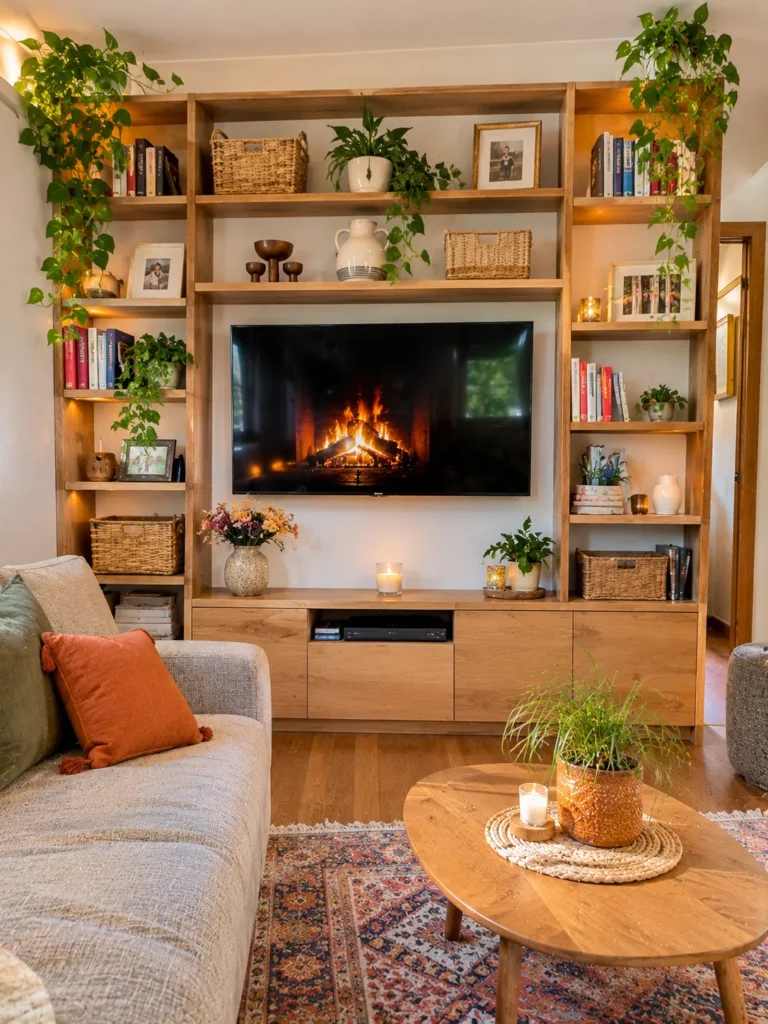
4. Floor-to-Ceiling Shelves Around the Television
Description
Using vertical wall space for storage keeps the floor clear and makes a tiny living room feel more organized. Floor-to-ceiling shelving around a television creates room for books, baskets, plants, and personal decorations.
What You’ll Need
- Narrow bookcases or custom shelving
- Wall brackets and suitable anchors
- Storage baskets
- Books and decorative objects
- Small indoor plants
- Cable management clips
Quick How-To
- Measure the wall and decide where the television will sit.
- Plan shelf depths carefully so the unit does not project too far into the room.
- Install the television and shelving with appropriate support and ventilation.
- Place heavier books and storage baskets on lower shelves.
- Use upper shelves for lightweight decorations and less frequently used items.
- Organize cables with clips or concealed cable channels.
Styling Tip
Mix closed baskets with open shelves. This keeps everyday clutter hidden while allowing a few favorite books, plants, and decorative objects to add personality.
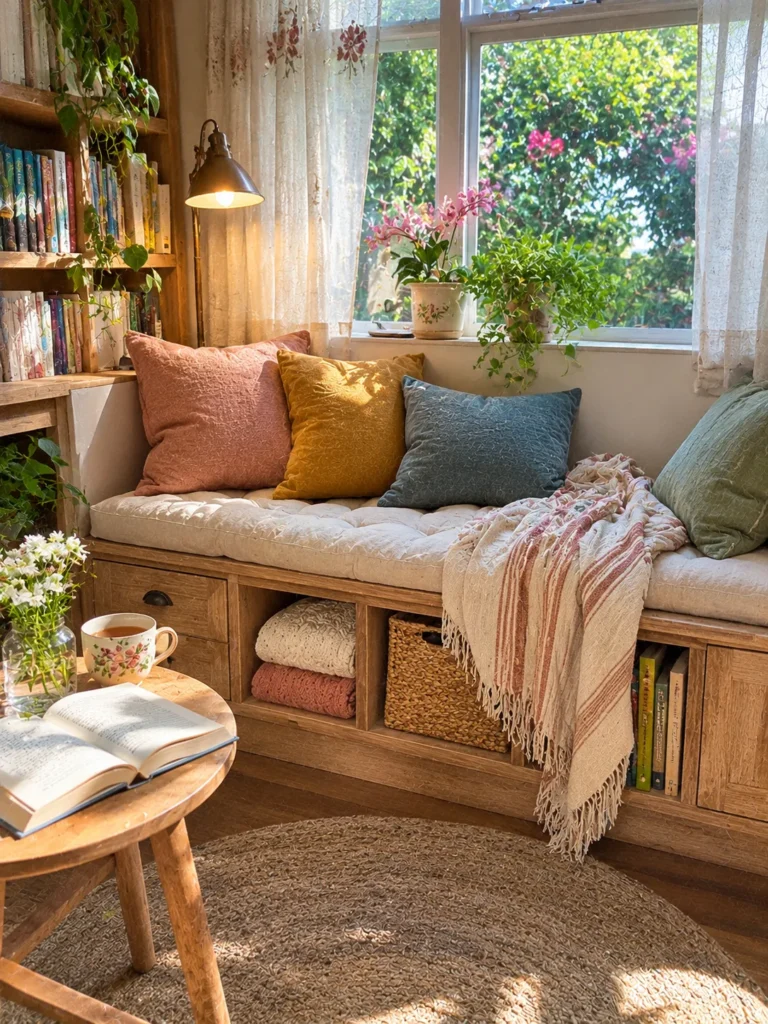
5. Window-Side Reading Nook with a Storage Bench
Description
A window-side reading nook turns an unused corner into a relaxing living room feature. A built-in bench with storage underneath provides seating, natural light, and a useful place to keep books or extra cushions.
What You’ll Need
- Window bench or compact storage bench
- Firm seat cushion
- Two or three soft pillows
- Small reading lamp
- Book storage basket
- Lightweight curtains
Quick How-To
- Measure the window area and check that the bench will not interfere with opening windows.
- Choose a bench with drawers or a lift-up lid for hidden storage.
- Add a cushion with enough support for comfortable sitting.
- Position a small lamp nearby for evening reading.
- Keep books and blankets in baskets underneath or beside the bench.
- Use simple curtains that allow daylight to enter.
Styling Tip
Choose cushions in two or three coordinating colors. A patterned pillow can add character without overwhelming the small seating area.
6. Light and Airy Scandinavian Tiny Living Room
Description
A Scandinavian-inspired living room uses natural materials, soft colors, and simple furniture to create a calm atmosphere. Its uncluttered approach works particularly well in tiny houses where visual simplicity makes a noticeable difference.

What You’ll Need
- Compact neutral sofa
- Light wood coffee table
- Cream or beige area rug
- Simple wall shelves
- Linen curtains
- Warm table or floor lamp
Quick How-To
- Start with a light wall color such as warm white or pale beige.
- Choose furniture with clean lines and practical proportions.
- Add natural wood through a coffee table, shelves, or small accessories.
- Use a light rug to define the seating area without creating a strong visual boundary.
- Keep decorative objects limited to a few meaningful pieces.
- Add warm lighting to prevent the neutral palette from feeling cold.
Styling Tip
Combine different natural textures rather than adding lots of colors. Linen, wool, wood, and woven baskets create depth while keeping the room visually peaceful.
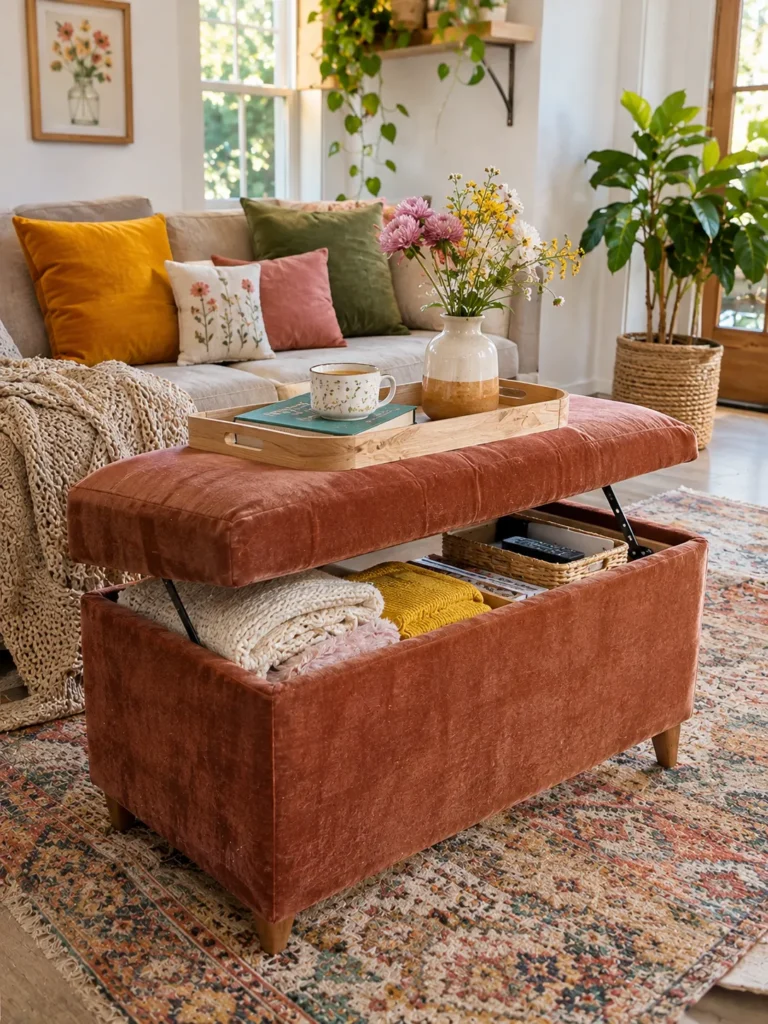
7. Multi-Functional Ottoman with Hidden Storage
Description
A storage ottoman is one of the most practical pieces for a tiny living room. It can work as a footrest, extra seat, occasional coffee table, and hidden storage compartment without requiring several separate furniture pieces.
What You’ll Need
- Storage ottoman with a stable lid
- Decorative tray
- Soft throw blanket
- Small storage organizers
- Non-slip pads if needed
Quick How-To
- Measure the available space in front of the sofa.
- Choose an ottoman that can be moved easily and does not block the main walkway.
- Store blankets, remote controls, magazines, or small accessories inside.
- Place a tray on top when using it as a temporary table.
- Add a soft throw to make it feel more inviting.
- Keep the interior organized so the ottoman remains useful rather than becoming a clutter box.
Styling Tip
Choose a fabric that adds warmth, such as textured beige, olive green, or soft rust. A rounded ottoman can also soften a room filled with straight furniture lines.
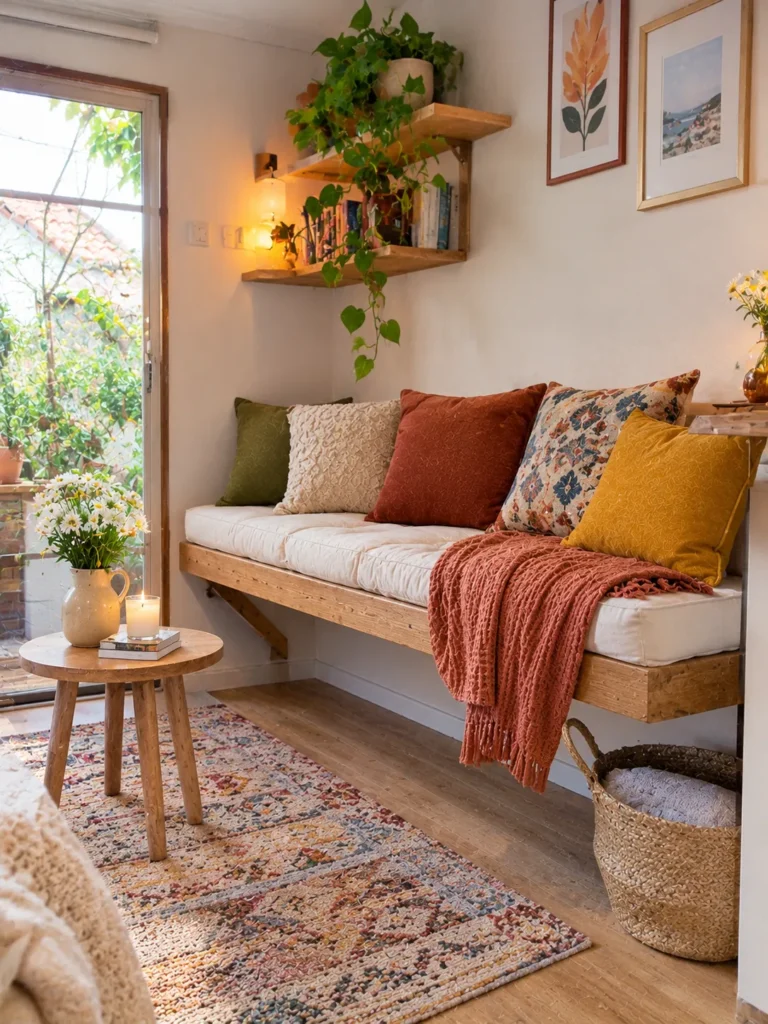
8. Tiny Living Room with a Wall-Mounted Sofa
Description
A wall-mounted or floating-style sofa creates a lighter visual effect by leaving more visible floor beneath it. This approach can make a narrow tiny house living room feel less crowded while providing comfortable everyday seating.
What You’ll Need
- Properly supported wall-mounted bench or sofa system
- Structural mounting hardware
- Comfortable seat cushions
- Back cushions
- Compact side table
- Suitable wall anchors
Quick How-To
- Confirm that the wall structure can support the intended seating system.
- Measure the seating height and depth before purchasing or building the unit.
- Use mounting hardware designed for the actual wall construction and expected load.
- Secure the frame according to the manufacturer’s instructions or have a qualified professional install it.
- Add fitted cushions and test the seating carefully before regular use.
- Keep the area beneath the sofa free for easy cleaning or low-profile storage.
Styling Tip
A floating bench in natural wood with thick cream cushions looks especially inviting. Avoid making the seating too deep because it can reduce the available walkway.
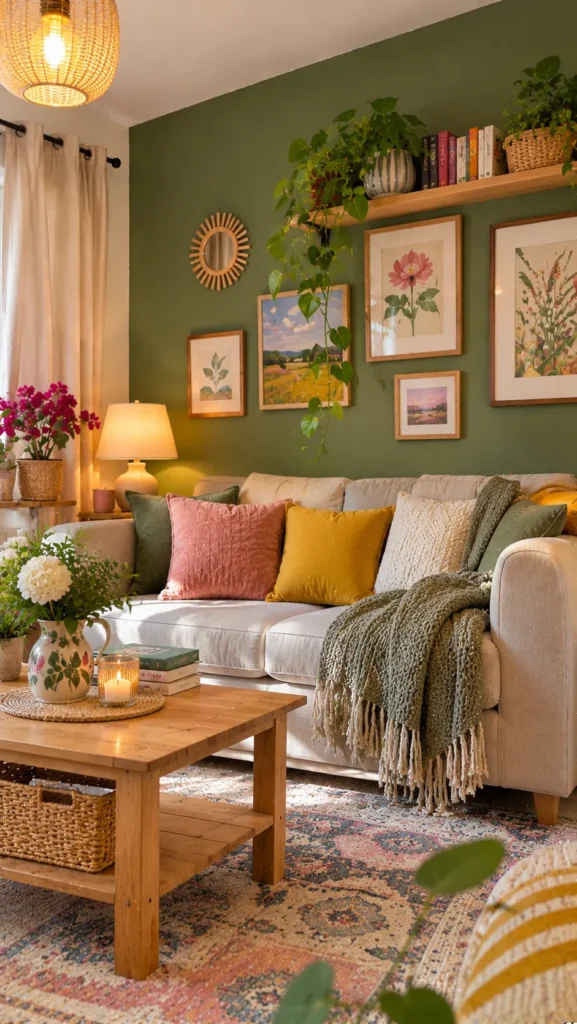
9. Colorful Accent Wall Behind the Sofa
Description
A colorful accent wall gives a tiny living room personality without requiring extra furniture or decorative objects. Choosing one carefully positioned wall creates a focal point and helps the seating area feel intentional.
What You’ll Need
- Interior wall paint or removable wallpaper
- Painter’s tape
- Paint roller and brushes
- Drop cloth
- Small framed prints
- Compact wall light or decorative shelf
Quick How-To
- Choose the wall behind the sofa or the main seating area.
- Test paint samples in natural and evening lighting before committing.
- Protect the floor and nearby furniture with a drop cloth.
- Apply the paint or wallpaper according to the product instructions.
- Allow the finish to dry fully before adding decorations.
- Keep wall accessories limited so the focal point remains clear.
Styling Tip
Try muted terracotta, dusty blue, sage green, or warm mustard. These shades add character while remaining easy to combine with neutral furniture.
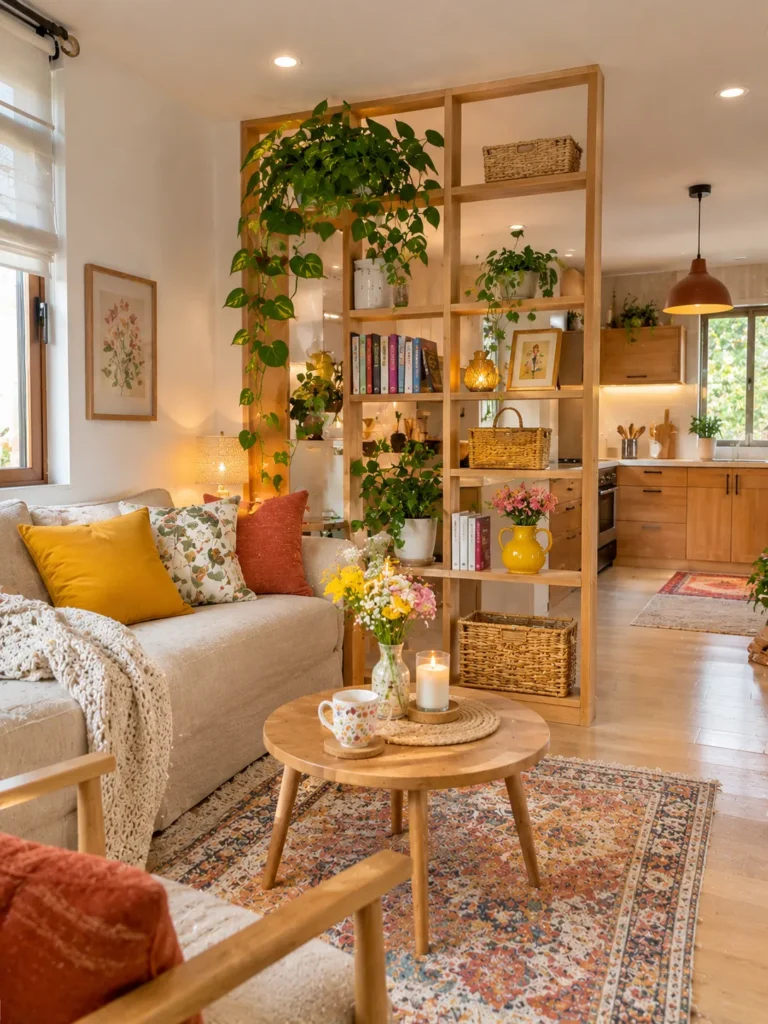
10. Open-Plan Living Room with a Slim Room Divider
Description
A slim room divider helps separate the living area from the kitchen or sleeping zone without making a tiny house feel closed in. Open shelving or a lightweight slatted screen creates definition while allowing light to pass through.
What You’ll Need
- Open-backed shelving unit or slatted divider
- Storage baskets
- Lightweight decorative objects
- Small indoor plants
- Suitable wall or floor fixing hardware
Quick How-To
- Identify the area that needs visual separation without blocking the main route through the house.
- Choose a divider with an open structure rather than a solid wall.
- Position it so windows and natural light remain unobstructed.
- Secure tall furniture to an appropriate wall or structural support to reduce tipping risk.
- Use the shelves for a mixture of baskets, books, and a few decorations.
- Keep the lower section useful for storage and the upper section relatively open.
Styling Tip
A natural wood slatted divider adds warmth and texture. Avoid filling every shelf, because the open spaces are what help the room feel connected.
11. Cozy Tiny Living Room with a Lofted Storage Area
Description
When a tiny house has enough ceiling height, a lofted storage area can free valuable space in the main living room. It keeps seasonal belongings and less frequently used items out of the way while allowing the lower area to remain comfortable and organized.

What You’ll Need
- Properly engineered loft or overhead storage structure
- Safe access ladder or stairs
- Secure storage boxes
- Compact sofa or seating bench
- Warm wall lighting
- Storage labels
Quick How-To
- Check the building’s structural capacity and available ceiling height before planning an overhead storage area.
- Have any structural changes assessed and installed by a qualified professional.
- Plan safe access without blocking doors or walking paths.
- Use lightweight, secure storage containers for seasonal items.
- Keep frequently used belongings in accessible lower storage.
- Add comfortable seating and layered lighting to the living room beneath or beside the storage area.
Styling Tip
Use matching storage boxes and simple labels to make the upper area look tidy. Keep the visible living room below light and uncluttered so the overhead structure does not feel heavy.
12. Nature-Inspired Tiny Living Room with Plants and Natural Textures
Description
A nature-inspired living room brings warmth into a tiny house through indoor plants, natural wood, woven materials, and soft earthy colors. It creates a welcoming atmosphere without relying on bulky decorations or unnecessary furniture.

What You’ll Need
- Two or three suitable indoor plants
- Compact plant stands
- Woven baskets
- Natural wood side table
- Linen or cotton cushions
- Small neutral area rug
Quick How-To
- Check the available natural light before choosing plants.
- Select compact varieties that suit the room’s conditions and maintenance needs.
- Place taller plants in unused corners and smaller ones on shelves.
- Use woven baskets for plant covers or everyday storage.
- Add natural wood and soft textiles through a few carefully chosen accessories.
- Leave clear surfaces and walking paths so the room remains practical.
Styling Tip
Combine different leaf shapes rather than filling the room with many plants. A trailing plant on a high shelf, one medium floor plant, and a small tabletop plant usually create enough greenery without crowding the space.
FAQ SECTION
How do you make a tiny house living room look bigger?
Use furniture with suitable proportions, keep walking paths clear, and make good use of vertical storage. Light wall colors, mirrors, natural light, and furniture with visible legs can also make the space feel more open.
What is the best sofa for a tiny house living room?
A compact sofa with narrow arms, a shallow profile, or built-in storage is often a practical choice. Measure the available space carefully, including the route needed to bring the sofa into the house.
How do you arrange furniture in a very small living room?
Start with the largest furniture piece and position it without blocking doors, windows, or main walkways. Add only the tables and seating you genuinely need. Leave some open floor space instead of filling every corner.
What colors work best in a tiny living room?
Warm white, cream, beige, pale grey, and soft earthy shades are easy to work with. You can introduce stronger colors through cushions, artwork, rugs, or one accent wall.
How can I add storage without making the room look cluttered?
Choose furniture with hidden storage, such as ottomans, storage benches, and nesting tables. Use closed baskets for everyday items and keep open shelves reserved for a few attractive or frequently used objects.
Can a tiny house living room have a full-sized coffee table?
Yes, but it depends on the layout. A small round table, nesting tables, or a movable ottoman often works better because it can be repositioned when more floor space is needed.
How do I separate the living room from the kitchen in an open-plan tiny house?
Use a rug, different lighting, a change in furniture arrangement, or a slim open shelving divider. These solutions define separate areas without blocking light or making the room feel smaller.
What lighting is best for a tiny living room?
Combine natural daylight with several smaller light sources. Wall lights, table lamps, and slim floor lamps provide useful lighting without requiring large fixtures or taking up too much space.
RELATED CONTENT
- Whimsy Home Aesthetic Ideas That Feel Straight Out of a Fairytale
- Creative Tiny House Storage Solutions
CLOSING
Decorating a tiny house living room is all about making thoughtful choices. You don’t need lots of furniture or expensive decorations to create a space that feels comfortable and welcoming. A well-planned sofa, clever storage, useful lighting, and a few personal touches can make a surprisingly big difference.
My favorite approach is to start with the way you actually use your living room. Think about where you relax, where you store everyday items, and how much open space you need to move comfortably. Once those essentials are in place, adding color, texture, plants, and personal decorations becomes much easier.
I hope these 12 tiny house living room ideas inspire you to make the most of your small space. Try the ideas that suit your layout, experiment with your favorite styles, and don’t be afraid to make the room your own. I’d love to hear which idea you try and how your tiny living room turns out!