12 Winter Floral Arrangements Centerpieces for Elegant Tables

Winter Floral Arrangements Centerpieces
Winter is a wonderful season to bring natural beauty indoors. Even when gardens are quieter and outdoor flowers are harder to find, you can still create stunning floral arrangements using seasonal greenery, winter blooms, berries, branches, and interesting natural textures. A thoughtfully styled centerpiece can make an everyday dining table feel special, add warmth to a living room, or create a welcoming atmosphere for winter gatherings.
The secret to beautiful winter floral arrangements is choosing materials that work well together and can handle the conditions inside your home.
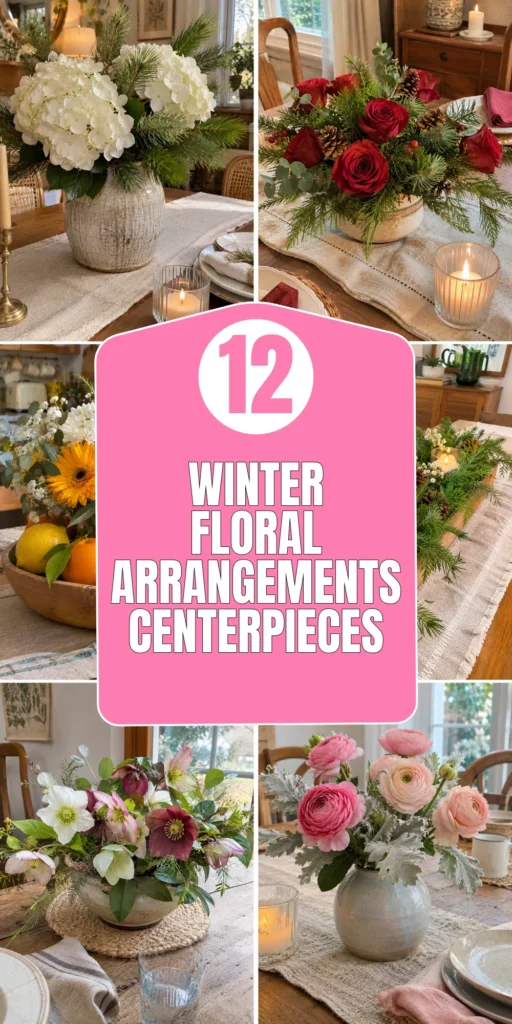
Some flowers are sensitive to warm rooms, while certain branches and greenery last much longer than delicate blooms. Mixing different heights, textures, and seasonal colors also helps create arrangements that feel interesting without looking overcrowded.
Whether you prefer a rustic farmhouse centerpiece, an elegant white arrangement, or a colorful display with winter berries, these 12 winter floral arrangements centerpieces offer practical inspiration for different decorating styles and budgets.
1. Classic White Roses and Winter Eucalyptus Centerpiece
Description
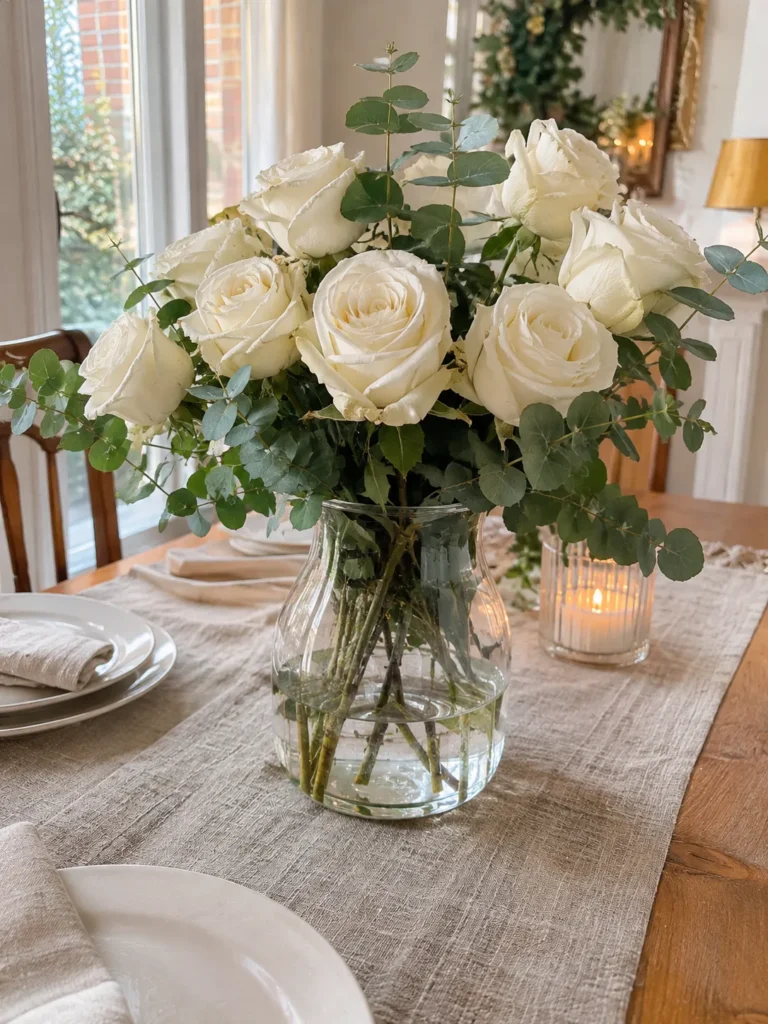
White roses paired with fresh eucalyptus create an elegant winter centerpiece that feels calm, natural, and timeless. The combination of soft petals and silvery-green foliage works beautifully for dining tables, holiday gatherings, and everyday winter decorating.
What You’ll Need
- 8–12 white roses
- Fresh eucalyptus stems
- A clear glass or ceramic vase
- Floral shears
- Fresh water
- Flower food
Quick How-To
- Clean your vase thoroughly and fill it with fresh water mixed with flower food.
- Remove leaves that would sit below the waterline to reduce bacterial growth.
- Trim the rose stems at an angle and arrange them loosely in the vase.
- Add eucalyptus around the roses, allowing some branches to extend naturally beyond the flowers.
- Turn the vase as you work so the arrangement looks balanced from different angles.
- Replace the water every two days and remove fading flowers.
Styling Tip
Use a low, wide vase for a dining table so guests can see across the arrangement. White roses look especially beautiful beside natural linen, wooden serving boards, and warm candlelight.
2. Rustic Pinecones and Winter Greenery Arrangement
Description
This rustic centerpiece combines evergreen branches, pinecones, and seasonal foliage for a natural woodland-inspired display. It is especially useful when you want a long-lasting winter decoration without relying on many fresh flowers.

What You’ll Need
- Fresh pine or fir branches
- Clean, dry pinecones
- A shallow wooden tray or ceramic bowl
- Floral foam suitable for fresh greenery or reusable floral wire
- Optional white flowers
- Small decorative candles
Quick How-To
- Place your floral foam or a simple branch-support structure inside the container.
- Cut evergreen branches into manageable lengths.
- Insert the largest branches first, creating a loose foundation.
- Add smaller pieces to fill visible gaps without making the arrangement too dense.
- Position pinecones between the greenery, securing them with floral wire if necessary.
- Add a few white blooms for contrast if desired.
- Keep the greenery away from direct heat and check it regularly for dryness.
Styling Tip
A shallow wooden tray makes the arrangement easy to move. Choose pinecones in different sizes for a more natural appearance, and keep candles in stable holders with plenty of clearance from foliage.
3. Burgundy Dahlias and Winter Berry Centerpiece
Description
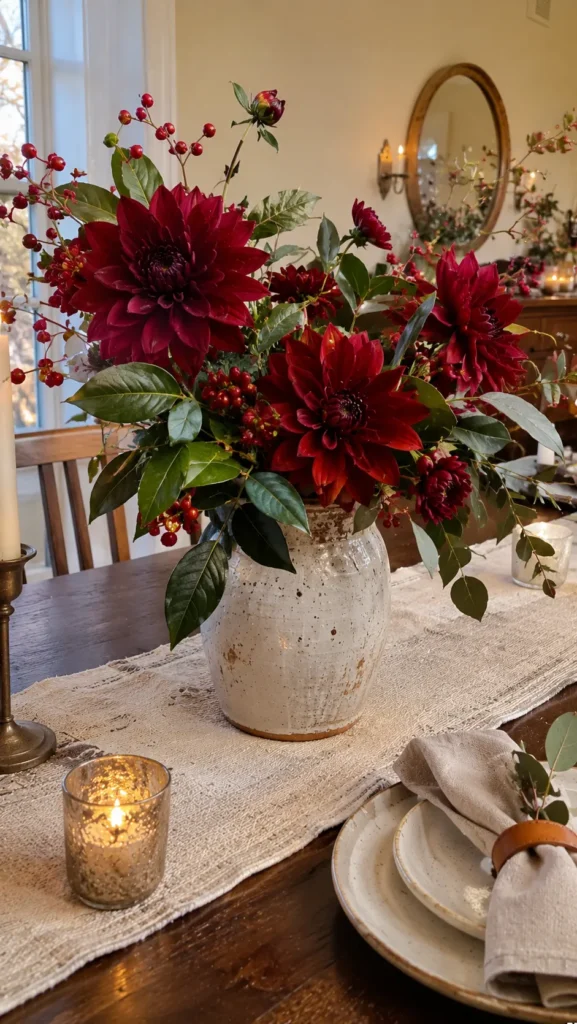
Deep burgundy flowers combined with seasonal berries create a rich centerpiece that brings warmth and color to winter tables. This arrangement works particularly well with darker wood, neutral table linens, and cozy seasonal decorating.
What You’ll Need
- Burgundy dahlias or similar deep-colored seasonal flowers
- Red or burgundy hypericum berries
- A few dark green foliage stems
- A medium ceramic vase
- Floral shears
- Fresh water and flower food
Quick How-To
- Fill your cleaned vase with fresh water and flower food.
- Remove leaves from the lower portions of the stems.
- Trim the flowers to different heights, keeping the largest blooms slightly below or around the center.
- Place the dahlias into the vase, spacing them so each flower has room.
- Add berry stems between the blooms to create smaller points of color.
- Finish with foliage around the outside to soften the outline.
- Remove fading flowers and refresh the water regularly.
Styling Tip
Keep the berry stems slightly higher than some of the flowers to add depth. If you have pets or children, check plant safety before using decorative berries, and keep arrangements out of reach.
4. Minimalist White Amaryllis Centerpiece
Description
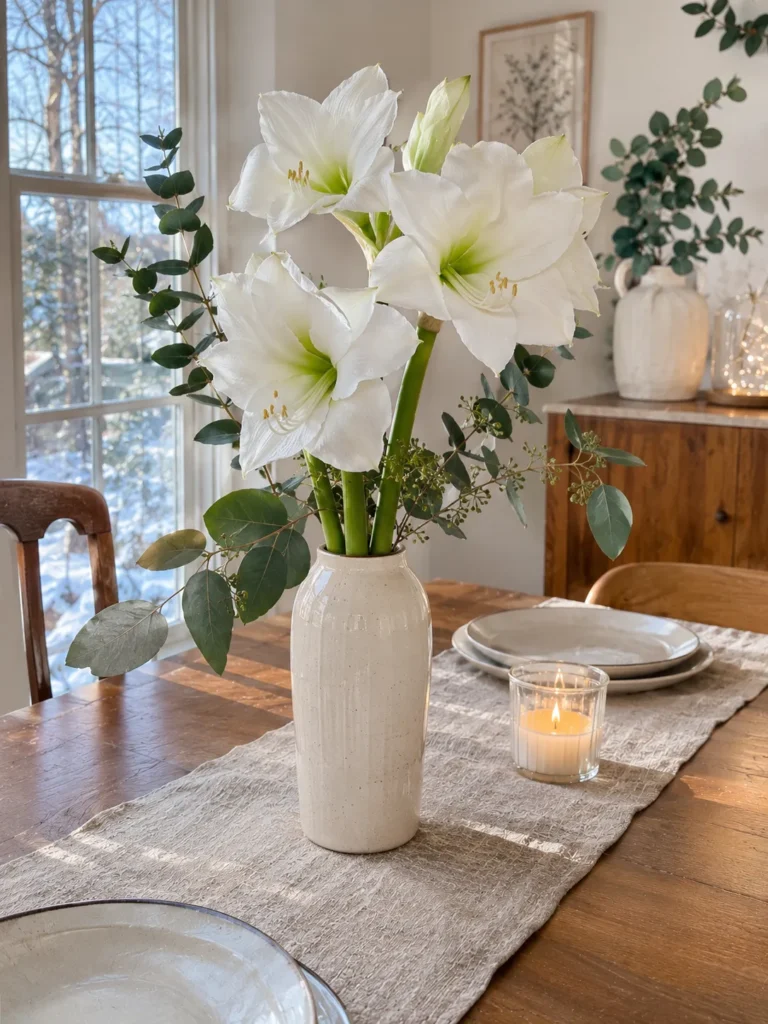
White amaryllis flowers make a striking winter centerpiece because their large blooms create visual impact without needing lots of additional decoration. Their sculptural stems are ideal for a simple, modern table setting.
What You’ll Need
- 3–5 white amaryllis stems
- A tall, narrow vase
- A few eucalyptus or olive branches
- Floral shears
- Fresh water and flower food
Quick How-To
- Choose a vase tall enough to support the flower stems.
- Add fresh water and flower food according to the package instructions.
- Trim the amaryllis stems to different lengths for a relaxed arrangement.
- Place the flowers in the vase, spacing their large blooms so they do not press against one another.
- Add a small amount of greenery around the base if the arrangement needs extra texture.
- Check the water level regularly because large stems can drink more than expected.
- Remove any fading blooms as they finish.
Styling Tip
Let the amaryllis be the main attraction. A simple white vase, neutral table runner, and a few understated accessories will make the dramatic flowers stand out.
5. Winter Garden Centerpiece with Hellebores
Description
Hellebores, sometimes called winter roses, offer delicate blooms in shades of white, pink, plum, and green. Their understated beauty makes them an excellent choice for a natural centerpiece inspired by a winter garden.

What You’ll Need
- Fresh cut hellebores from a florist
- Seasonal foliage
- A low ceramic bowl or vase
- Floral frog or flower-support grid
- Floral shears
- Fresh water and flower food
Quick How-To
- Choose a low container that allows the flowers to sit at different heights.
- Add a floral frog or create a simple support grid across the opening.
- Fill the container with fresh water and flower food.
- Trim the hellebore stems and remove any leaves that would sit underwater.
- Arrange the flowers loosely, allowing some blooms to face sideways or slightly downward.
- Add foliage around the edges to create a soft, garden-inspired shape.
- Check the water daily and remove any damaged leaves or blooms.
Styling Tip
Mix different hellebore colors rather than using only one shade. Their subtle variations look beautiful with natural ceramic containers and simple linen tablecloths.
6. Citrus and Winter Flower Table Centerpiece
Description
Fresh citrus brings cheerful color to a winter floral centerpiece. Combining oranges, lemons, seasonal flowers, and greenery creates a bright arrangement that feels fresh and welcoming during darker winter days.

What You’ll Need
- Small oranges or mandarins
- A few lemons
- White or yellow seasonal flowers
- Fresh eucalyptus or evergreen foliage
- A shallow serving bowl or tray
- A small waterproof vase or floral container
Quick How-To
- Place a small waterproof container inside the serving bowl to hold the flowers.
- Add fresh water and flower food to the inner container.
- Arrange the flowers and greenery first, keeping the stems away from the fruit.
- Position the oranges and lemons around the container.
- Turn the bowl to check that the fruit and flowers are distributed evenly.
- Replace any fruit that becomes soft or damaged.
- Keep the fruit separate from the flower water to prevent contamination.
Styling Tip
Use a mixture of orange and yellow citrus for a lively look. A wooden tray underneath helps keep the display together and protects the table from moisture.
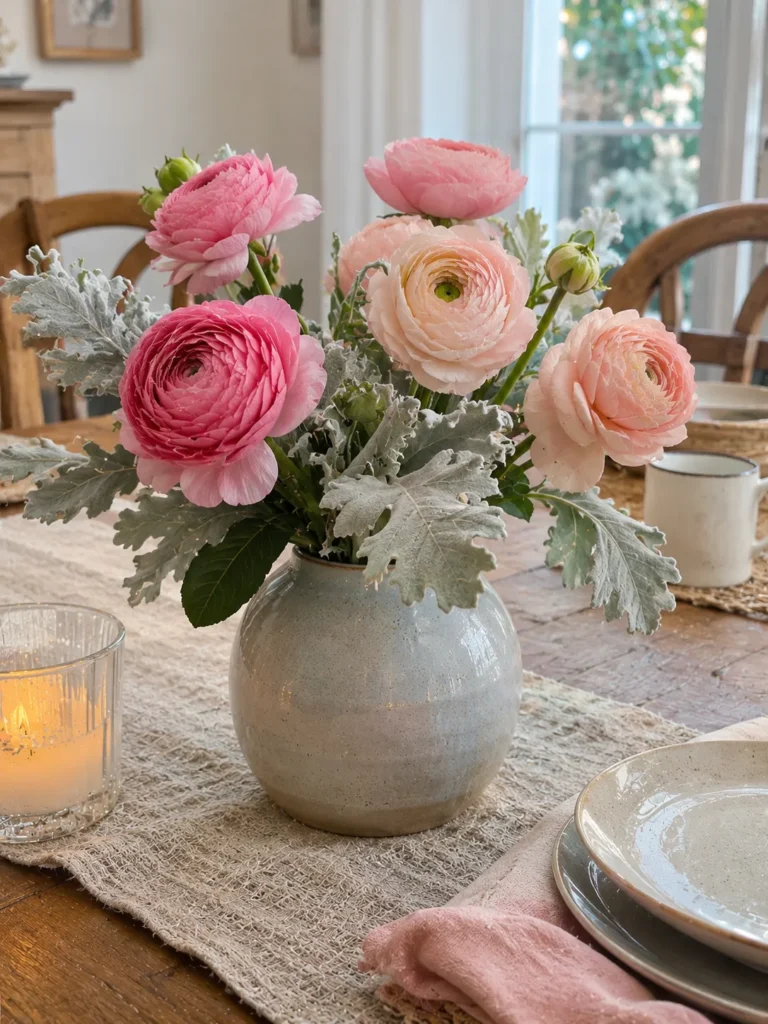
7. Soft Pink Ranunculus and Silver Foliage Arrangement
Description
Soft pink ranunculus paired with silvery foliage creates a delicate winter centerpiece with plenty of texture. Its gentle color palette is ideal for romantic tables, winter brunches, and understated seasonal decorating.
What You’ll Need
- Pink ranunculus stems
- Dusty miller or suitable silver-toned foliage
- A small glass or ceramic vase
- Floral shears
- Fresh water and flower food
Quick How-To
- Select ranunculus stems with firm stems and flowers that are not completely open.
- Fill your vase with fresh water and flower food.
- Trim each stem at an angle and remove lower leaves.
- Arrange the flowers at slightly different heights, allowing their rounded heads to create a soft shape.
- Add silver foliage sparingly around the flowers.
- Keep the arrangement away from radiators, heaters, and direct hot sunlight.
- Refresh the water every two days.
Styling Tip
Choose a pale grey or cream vase to complement the silver foliage. Avoid adding too many extra colors because the pink and grey combination is most effective when kept simple.
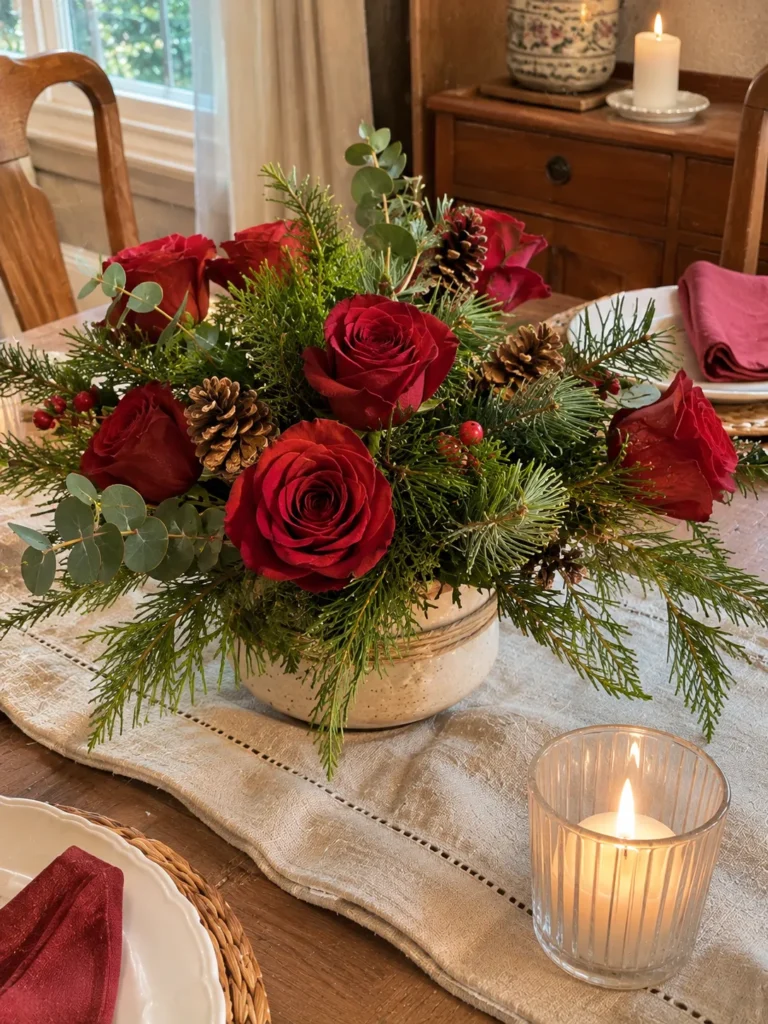
8. Evergreen and Red Rose Winter Centerpiece
Description
Red roses surrounded by evergreen branches create a traditional winter centerpiece with a bold seasonal look. This combination is perfect for festive dinners, family celebrations, and tables that need a strong focal point.
What You’ll Need
- 7–10 red roses
- Fresh fir or pine branches
- A low vase or floral bowl
- Floral foam suitable for fresh flowers
- Floral shears
- Fresh water and flower food
Quick How-To
- Prepare your container and add a suitable flower-support system.
- Trim the evergreen branches and arrange them around the outside.
- Cut the rose stems to different lengths.
- Place the roses evenly throughout the greenery, keeping their heads visible.
- Turn the arrangement as you work to avoid empty areas.
- Remove leaves that sit below the waterline if using a water-based container.
- Check the arrangement daily and remove fading flowers.
Styling Tip
Use natural evergreen branches rather than artificial-looking plastic foliage. A simple cream table runner will balance the strong red color and keep the display from feeling too busy.
9. Winter White Hydrangea and Pine Arrangement
Description
White hydrangeas and fresh pine create a full, textured centerpiece with a beautiful mix of soft blooms and structured greenery. It is a lovely choice for larger dining tables where a fuller arrangement can make a statement.

What You’ll Need
- 2–3 white hydrangea stems
- Fresh pine or fir branches
- A wide ceramic vase
- Floral shears
- Fresh water and flower food
Quick How-To
- Choose a wide vase that can support the weight of the hydrangea heads.
- Fill it with fresh water and flower food.
- Trim the hydrangea stems and remove excess leaves.
- Arrange the largest flower heads first, leaving enough room between them.
- Add pine branches around and between the flowers.
- Adjust the stems so the greenery creates a natural outline rather than hiding the blooms.
- Monitor the water level daily because hydrangeas can be thirsty flowers.
Styling Tip
Use a textured stoneware vase to give the soft hydrangeas a little contrast. Keep the arrangement low enough to avoid blocking conversation across the table.
10. Dried Flowers and Natural Branch Centerpiece
Description
Dried flowers and natural branches make a relaxed winter centerpiece that can last for months with very little maintenance. Their muted colors and interesting shapes are perfect for rustic, farmhouse, and Scandinavian-inspired interiors.

What You’ll Need
- Dried hydrangeas or other dried flowers
- Dried grasses or seed heads
- Decorative branches
- A sturdy ceramic vase
- Floral wire or string
- Pruning shears
Quick How-To
- Select a vase with a narrow opening to help support the branches.
- Trim the longest branches first and place them into the vase.
- Add dried flowers in small groups, distributing their shapes throughout the arrangement.
- Use floral wire if you need to secure stems that move too much.
- Turn the vase and adjust the arrangement until it looks balanced.
- Remove loose petals and dust gently with a soft brush.
- Keep dried materials away from flames, heaters, and damp areas.
Styling Tip
Combine different heights and textures instead of filling every gap. A few open spaces make dried arrangements look more natural and prevent them from appearing overcrowded.
11. Winter Woodland Centerpiece with Cotton Stems
Description
Cotton stems, evergreen foliage, pinecones, and natural branches create a soft woodland-inspired centerpiece. The combination of fluffy cotton and structured greenery adds texture while keeping the color palette calm and inviting.

What You’ll Need
- Natural cotton stems
- Fresh or preserved evergreen branches
- Small pinecones
- A ceramic or glass vase
- Floral wire
- Optional dried grasses
Quick How-To
- Place the cotton stems into the vase first, spreading them at different heights.
- Add evergreen branches between the cotton stems to create contrast.
- Secure loose branches with floral wire if necessary.
- Position small pinecones around the base or attach them carefully to decorative branches.
- Add a few dried grasses for extra movement.
- Remove loose cotton fibers and damaged foliage.
- Keep fresh greenery away from direct heat and replace it when it dries.
Styling Tip
A natural beige or dark green vase works especially well with cotton stems. Use this arrangement on a sideboard or console where its taller shape can be appreciated.
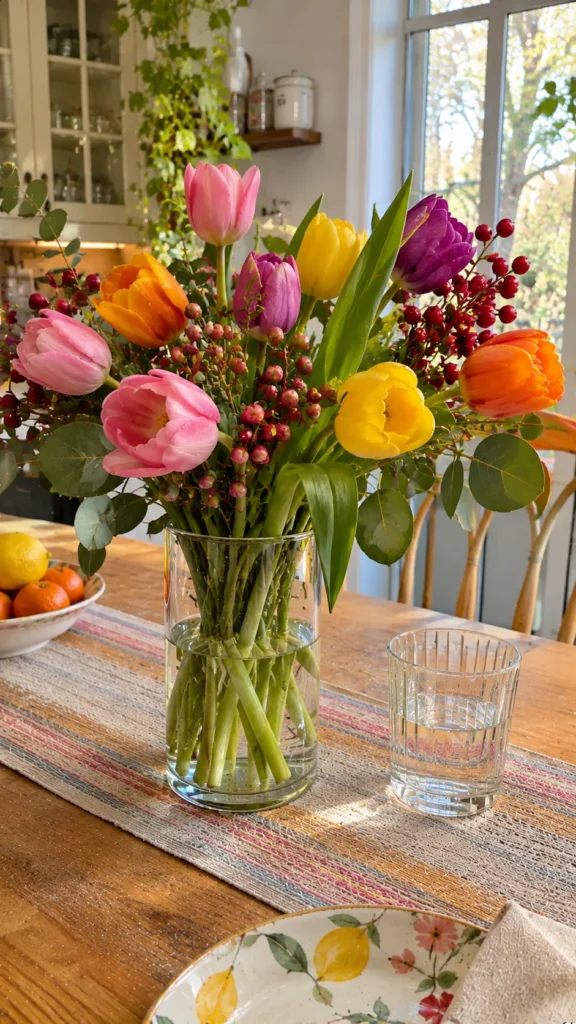
12. Colorful Winter Tulip and Berry Centerpiece
Description
Colorful tulips and decorative berry stems create a cheerful winter centerpiece that brings energy to a neutral room. Choose pink, yellow, orange, or purple tulips for a lively display that feels fresh and different from traditional winter arrangements.
What You’ll Need
- 10–15 fresh tulips
- Suitable decorative berry stems
- A tall glass vase
- Floral shears
- Fresh water
- Flower food
Quick How-To
- Clean the vase and fill it with a modest amount of fresh water and flower food.
- Remove any leaves that would sit below the waterline.
- Trim the tulips and arrange them loosely in the vase.
- Add berry stems between the flowers, keeping them slightly higher in some areas.
- Remember that tulips continue growing and bending after cutting, so leave enough room for movement.
- Keep the arrangement in a cool spot away from direct sunlight and heating vents.
- Trim the stems and refresh the water every couple of days.
Styling Tip
Mix two or three tulip colors rather than using every shade available. A simple transparent vase allows the colorful stems to become part of the decoration.
FAQ SECTION
What flowers are best for winter centerpieces?
Popular choices include amaryllis, hellebores, roses, ranunculus, tulips, and hydrangeas. Their availability varies by location and season, so ask a local florist what is freshest. Evergreen branches, eucalyptus, and suitable berries are useful additions for extra texture.
How can I make winter floral arrangements last longer?
Start with a clean vase, fresh water, and flower food. Remove leaves below the waterline, trim stems regularly, and replace the water every two days. Keep arrangements away from heaters, fireplaces, and direct sunlight.
What greenery works well in winter arrangements?
Fir, pine, cedar, eucalyptus, and other suitable seasonal foliage are popular options. Choose fresh branches with healthy color and flexible stems. Avoid greenery that is already brittle, dry, or shedding excessively.
How do I make a centerpiece without spending too much?
Use a combination of affordable seasonal flowers, greenery, and natural materials. A small number of statement blooms can look beautiful when surrounded by foliage. Reuse clean jars, simple ceramic vases, and containers you already own.
Should a dining table centerpiece be tall or low?
For everyday dining and gatherings, low arrangements are usually more practical because they allow people to see and speak to one another. Taller arrangements work better on sideboards, entry tables, or dining tables when they can be moved before meals.
Can I mix fresh and dried flowers?
Yes, but consider their different care needs. Fresh flowers require water, while dried flowers should remain dry. Keep dried stems outside the water container, using separate holders or a design that prevents them from becoming wet.
How do I choose colors for a winter centerpiece?
Start with two or three main colors and add greenery or neutral tones for balance. White and green create a calm look, burgundy and evergreen feel traditional, while pink, yellow, and orange bring a brighter winter atmosphere.
Are candles safe around floral centerpieces?
Candles should always be placed in stable holders with generous clearance from flowers, dried materials, ribbons, and foliage. Never leave burning candles unattended. Battery-operated candles are a practical alternative, especially for arrangements containing dry greenery.
RELATED CONTENT
- Christmas Flower Arrangements to Make Your Home Feel Festive
- Easy DIY Winter Decorations for Your Dining Table
CLOSING
Winter is a lovely time to experiment with flowers, greenery, and natural textures. You don’t need a huge collection of expensive blooms to create something beautiful. Sometimes a few fresh roses, a handful of evergreen branches, or a simple combination of dried flowers and pinecones is enough to transform an ordinary table.
The best arrangements are the ones that suit your home, your budget, and the way you use your space. Try different containers, play with seasonal colors, and don’t worry if every stem isn’t perfectly positioned. Those little natural differences are part of what makes handmade floral styling so special.
I hope these 12 winter floral arrangements centerpieces inspire you to create something beautiful this season. Choose an idea you love, gather your favorite materials, and enjoy bringing a little winter garden magic indoors. I’d love to see what you create and how you make it your own!